Why weaponizing your pessimism drives real results

Arthur dela Fuente (not his real name) is a widower and a retired factory manager known as an incurable pessimist. As a former continuous improvement manager, he spent 26 years solving thousands of issues at their plant.
His contingency planning includes improbable situations like a rogue asteroid or realistically – a catastrophic plumbing failure at their 52-year-old factory on a Sunday morning.
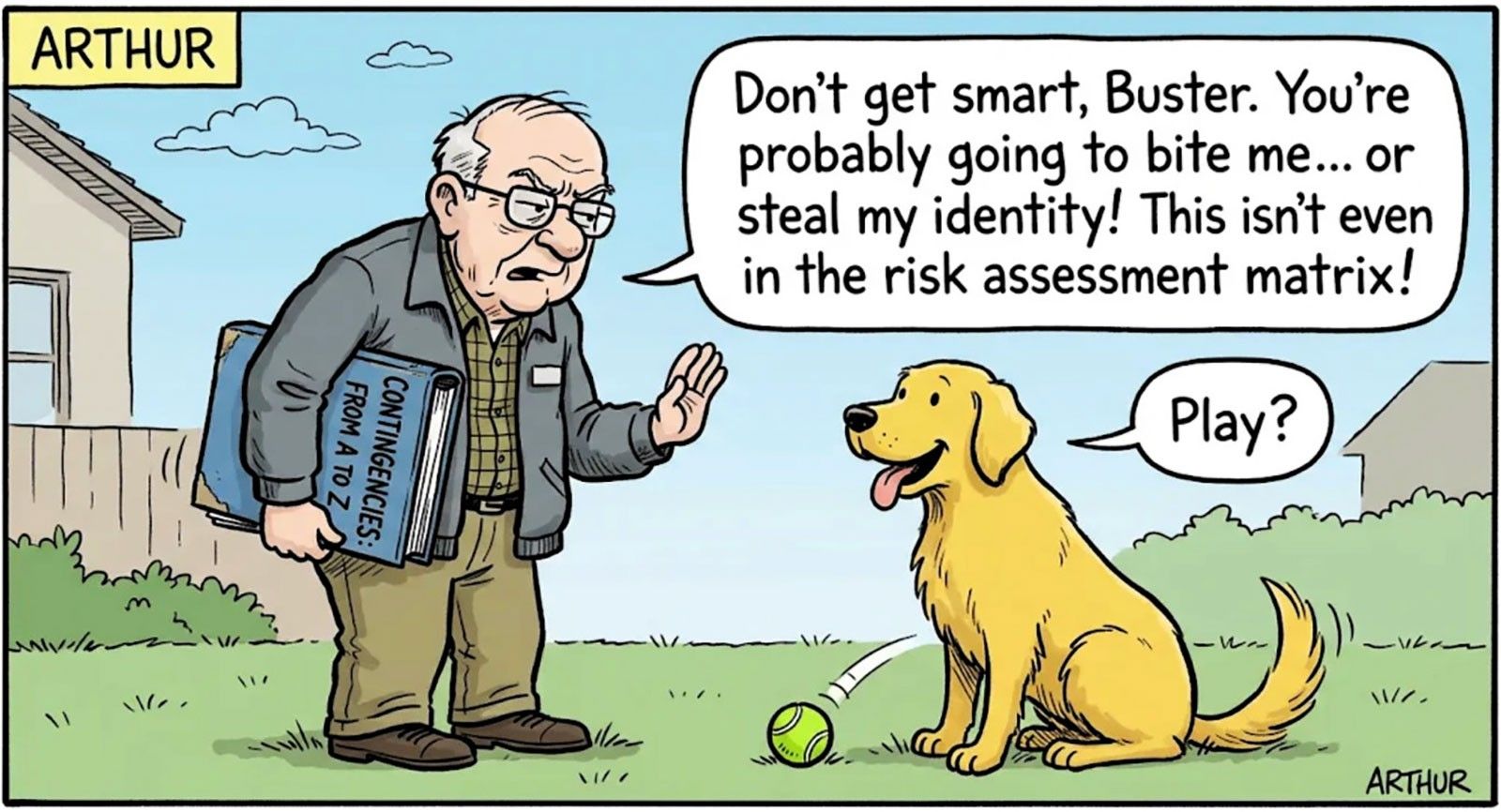
At home, his closet looked less like a clothes storage because it contained binders titled “Contingencies: From A to Z.”
One Monday morning at six, Arthur tripped on his stairway and sighed with grim dissatisfaction. “That’s the first mistake this week,” he muttered to himself.
He expected their 10-year-old coffee maker to explode anytime soon, but continued to brew a perfect pot. He stepped outside of the house when a morning sun greeted him. That was the time when a neighbor’s golden retriever dropped a tennis ball at his feet.
“Stop it! Don’t bite me,” Arthur warned the dog. The retriever sneezed and ran away. By noon, the universe grew terrifyingly kind. He went to a nearby shopping mall to eat a bento lunch at a Japanese restaurant.
Arthur ate it suspiciously, waiting for food poisoning. Nothing happened.
Later, he anticipated that the cashier would deny him the senior citizen’s discount.
By 2:30 p.m., after wandering aimlessly inside the mall, he entered the movie house for free admission as a senior citizen, but after sanitizing a seat.
At around 5:15 p.m., his phone buzzed: “Congratulations! You’ve won $100 worth of grocery voucher in the homeowners’ association raffle draw.”
Arthur stared at the screen, clutched his baseball cap tighter to his bald nape and let out a long-defeated groan. “Now, I have to figure out the fine print.”
During his active years in service, he was described as a top-notch manager who coached his workers to prepare for every worse situation. That was their basic formula in solving hundreds of hidden operational wastes that resulted in millions of dollars of savings.
Negativity bias
I became so fascinated with Arthur’s story that I embellished some of its details after a lengthy discussion with the manager who succeeded him in the factory. He queried: Is there a link between Kaizen and Lean Thinking (KLT) and pessimism?
I replied that pessimism is essential to making KLT work. Optimism, however, is necessary to sustain it, no matter how trivial the contribution and the result.
Human pessimism can be a powerful catalyst toward continuous improvement. This is important in organizations where employees have experienced failed improvement programs, unfulfilled management promises and suggestions that were ignored.
From an evolutionary standpoint, paying attention to potential threats gave our ancestors a survival advantage. Those who noticed suspicious movements in the tall grass had a better chance of avoiding predators than those who ignored the warning signs.
That’s the essence of negativity bias. Negativity bias and KLT may appear to share the same starting point: an awareness of what could go wrong. While negativity bias can lead to anxiety and inaction, KLT converts that awareness into systematic problem-solving with the following three approaches:
1. It rewards fault-finding. Instead of telling people to “stop being so negative,” a KLT encourages them to actively hunt for invisible friction, bottlenecks and defects. That’s how to turn critics into active problem-solvers.
2. It reduces the chance of failure. Left unchecked, pessimism can discourage people from acting, especially when problems appear too small to deserve attention. KLT counters this by encouraging one percent daily improvements. Even when an experiment fails, the cost of learning remains low.
3. It shifts from judgment to observation. KLT shifts the discussion to an objective observation. Instead of blaming people for mistakes, it examines the actual condition, establishes baseline performance and uses the PDCA (plan, do, check, act) cycle to test improvements.
Ultimately, KLT does not cure human pessimism. Rather, it weaponizes it for the betterment of an organization. It takes our brain’s relentless compulsion to ask: “What could go wrong?” and pairs it with “what small steps can we take now to fix it?”
In other words, pessimism finds the problem, but KLT finds the solution.
Rey Elbo is a quality and productivity activist. Send your stories, comments or questions to [email protected] or via Facebook, LinkedIn, X or https://reyelbo.com




- Latest
- Trending