Economists see more BSP rate hikes
Despite weak economic growth
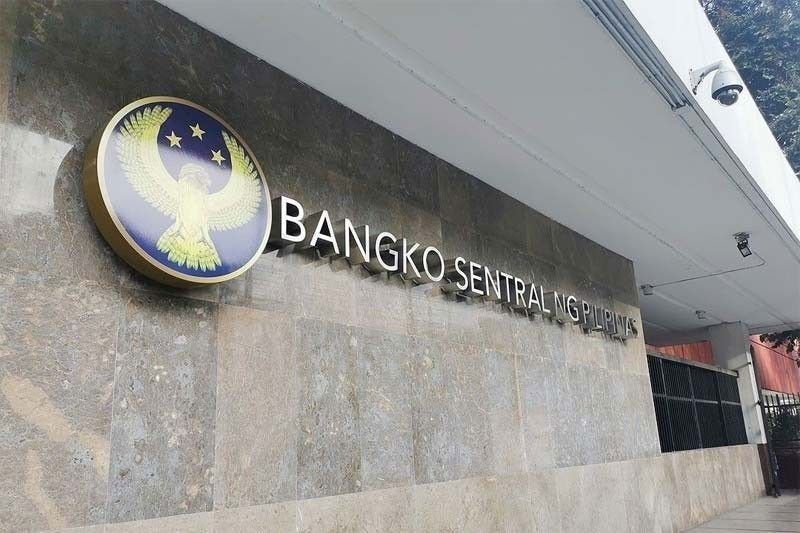
MANILA, Philippines — Economists expect the Bangko Sentral ng Pilipinas (BSP) to raise interest rates further despite the economy’s sharp slowdown, as stubborn inflation continues to squeeze household spending and threatens to delay a recovery.
The country’s gross domestic product (GDP) grew by just 2.1 percent in the third quarter, down from 2.4 percent in the preceding quarter and four percent a year earlier, the Philippine Statistics Authority reported on Monday.
GDP, the total value of goods and services produced in the country, expanded at its slowest pace since the pandemic and missed the market’s 3.1-percent forecast.
Economists from HSBC, Bank of America (BofA) and Bank of the Philippine Islands (BPI) said weak demand and rising living costs have complicated the BSP’s task of controlling inflation without further undermining growth.
HSBC economist Aris Dacanay said the disappointing GDP figure reduced the likelihood of another aggressive 50-basis-point rate hike in December, but did not eliminate the need for tightening.
Dacanay expects a smaller 25-basis-point increase to 5.75 percent next month, which he believes would end the central bank’s tightening cycle.
BofA expects another 25-basis-point increase in December, followed by a similar adjustment in February 2027, taking the benchmark rate to six percent.
BPI lead economist Emilio Neri Jr. likewise said additional increases remain likely, warning that pausing too early could allow inflation to become more entrenched and complicate the eventual recovery.
Household consumption grew only 2.4 percent in the third quarter, its weakest non-pandemic expansion since 2010, according to HSBC.
The Ayala-led bank noted that consumer spending rose 8.5 percent in nominal terms, indicating that much of the increase reflected higher prices rather than more goods and services purchased.
Dacanay also pointed to a confidence shock following investigations into flood-control projects that curtailed infrastructure disbursements. He said the shock had proved “large and long-lasting,” even as construction demand began improving.
Investment contracted by 0.2 percent, an improvement from the previous quarter’s 8.8-percent drop, while agriculture shrank 4.8 percent. Exports and government consumption grew 8.6 percent and 6.8 percent, respectively, but failed to offset weaker domestic demand.
The outlook remains subdued as BofA expects growth to improve slightly to 2.6 percent in the fourth quarter and 3.5 percent in 2027, from the projected 2.5 percent this year.
HSBC forecasts growth at 3.2 percent this year and 4.8 percent next year, although it warned the latest GDP result poses downside risks to both projections.
BofA sees inflation easing to 5.2 percent next year from six percent in 2026, but remaining above the BSP’s two to four percent target range until late 2027.
HSBC urged faster implementation of foreign-funded infrastructure projects and lower food import barriers to ease prices and revive consumer demand.








- Latest
- Trending