BSP eases rules as Middle East tensions shake markets
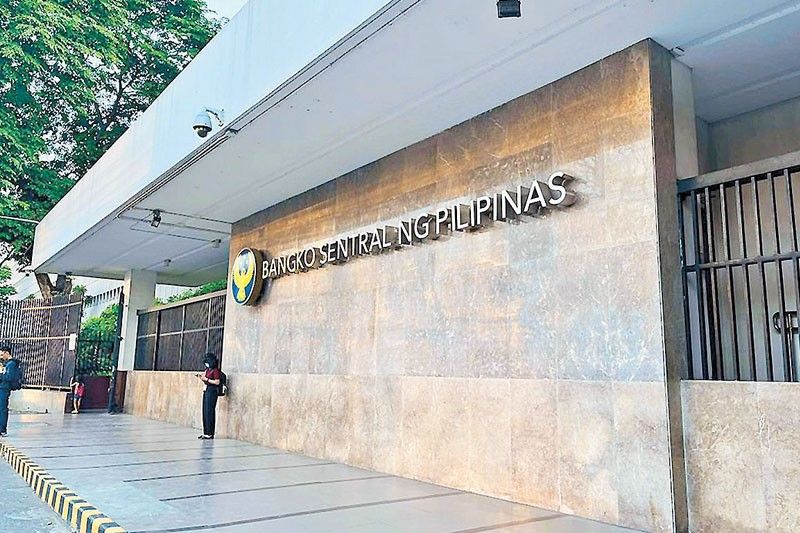
MANILA, Philippines — The Bangko Sentral ng Pilipinas (BSP) has granted temporary regulatory relief to banks and quasi-banks to shield their reported capital positions from unrealized losses on peso government securities caused by market volatility from the Middle East conflict.
In a memorandum, the BSP said the Monetary Board approved a time-bound relief measure allowing banks and quasi-banks to temporarily exclude certain paper losses on peso government securities from the computation of their capital adequacy ratio (CAR) and common equity tier 1 (CET1) ratio.
The relief covers net unrealized losses on peso government securities under the fair value through other comprehensive income (FVOCI) portfolio that were incurred after the start of the Middle East conflict.
“The time-bound relief is aimed at preventing transitory market movements from unduly affecting the reported capital strength of banks and quasi-banks,” the BSP said in a statement.
Unrealized losses refer to declines in the market value of securities that have not been sold. These paper losses are deducted from CET1 capital, the highest-quality capital held by banks to absorb losses and a key component in computing their CAR.
Under the relief, a bank or quasi-bank will not be required to deduct from CET1 capital the cumulative unrealized losses on peso government securities booked under FVOCI that were incurred after the start of the Middle East conflict on Feb. 28.
For banks and quasi-banks that already had net unrealized losses on their FVOCI peso government securities as of Feb. 28, the relief will apply only to cumulative losses exceeding that level.
Meanwhile, those that recorded net unrealized gains on their FVOCI peso government securities as of Feb. 28 will be allowed not to deduct any unrealized losses from CET1 capital during the relief period.
The BSP said the relief would apply from April 1 to Dec. 31. It may also be applied retroactively to April and May capital figures.
Beginning Jan. 1, 2027, banks and quasi-banks must revert to applying unadjusted CET1 capital in computing their CAR and CET1 ratio. This means unrealized mark-to-market losses on FVOCI peso government securities will again be reflected in full under the usual capital rules.
The BSP stressed that the temporary relief does not remove disclosure requirements.
“Banks and quasi-banks availing themselves of the relief must continue to disclose all unrealized losses in financial reports to the BSP and in their financial statements,” it said.
The memorandum likewise stated that banks and quasi-banks should continue to report actual unrealized FVOCI losses in all other financial reports, including their financial reporting package and financial statements. Realized and unrealized losses, including impairment losses, must also be reported in full.
Banks and quasi-banks that intend to avail themselves of the relief are required to notify the BSP by June 30. They must submit an email notification to their supervising department, along with their February 2026 solo CAR report and copy furnish the BSP’s Capital Markets and Trust Supervision Department.
The BSP said it would closely monitor additional investments booked under the FVOCI accounts of banks and quasi-banks that avail themselves of the relief during the covered period.
It also said it could impose limitations on the participation of availing banks in select BSP liquidity facilities.


- Latest
- Trending