Investment scams

The multi-billion peso investment scam case against MFT Group of Companies and its chief executive officer, Maria Francesca Tan, is just one of the few high-profile cases that should warn the public of the cautionary saying that “if it sounds too good to be true, then it probably is,” which means it isn’t.
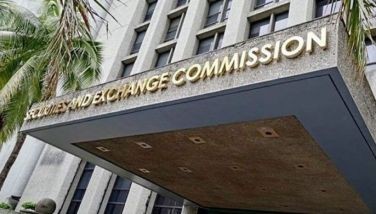
As early as 2024, the Securities and Exchange Commission made permanent a cease and desist order issued against MFT and Foundry Ventures Inc. as well as their representatives and agents in selling and offering for sale of securities in the form of evidence of indebtedness to the public, until the required registration statements are duly filed with and approved by the SEC and the corresponding license to offer or sell securities are issued.
The SEC also prohibited the said companies, as well as Tan and a number of other individuals, from transacting any business involving the funds covered by the order in its depository banks, and from transferring, disposing, or conveying all assets, properties, and funds of which they may have any interest, claim, or participation to ensure the preservation of the assets for the benefit of the investors.
According to the SEC en banc order dated April 1, 2024, the respondent corporations and individuals were selling or offering unregistered securities in the form of investment contracts and/or evidences of indebtedness without the requisite license in violation of the Securities Regulation Code (SRC) or Republic Act 8799.
It said that the investment solicitation scheme, which promises high returns, is a security in the form of an investment contract as all elements of the Howey Test are present. The SEC also found that the loan agreements and promissory notes issued to the investors are securities in the form of evidence of indebtedness, as they were executed in exchange for a considerable number of individual, non-personalized loans obtained or solicited from the public, which are used to fund the operations of their alleged subsidiaries.
The SRC defines securities as shares, participation, or interests in a corporation, commercial enterprise, or profit-making venture, and as evidenced by a certificate, contract, or instrument, whether written or electronic. The term includes investment contracts as well as notes and evidence of indebtedness.
The same law also provides that securities shall not be sold or offered for sale or distribution within the Philippines, without a registration statement duly filed with and approved by the SEC.
Meanwhile, the SRC’s implementing rules define an investment contract as a contract, transaction, or scheme whereby a person invests his money in a common enterprise and is led to expect profits primarily from the efforts of others.
The Howey Test is a legal framework established by the US Supreme Court in 1946 in the landmark case of SEC vs WJ Howey Co. Under this test, an investment contract exists if a transaction meets the following criteria: first, it must involve an investment of money; second, the investment is made in a common enterprise; third, the investor is motivated by an expectation of profits; and fourth, any profit derived is solely from the efforts of others, leaving the investor with a passive role.
Another landmark US case amended the Howey Test. In the case of SEC vs Turner Enterprises, the 9th Circuit of the US Court of Appeals ruled that the element that profits must come “solely” from the efforts of others should not be given a strict interpretation. It held that a literal reading of the requirement “solely” would lead to unrealistic results. It reasoned out that its flexible reading is in accord with the statutory policy of affording broad protection to the public.
As explained by our own Supreme Court in the case of Power Homes Unlimited vs SEC, “our RA 8799 appears to follow this flexible concept for it defines an investment contract as a contract, transaction or scheme whereby a person invests his money in a common enterprise and is led to expect profits not solely but primarily from the efforts of others. Thus, to be a security subject to regulation by the SEC, an investment contract in our jurisdiction must be proved to be: (1) an investment of money, (2) in a common enterprise, (3) with expectation of profits, (4) primarily from efforts of others.”
In its 2024 ruling, the SEC emphasized that securities transactions are impressed with public interest and are thus subject to public regulation, and as held by the Supreme Court in the case of SEC vs CJH Development Corp., the purpose of requiring the registration of securities is to afford the public protection from investing in worthless securities.
In the case of MFT Group, the SEC explained that the loan agreements it executed in exchange for its client-investors’ investments were investment contracts, as all the elements of the Howey Test were present. First, there was actual investment of money ranging from P50,000 to P8 million; second, the monies collected were pooled to finance “sure projects” of its subsidiaries; which is the common enterprise that the respondents were operating to sustain their unauthorized investment scheme; third, their investors expected a return on their investment at the rate of 12 to 24 percent per annum, which respondents guaranteed; and fourth, the returns on investments were made possible primarily from the efforts of respondents.
It added that in the same manner, the loan agreements and checks executed and issued by respondents insofar as they were used to obtain funds from the public are securities in the form of evidence of indebtedness, considering that they clearly took on the attributes of traditional stocks. But since these documents are not registered, the SEC said there was no way to protect the investing public.
The SEC filed a criminal complaint against MFT Group and Foundry Ventures for an unauthorized investment scheme and misrepresentations in the group’s financial statements.
The STAR reported a few days back that the SEC is awaiting Interpol’s issuance of the red notice requested for Tan, who is still at large.
In a resolution in May of last year, the Department of Justice indicted MFT Group, Foundry Ventures, and their respective officers, including Tan, for syndicated estafa and unauthorized solicitation of investments from the public.
Meanwhile, the Court of Appeals has upheld the freeze orders on bank accounts and other funds linked to Tan and the MFT Group, citing probable cause of a Ponzi-like investment scheme. A Ponzi scheme is a fraudulent investment scam that generates returns for earlier investors by taking money from newer investors, creating the illusion that the investment is generating legitimate, profitable returns.
The court in 2024 issued the freeze order requested by the Anti-Money Laundering Council affecting 238 bank accounts, four securities accounts, and four insurance accounts tied to the MFT Group and its officials after the AMLC found probable cause that these assets are linked to unlawful activities.
Last March 18, the CA rejected Tan’s attempts to overturn the SEC’s cease-and-desist order, finding that the SEC’s authority to prevent the dissipation of assets related to its disgorgement power was upheld.
Tan, meanwhile, has told creditors that the group’s focus for 2026 is on structured interim solutions. The STAR reported recently that Tan warned creditors during an April meeting of the adverse consequences if she were to be detained, saying no one would be paid if that happened.
If someone promises guaranteed returns more than what traditional investment vehicles are able to pay, which is around three to five percent per annum, then that already raises a red flag by itself. Where are those extra returns going to come from, and how are they going to be generated? Victims of investment scams are not all wealthy people. There are those who invest their retirement funds into these get-rich-quick schemes because they were smooth-talked into it.
Again, if it sounds too good to be true, then it probably is.
For comments, email at [email protected]




- Latest
- Trending