Pax Silica
We keep missing the boat in attracting enough foreign manufacturing investments. Our economy was second only to Japan when South Korea was still smoldering from the Korean war. But the Koreans became an industrial powerhouse while we are still third world.
The next boat came when manufacturers were looking for a country that could supplement or replace their factories in China. We couldn’t get our act together so we missed that boat too. But war-torn Vietnam managed to get on it and eventually their economy overtook ours.
Our failure is not because we can’t craft investment incentives into a law that will attract investors. Indeed, we were the first in the region to have an Investment Incentives Act and an office, the Board of Investments, to implement it. But we suck in implementation.
Sadly, we have been sliding in the ranks of ASEAN economies. And try as we might, we just can’t get foreign investors to come and build factories here that will employ our workers.
We have a bad reputation for corruption and red tape, frequent changes in policies, a noisy and highly ideological leftist movement that would keep us in the dark ages like North Korea, inconsistency in enforcing laws and the best justice system money can buy.
Will we ever be able to catch up with the fast-industrializing ASEAN neighborhood?
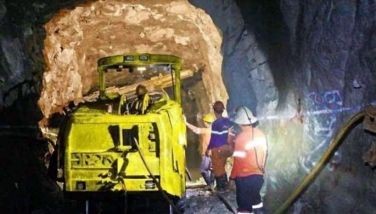
Now comes Uncle Sam with the gem of an idea not so much to help us get on with digital age manufacturing but to establish an alternative supply chain to China for critical products with national security implications like artificial intelligence (AI), semiconductors and critical minerals.
They call it Pax Silica, a US-led international coalition launched in December 2025 to build a network of allies to include the US, the Philippines, Australia, Greece, Japan, South Korea, Singapore, Israel, Qatar, UAE, India, Sweden and the United Kingdom.
The idea is to create a resilient “silicon” supply chain from mining to AI infrastructure, in a bid to reduce reliance on manufacturing and technology inputs from potentially hostile governments.
The US and the Philippines announced that the pilot project is a 1,618-hectare “Economic Security Zone” in Clark New City to serve as the initial hub for AI innovation under Pax Silica.
If we ever get this going, which I doubt, it would be a welcome sign that we are finally moving. We will have an important role in the rapidly evolving AI and semiconductor landscape, much to our surprise.
To me, the only way this experiment will work for our benefit is if it is implemented outside of our usual laws that have been proven useless, even detrimental in attracting investors. If all we can offer is another PEZA-type operation, investors will say they have heard that story and it is not good enough.
Putting this development in a special class beyond the reach of our usual regulatory agencies and courts will raise howls from the usual suspects that we are surrendering our sovereignty. I think this is a very narrow and outdated way of viewing it.
China and Vietnam allowed Singapore to manage special economic zones which jumpstarted their industrial growth. They didn’t worry about losing sovereignty because in reality they didn’t. And they learned a lot from the Singaporeans.
The promise of this Pax Silica concept is too important for us to waste again. It is projected to initially generate up to $100 billion for the local economy.
Though sponsored by the US and its partner governments, the private sector serves as the engine for implementation and investment. The private sector is expected to provide the bulk of the capital.
The newly launched Pax Silica Fund aims to catalyze trusted capital from large sovereign wealth and private sources, which control over $1 trillion in assets.
Private firms will anchor the new industrial hubs, managing the actual semiconductor design, fabrication, packaging and data infrastructure.
Major private players — including companies like Sony, Samsung, ASML and DeepMind — are the actual developers and manufacturers within the supply chain.
Governments will provide the strategic framework, legal security and physical infrastructure necessary for the initiative to function. It has to be governed differently if it is to work as envisioned.
The zone will utilize internationally enforceable contracts, transparent regulatory standards and expert dispute resolution to bypass traditional bureaucratic “red tape.”
Unlike standard economic zones that often require navigating multiple LGU permits, it will have a consolidated regulatory environment. The goal is to provide a “single window” for all approvals, effectively insulating the zone from local political patronage.
Pax Silica will also use “internationally enforceable contracts.” This creates a layer of legal certainty, providing a buffer against the inconsistent application of local laws.
Disputes will be typically settled via international arbitration (e.g., in Singapore or the US) rather than in Philippine Regional Trial Courts. These international rulings are binding and enforceable under the New York Convention, which the Philippines has ratified. This forces the local executive branch to honor the decision even if a local court attempts to interfere.
And the use of the arbitration process is not new to us. We have been using it for years and the water concessionaire contracts are good examples.
One other thing… it will be in a part of Clark where nothing much is happening anyway. So, what do we have to lose?
I have long advocated asking Singapore to take one of our islands and convert it to an economic zone like what they did in China and Vietnam. That would show us why we have failed so we can copy their winning formula.
I believe we should give Pax Silica a chance to work. Banish old thinking about losing sovereignty because oversensitivity to this issue has kept us poor and underdeveloped compared to regional peers.
To see is to believe but put skepticism aside for now. It is a chance we shouldn’t waste again.
Boo Chanco’s email address is [email protected]. Follow him on X @boochanco



- Latest
- Trending