‘Corruption scandal won’t derail Philippines economy’

MANILA, Philippines — The Philippines’ widening corruption scandal is unlikely to cause a lasting impact on economic growth, but risks are rising that the Marcos administration could resort to populist measures to quell public unrest, according to the UK-based research firm Capital Economics.
In its Asia Economics Update, Capital Economics said the ongoing graft probe linked to flood control projects may disrupt certain sectors in the near term, but it is not expected to derail the broader economy.
“The ongoing investigation into corruption in the Philippines brings the risk of further protests over the coming months. So long as any unrest is limited in scale and duration, the economic and financial market impact is likely to be limited,” Jason Tuvey, deputy chief emerging markets economist at Capital Economics, said.
He said the limited evidence so far suggests that there may have been some impact on activity in the Philippines from the recent protests, with the purchasing managers’ index falling sharply in July and remaining below 50 in August.
“The experience from across the emerging world shows that there is no mechanical link between social unrest and economic and financial market performance,” Tuvey said. “But, so long as unrest is limited in scale and duration, there is unlikely to be a lasting blow to gross domestic product.”
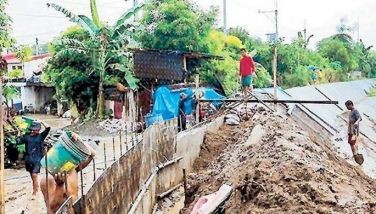
The Philippines has been rocked in recent months by a corruption scandal centered on flood control projects, which came to light after severe flooding hit Luzon, including Metro Manila.
So far, authorities have frozen P4.2 billion ($72 million) worth of assets linked to the case, including 1,600 bank accounts, 160 vehicles and 40 properties.
Still, the bigger concern lies in how the government responds to growing anger over corruption. “The bigger risk is that, similar to Indonesia, the government turns to populist policies in a bid to appease protesters, resulting in higher risk premia on Filipino assets,” Tuvey said.
He warned that such a policy shift could lead investors to demand higher risk premiums on Philippine assets. “The large current account deficit leaves the peso particularly vulnerable to downward pressure.”
Capital Economics said measuring corruption remains difficult. Transparency International’s Corruption Perceptions Index ranks the Philippines below most major Asian economies.
Meanwhile, the World Bank’s 2023 Enterprise Survey found that only eight percent of firms experienced bribery requests, which is “below other parts of Asia and far below the levels recorded in previous years.”
However, there are many channels through which corruption influences the decisions of firms, households, and the government





- Latest
- Trending