Good news for pilots

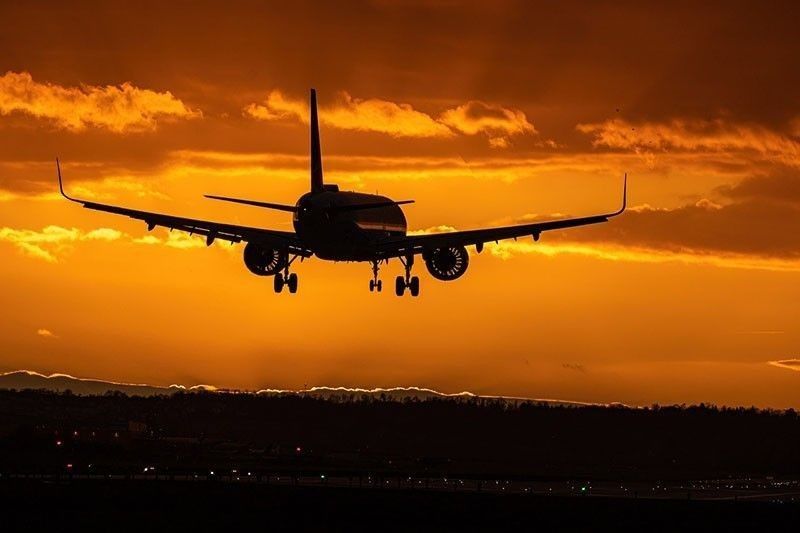
Filipino pilots and those aspiring to be pilots may soon have reason to rejoice following new proposals from the International Air Transport Association (IATA), at the forthcoming 42nd Assembly of the International Civil Aviation Organization (ICAO) meeting in Montreal, Canada from Sept. 23 to Oct. 3 this year, to extend the retirement age of pilots from 65 to 67.
Under the proposal for pilot age limits on multi?pilot international flights under ICAO Annex 1 (pilot licensing rules), airline pilots on multi?pilot international operations must retire at 65. IATA is supporting lifting the multi?pilot age limit to 67, while retaining the existing cockpit safeguard of at least one pilot under 65, and pairing the change with stronger, standardized medical oversight.
The higher age retirement proposal, according to IATA, reflects longer, healthier careers while keeping safety safeguards in place.
IATA is asking member states to approve the increase to 67 for multi?pilot international operations, with the “one?under?65” rule maintained, existing medical frequency preserved (e.g., six?monthly over 60), and no change to the single?pilot limit.
The proposal includes setting up a standardized medical risk?assessment and oversight system, using a common, privacy?respecting dataset (e.g., medical certificate actions, reasons for retirement/non?renewal, in?flight incapacitation events) to monitor age?related risks consistently across states.
Likewise, the proposal agrees on the issuance of joint guidance (medical, licensing and operations) so implementation is uniform, auditable and aligned with safety management best practice.
The proposal to extend the retirement age of commercial pilots most likely takes into consideration the high cost of training commercial pilots.
In the Philippines, the training cost to become a commercial pilot and secure a commercial pilot license or CPL can range from P3 million to P5 million. The initial training would involve ground school and flight hours to learn both theoretical knowledge and practical flight time in small aircraft.
A pilot candidate with no experience needs a comprehensive program to learn instrument rating (IR) and multi-engine rating (ME). Additional costs would include expenses for uniforms, books and licensure exams. Other expenses would include personal living expenses, such as for food, accommodation, transportation and other personal needs.
Additionally, aside from the CPL, aspiring pilots who want to fly larger commercial aircraft and other types of commercial planes with a different type of rating will have to spend another P1.5 million.
At the Montreal ICAO meeting, member states will tackle 14 working papers authored by IATA covering a wide range of topics for the assembly’s consideration.
According to Willie Walsh, IATA director general, safety, sustainability and efficiency will be the top of the assembly’s priority list. “It is critical that we secure stronger support for SAF production and CORSIA as key enablers of aviation’s commitment to achieve net zero emissions by 2050. Equally, we need an agreement to follow the principles and provisions of the Chicago Convention to avoid patchworks of debilitating tax measures and passenger rights regulations. And we must shore-up safety with timely accident reports, mitigations for GNSS interference and preservation of critical radio-frequency spectrum.”
Global standards, many of which are developed by governments through ICAO, are crucial for safe, efficient and increasingly sustainable aviation operations worldwide. These standards are developed with the expertise and input of airline operators worldwide working with ICAO member states. The ICAO Assembly is a once-every-three-year opportunity for states to align on ICAO’s work program as it addresses aviation’s most pressing issues.
Most topical among the papers IATA has submitted are targets for SAF use set by the ICAO Conference on Aviation and Alternative fuels (CAAF/3), which should be reviewed by states to take into consideration the price-raising consequences of setting mandates without the anticipated increase in SAF production.
IATA is asking members states to support its efforts to create a functioning SAF market and to step up economic incentives for fuel producers for SAF production, as well as make timely policy interventions to address anomalies.
IATA is also asking member states to reaffirm their commitment to making the Carbon Offsetting and Reduction Scheme for International Aviation (CORSIA) a success as the only economic measure to manage aviation’s climate impact. CORSIA was agreed by states at the 39th ICAO Assembly (2016) to be the sole economic measure to address aviation’s global carbon emissions. CORSIA is expected to generate up to $17 billion in climate finance by 2035.
However, states continue to create or augment aviation taxes and schemes (national and regional) that undercut CORSIA’s credibility, and which do little or nothing to further sustainability.
Another concern of IATA that will be contentious for air travelers and consumer protection advocates is their stand on consumer protection, arguing that in recent years several governments have been considering and implementing consumer protection regulations for air travelers. In many cases these have deviated from ICAO’s Core Principles on Consumer Protection which support alignment with global standards (Montreal Convention 1999, for example), respect proportionality and take into consideration exceptional circumstances of mass disruption.
Arising from this, IATA argues, “we have a patchwork of regulations that conflict with each other and confuse travelers. Moreover, although disruptions have many sources, there is no shared accountability for traveler inconvenience and airlines bear the brunt of increasingly onerous regulations.”
IATA instead asks for the development of supplementary guidance to globally align on definitions of extraordinary circumstances, smooth discrepancies among jurisdictions, share accountability among stakeholders and consider the specific challenges of mass disruptions.





- Latest
- Trending