Economists weigh in on Trump’s 20% tariff
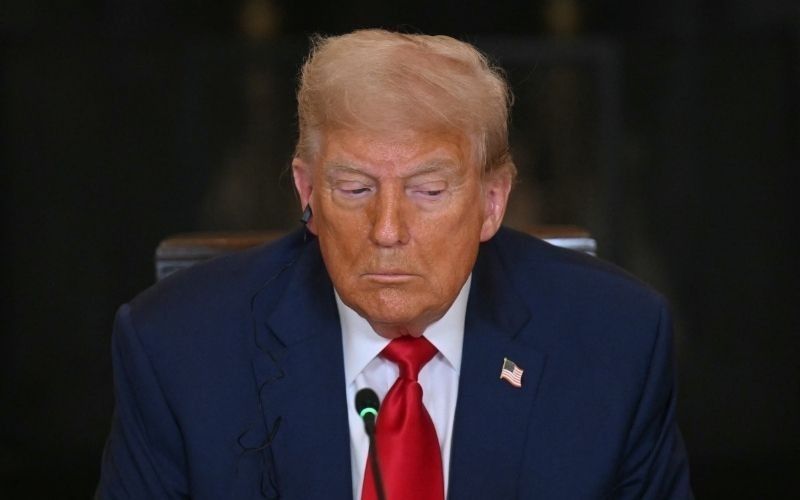
MANILA, Philippines — The Philippines may be “less affected” by US President Donald Trump’s decision to slap a 20 percent tariff on all Philippine exports, although uncertainty surrounding the policy is likely to weigh on investor sentiment and delay growth-related decisions.
“There’s so much unpredictability,” Rizal Commercial Banking Corp. president and CEO Reginaldo Cariaso said in an interview.
“It’s unprecedented how tariffs are being used as a tool by the Trump administration. We’ll have to see how this evolves after Aug. 1, but I do think the Philippines will be less impacted than other countries,” Cariaso said.
Starting Aug. 1, the US will impose a 20-percent general tariff on all Philippine exports to the US. This was higher than the 17 percent reciprocal tariffs previously announced last April.
While Cariaso admitted that the situation remains fluid, he noted that the country’s relatively low exposure to high-tariff categories might serve as a buffer against the worst effects of a protectionist policy shift in the US.
On the downside, local exporters that sell to the US market could see demand shrink as their products become more expensive due to higher tariffs. This could force companies to pivot to alternative markets such as Canada, Europe or South America, depending on their strategy.
“Some companies may find other markets to redirect to, but it really depends on whether they have the capacity and supply chains in place to do that,” Cariaso said.
He pointed to a possible upside: if other countries such as Vietnam face higher tariffs, the Philippines could become more attractive as a manufacturing base, especially for industries where the country already has existing capacity, such as electronics or textiles.
The tariff for the Philippines is lower than neighboring Southeast Asian nations such as Indonesia at 32 percent, Thailand and Cambodia at 36 percent and Laos and Myanmar at 40 percent.
“There could be a net benefit for the Philippines,” he said. “But for more complex manufacturing like semiconductors or autos, we’re not quite there yet.”
Cariaso added that the broader uncertainty might lead businesses to postpone expansion plans.
“Because it’s wait-and-see, businesses will delay investments in growth unless they’re absolutely certain it’s an opportunity,” he said.
On the macroeconomic front, Cariaso said the tariff risk could fuel inflationary pressures, which in turn may limit the Bangko Sentral ng Pilipinas (BSP)’s ability to cut interest rates.
“There are different views, but it could cause inflation,” he said.
So far, however, the BSP has maintained a dovish stance, signaling room to further cut rates in the second half on the view that inflation remains manageable.
“The BSP is advocating growth,” Cariaso said. “They did that by lowering banks’ reserve requirements and by telegraphing rate cuts. Overall, they’re supportive of growing the economy.”
John Paolo Rivera, senior research fellow of the Philippine Institute of Development Studies, said the tariff hike could result in job losses, as Filipino business exporters may be forced to reduce production if they fail to secure alternative export markets.
“It raises the cost of Philippine goods in the US market, threatening our competitiveness and potentially reducing export earnings and job opportunities in key sectors,” he told The STAR.
“Regarding inflation, it’s the US that will likely be affected as products from the Philippines will become more expensive. The direct impact on us will be on employment. Exporters might cut down on production due to higher costs, especially if their only market is the US,” Rivera said.
Data from the Philippine Statistics Authority (PSA) showed that the US is the Philippines’ largest export market in May, with goods valued at $1.1 billion, representing 15.3 percent of the country’s total exports.
Rivera also said the Department of Finance must position the Philippines as a viable investment destination and a reliable trade partner, through prioritizing ease of doing business, advancing economic liberalization and providing support for exporting enterprises.
“Other economies like Vietnam, even if the tax rates are the same, they are more advanced than us in terms of logistics (and) ease of doing business,” Rivera said.
“So we have to attack it not directly, not on a revenue generation basis, but on the system that will allow foreign investors to still look at the Philippines as a better investment destination,” the economist said.
According to Rivera, it is high time for the government to consider restarting negotiations with the US, particularly to seek exemptions for critical products like agricultural goods and semiconductors.
In its commentary, research and advocacy group IBON Foundation said the US decision to impose a higher tariff exposed the weakness of an export-driven, foreign-led economy.
Thus, it said it is high time for the Philippines to craft a self-reliant trade strategy and reduce its dependence on foreign partners.
IBON Foundation executive director Sonny Africa said the increase from 17 percent in April to 20 percent underscored the need for a more assertive and self-reliant trade strategy.
“While maintaining good relations is important, this development highlights that we must prioritize building domestic purchasing power and a robust Filipino industrial base that makes the country less vulnerable to abrupt external policy shifts,” Africa said.
Instead of appeasing US trade demands, the economist argued that the government must reorient its economic policies.
This could be done by developing strong domestic production and Filipino industrial firms, reasserting state regulation and breaking free from overdependence on foreign capital and markets.
Africa maintained that a government that charts an independent economic path for the Philippines is long overdue.
He said the government must tell the public what exactly the US wants from the Philippines in exchange for lowering its tariffs.
“The latest tariff hike on the Philippines just puts the already strong US on even stronger negotiating ground in any upcoming talks,” he said.
Meanwhile, the country’s exporters are calling for government support as they brace for the impact of the 20 percent tariff, while the government prepares to negotiate for a lower levy and review the higher rate’s economic implications.
Philippine Exporters Confederation Inc. president Sergio Ortiz-Luis Jr. said in a telephone interview yesterday that the higher tariff calls for greater government support for exporters.
Ortiz-Luis said the country’s exporters have not been given enough attention, as the sector has received little to no support for research and development and marketing compared to the country’s neighbors.
“I think the government should improve the development of the exports sector,” he said, noting the need to allocate greater funding to support the sector.
He said there is also a need to diversify the country’s export markets.
The US is the Philippines’ top destination for exports, accounting for 17 percent of the total last year.
For his part, Foreign Buyers Association of the Philippines president Robert Young said the US’ move to impose a higher 20 percent tariff on the country’s exports “is very heartbreaking.”
Apart from negotiations with the US to reconsider the 20 percent tariff, he said the government should provide more support to improve production capabilities and ease of doing business so that Philippine exporters will remain in the radar of US buyers.
“We need the assistance and subsidies of the government very urgently,” he said.
Philippine Chamber of Commerce and Industry president Enunina Mangio said the higher tariff calls for greater support for local industries by increasing the budget for research, development, technology and market intelligence.
“To remain viable in a shifting global market, we must accelerate investments in automation, logistics and workforce upskilling,” she said.
Trade Secretary Cristina Roque told reporters yesterday that she will be going to the US with Special Assistant to the President for Investment and Economic Affairs Frederick Go and Trade Undersecretary Ceferino Rodolfo next week to discuss a lower tariff with counterparts.
She said the Philippine delegation will also meet with the economic team to discuss measures to cushion the impact of the tariff on the country’s exports and the economy.
Department of Economy, Planning and Development Secretary Arsenio Balisacan told The STAR that the agency would be reviewing the impact of the tariff imposed on Philippine exports on the economy.
“We’re revisiting our earlier analysis, given the many recent changes, including the new tariffs imposed on our Asian neighbors,” he said.
Moody’s Analytics economist Sarah Tan said the US decision to raise the tariff on Philippine goods to 20 percent is expected to have a material impact on the Philippine economy in the short to medium term.
A higher tariff rate will erode the price competitiveness of key export products, especially electronics, garments and agricultural goods which the US is a large buyer. Lower export volumes will likely slow manufacturing output and weigh on overall GDP (gross domestic product) growth,” she said.
She said the extent of the impact will depend on how long the tariff measures remain in place and how quickly exporters can adjust.
To navigate this, she said the government should prioritize negotiations to bring tariffs back down, while exporters should accelerate market diversification.
Foundation for Economic Freedom president Calixto Chikiamco said the higher tariff rate would have a negative effect on exports to the US and the country’s growth.
“To mitigate the impact, the government should consider weakening the peso and gaining competitiveness against other Asian countries,” he said.





- Latest
- Trending