


Mayani Philippines banks on pre-cooling facilities
To cut vegetable waste
MANILA, Philippines — We have seen it time and again: a typhoon strikes, vegetable prices spike, farmers plant anew and harvest in a week or two.
And then what? Prices freefall to the point that sacks of tomato or cabbage are literally given away for free.
One may wonder if there will ever be a solution to this perennial supply woe of the agriculture sector.
For up-and-rising agriculture technology firm Mayani Philippines, the answer is in Celsius – it is the temperature.
The tropical climate of the Philippines makes fresh produce harvest vulnerable to weather-induced wastage.
For example, Mayani Philippines co-founder and CEO JT Solis explained that tomatoes are “literally” cooking themselves upon harvest with their temperature reaching 40 degrees Celsius.
With tomatoes being scorched, farmers run the risk of incurring losses as their freshly harvested produce goes to waste.
As much as 40 percent of vegetable farmers’ produce is wasted after harvest due to various post-harvest issues, including unfavorable climatic conditions.
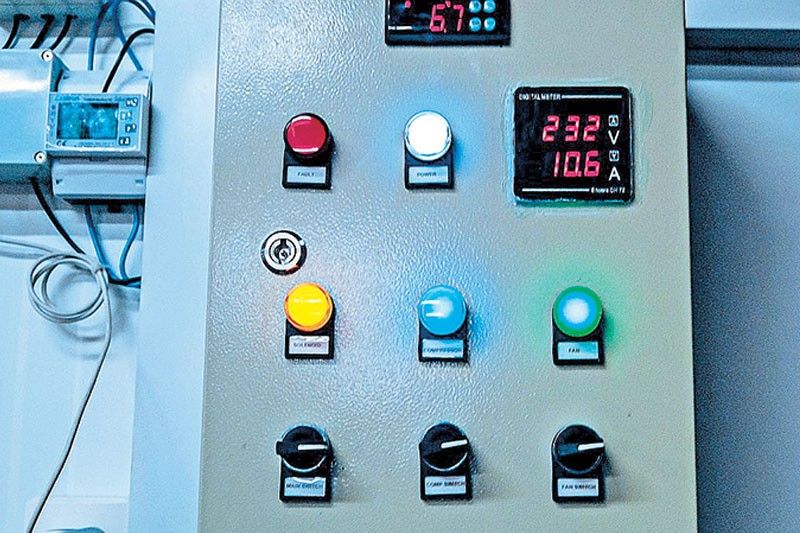
To help address this issue, Mayani is embarking on a project that will build pre-cooling facilities in key food-producing areas nationwide where the company has partner-farmers.
As a start, the firm is building two pre-cooling facilities that are set to be operational by the second quarter.
Solis said that one pre-cooling facility would be constructed in Benguet to serve highland vegetables while the other one will be established in Batangas to serve lowland vegetables.
Each facility will have a capacity of 15 to 20 metric tons, Solis said.
The pre-cooling facilities, Solis explained, will bring down the temperature of their partner-farmers’ freshly harvested vegetables to the ideal temperature that would prevent spoilage and wastage.
This will buy farmers some time before the reefer vans arrive to pick-up and transport their produce to key markets in the country, he added.
The set-up will increase the farmers’ available produce that they can sell in the market, thus boosting their income and improving food supply for consumers. This will also translate to more stable or even more affordable food prices for consumers because of additional supplies that would have gone into waste otherwise.
“Agriculture has a multitude of problems. The biggest problem we’ve seen so far that’s very practical is actually post-harvest cold logistics,” he said.
“I think it is an underinvested part of the agriculture value chain. It gets less attention,” he added.

Solis emphasized that the pre-cooling facilities have become more critical than ever given the high heat indices that the country is experiencing today.
“The general aim is to lessen post-harvest losses and be able to save crops from rotting and be able to increase rural income for farmers,” he said.
Solis makes the math simple: if farmers will salvage 20 percent of their produce from wastage, then their income will increase by the same rate.
Mayani will not charge its partner farmers of any fees once the pre-cooling facilities become operational as long as they follow the necessary post-harvest protocols, Solis said.
Solis pointed out that it is imperative to find solutions to the problem of the vegetable industry to make the much-needed commodity more affordable to Filipino consumers. This, he noted, will help consumers, especially children, gain necessary nutrients and vitamins to prevent stunting and wastage.
The pre-cooling facilities are financed using the $1 million fund unlocked by Mayani through a catalytic funding mechanism.
Mayani secured $SGD250,000 in catalytic capital last year from Temasek Trust and its ecosystem entities such as Centre for Impact Investing and Practices and Philanthropy Asia Alliance.
The funding was used by the firm to build a 25-MT cold room in its Mandaluyong headquarters. Following its construction, Mayani was able to access the “crowded-in” capital of $1 million that it is using now to finance its pre-cooling facilities.
Mayani is also in discussions with the Department of Agriculture (DA) for possible areas of collaboration, particularly in terms of logistics.
Earlier this year, the DA said it is spending P3 billion to build around 99 various cold storages that would help extend the shelf life of locally-produced crops, ensuring the country’s food supply and stabilizing commodity prices in the market.
“We also have a very big move on the logistics – 30 percent of our produce, especially of vegetables, is gone because of wastage because of the poor logistics system in our food supply chain,” Agriculture Secretary Francisco Tiu Laurel Jr. said.
“If we can lessen, or hopefully almost eliminate, those losses, that will be equivalent to at least 10 to 15 percent less cost for our vegetables and high-value crops like fruits,” Tiu Laurel added.
Furthermore, Solis noted that Mayani’s growership mechanism, wherein farmers enter into long-term supply agreements with them, shielded vegetable farmers from recent market risks.
For example, farmers cultivating tomatoes did not need to endure a price of P4 per kilo for their produce in their recent harvest. Solis said Mayani bought their partner-farmers’ produce at a price based on their production cost plus 30 percent premium.
“It is based on the farmers’ production costs, not on market risks,” he said.
Mayani seeks to boost farmers’ incomes while providing consumers with more affordable fresh produce by building a “sustainable” market access for both players.
The company partners with the country’s largest supermarket chains, food brands, international hotels, food processors and other institutional players in the country.
Some of the brands that the company has partnered with are Puregold, Robinsons, MerryMart, Hilton, CafeFrance, Sukiya and Manila Doctors Hospital.
“We envision a Philippines where smallholder farmers and fisherfolk lead better lives because of technology, community, and an overarching passion to cultivate positive impact,” the company said.




- Latest
- Trending


