National heroes, yesterday and today
Tomorrow, Aug. 31, the nation celebrates National Heroes Day (NHD). This should be more than just remembering famous names, historical figures and stories from the past – but a moment for Filipinos to reflect on the sacrifice, courage and patriotism of persons we can call heroes. However, the deeper purpose of NHD should not simply be to remember the dead. It is to understand why these people were willing to sacrifice for the kind of country they dreamt of creating. And whether the generations that came after them have continued the values for which they fought.
NHD should not be treated as just another holiday. It should be understood also as a conversation between the past and the present. Let us imagine what the heroes of yesterday are asking the Filipinos of today: what has the present generation done with the freedom and opportunities that their sacrifices have made possible?
Heroism is commonly associated with extraordinary bravery, particularly in situations involving danger or sacrifice. A hero is often imagined as someone who saves lives, fights enemies, leads revolutions or gives his/her life for a greater cause. But if heroism is understood only in this way, it becomes something distant from ordinary people.
Most Filipinos will never lead a revolution or fight a war. Does that mean they can never become heroes? The answer is No. Heroism may also be seen as the willingness to place something greater than one’s self above personal comfort, fear, safety or interest. It is the courage to act when remaining silent would be easier. It is the willingness to sacrifice when selfishness would be more convenient. It is the decision to serve others even when there may be no reward.
Heroism therefore begins with a choice, choices that we can see almost on a daily basis. There are events that we witness around us about people who make choices.
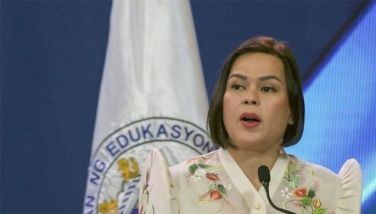
On a daily basis, for example, we can witness the impeachment trial of Vice President Sara Duterte by the Senate. I have watched this whenever I can and am impressed by the act of volunteerism of prosecution lawyers who have offered their services pro bono.
Two individuals, in particular, have impressed me and these are Lorna Kapunan and Mae Divinagracia. Kapunan is a public celebrity who gets involved in well-known cases and is a highly acknowledged litigator. The lawyer of the defense panel in fact publicly said during the trial that she had very high respect for Kapunan, who is also her idol.
Divinagracia has impressed everybody with her calm demeanor and her habit of holding a “comfort Cross” during litigation. Both these lawyers are, to my mind, heroines in this impeachment trial.
In contrast, senator-judge Alan Peter Cayetano has spent most of his time perceived to be defending the defendant. His sister, Pia, has spent a lot of time in turn, defending her brother Alan Peter Cayetano.
On the other hand, senator-judge Robinhood Padilla has tried to insert himself in the discussions. However, as far as I am concerned, he is neither hero nor villain. He, however, provides comic relief to an otherwise understandably tense situation.
During the medieval period in the European courts, a court jester would provide comic relief. So therefore, court jesters also play a role.
A nation can be politically free while still struggling with poverty, corruption, inequality, exploitation, misinformation and abuse of power.
The enemies of the past were often visible. They had uniforms, positions of authority, institutions and systems that could be identified. The enemies of the Filipinos in the present times could be much more complicated, as some problems are embedded in institutions, culture, economic structures, political practices and even in the behavior of ordinary citizens.
Some of the enemies of the Filipino today may actually be government officials or well-known business figures and celebrities.
The modern Filipino may not be asked to fight an invading army, but they may be asked to fight dishonesty and abuse of power.
They may not be asked to join a revolution but they may be asked to resist corruption.
They may not be asked to sacrifice their lives for independence but they may be asked to sacrifice convenience in order to help another person.
They may not be asked to write revolutionary novels like Dr. Jose Rizal but they may be asked to defend truth in an environment where disinformation spreads so easily.
It may not have disappeared but the battlefield of heroism has simply changed. Today’s acts of heroism can take place in a classroom where a teacher struggles with meager resources to continue teaching; or a hospital where a nurse or doctor continues caring for patients in rural areas where health resources are scarce; a government office where an employee refusing to accept a bribe is a demonstration of courage; a journalist who continues searching for truth despite intimidation.
The greatest way to honor the heroes of the Philippines is not merely to remember their names but to live in such a way that future generations will have reason to remember ours.




- Latest
- Trending