Who should be the next president of the Philippines?
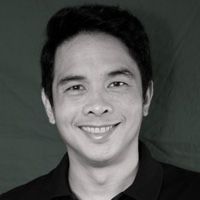
On Aug. 20, 2025, the President of the Philippines stood on a riverbank in Barangay Piel, Baliwag, Bulacan. Public Works records said a 220 meter river wall had been built there for P55.7 million, finished on June 30 and paid. In front of him was the river and nothing else. “Kahit isang araw hindi nagtrabaho,” he said. Not even one day of work. The district engineer later told a House hearing that he had signed the completion certificate without inspecting the site.
Bulacan floods every rainy season, and some of its towns sit in water for weeks. The families there, like families everywhere, pay about P4 of every P10 of their medical bills themselves. The wall that was never built was supposed to protect them. The money that paid for it came from them.
Remember that riverbank. It explains our economy better than any lecture.
Multiply the wall. Between July 2022 and May 2025 the government spent P545 billion on flood control. Fifteen contractors took a fifth of it. By October 2025, inspectors had checked 8,000 projects and found 421 that did not exist. The central bank governor says growth last year would have been 4.7 percent instead of 4.4 without it.
Now go back to 1960. That year the average Filipino earned $269, more than the Malaysian and far more than the Korean, who earned $159. Today the Korean earns about $36,000, the Malaysian $13,000 and the Filipino about $4,200. Even Thailand and Indonesia have passed us. This was not bad luck. For 60 years we were out governed, and the riverbank in Baliwag shows how.
The 2026 budget is P6.8 trillion, and P950 billion of it goes to interest on debt, more than the entire health and social welfare budgets combined. The national debt is now about 66 percent of GDP, the highest in more than two decades. We borrow to fund the leak, pay interest on the leak, then borrow again. The deficit and the corruption are not two problems. They are one problem seen from two sides.
Korea, Malaysia, Indonesia and India were all corrupt while they grew. The difference is what the bribe bought. There, corruption was a tax on production. A firm paid for its permit, then built the factory, hired the workers and exported. Here, corruption became a substitute for production. The money is made inside the budget itself: the insertion, the ghost project, the contractor who is also the legislator. When the surest road to wealth runs through the budget, talent goes into politics, not enterprise. Manufacturing is 15 percent of our economy, against 27 percent in Korea. We consume, we remit, we import. We do not build.
Nor is the private sector innocent. The 50 richest Filipinos are worth $79 billion, about a sixth of GDP, and those fortunes sit in power, water, telecoms, ports, malls and banks, where the decisive asset is proximity to government, not a better product. Our startups raised $119 million last year, two percent of Southeast Asia’s total. A country that exports the region’s best nurses and engineers cannot grow a hundred companies that matter. That is a sign of closed doors.
Then there is the money Congress steers. Activists count nearly P700 billion in the 2026 budget that individual legislators inserted for projects of their choosing, parked in district engineering offices and soft programs. That is the real power of Congress: not what it spends on itself, but what it gets to decide for everyone else.
So what does the job take? An operator. Someone who treats the budget as the country’s most important moral document and defends it line by line. Someone who publishes every project, proponent and contractor on the day it is funded, so the next ghost wall is caught by a barangay captain with a phone, not by a president with a motorcade. Someone who takes the champions and the new companies public on the exchange, so that Filipinos own what gets built and a million small shareholders with audited books police what no regulator can.
Korea did not get rich by eliminating corruption first. It got rich by making production more profitable than plunder. That is the whole job. And here is the hopeful part: everything the job needs, we already have. We have the workers. The world hires them every day. We have 1.2 million registered firms. We even have the money. Those P700 billion of insertions are roughly our health and social welfare budgets combined. We will not stop the leak in one term. But we can shrink it and point the pipe at the people, at a few programs big enough to carry the next generation: a well-fed child in its first thousand days, a teacher in every classroom, a clinic that treats you before it asks how you will pay.
Lee Kuan Yew said a nation is made great not by its size but by the will and cohesion of its people and the quality of its leaders. Nobody doubts the will of Filipinos, or our cohesion. Every typhoon proves it: the neighbor with the boat, the stranger with the rope, the barangay kitchen that feeds a street. What the people need is leadership of the same quality. That is the vote in 2028.
So who should be president? Not the most popular. We have tried popular. Not the strongest. We have tried strong. The most responsible: the one who checks the wall before signing the check. The Filipino was never the problem. Give the builders a fair field, and watch what this country does.


- Latest
- Trending