Investing in Philippines, one project and one churro at a time

Whenever I encounter a piece of Spanish culture in my hometown here in Manila – whether it may be through architecture, language, family traditions or even food, I am reminded that the relationship between the Philippines and Spain is not confined to history books. It lives on in our everyday experiences.
This connection runs close to home. My father’s roots, I was told since I was a child, came from the Basque region of northern Spain, a land of hardworking people, strong families and a proud seafaring tradition.
The Basques have held on to their identity for centuries, and their language – Euskara – is among the oldest in Europe.
My family name can still be found there, a humbling reminder that our story began long before us and crossed oceans to reach the Philippines.
That is why, when Spain and the European Union announced their support for the Luzon Economic Corridor (LEC), it felt like more than a headline to me. It was a reminder that a relationship centuries-old can still open doors for both nations.
The LEC, linking Subic, Clark, Manila and Batangas, is meant to draw investment in transportation, energy, digital infrastructure, advanced manufacturing and logistics. Spain and the EU bring what the project needs: technology, capital, expertise and global business networks.
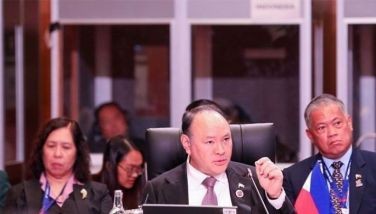
Finance Secretary Frederick Go described the move as a strong vote of confidence in the Philippine economy. That matters at a time when nations are competing fiercely for investment and strategic partnerships. Infrastructure is no longer just about roads and ports. It is about building ecosystems that attract industries, create jobs and strengthen the country’s competitiveness.
Spain’s participation is especially welcome as the country committed to support projects through technical assistance, financing and private-sector partnerships.
The EU, meanwhile, intends to support LEC through its Global Gateway initiative, pushing renewable energy, digital connectivity and other critical infrastructure projects.
These commitments of EU and Spain represent a meaningful step toward translating plans into concrete investments.
The prospects presented by the LEC also extend to the country’s natural resources sector. As Mike Toledo, chairman of the Chamber of Mines of the Philippines, observed and told me, “The Luzon Economic Corridor presents an opportunity to connect the Philippines’ mineral resources with the infrastructure, energy, technology, and manufacturing capabilities needed to develop a stronger domestic critical-minerals value chain.”
Philippines is rich in mineral resources, but the challenge has always been converting those into higher-value economic activity.
“Our country should be able to translate this opportunity into viable investments, with reliable infrastructure, a competitive business environment, and firm commitments to environmental protection and community development,” Toledo further said.
Yet the story of Spain and the Philippines are not only about infrastructure and investments. They are also about people and culture.
I was reminded of this recently, in a chance encounter at The Podium with Shaan Chainani, owner of San Ginés, the iconic Madrid institution that recently opened its first Asian flagship in Manila. As we spoke, I found myself marveling at the food it serves, especially the churros.
What struck me about it is that the churros that generations of Madrid residents have had since 1894 can now be enjoyed here in the Philippines, with the same authenticity.
Beyond the food, I was even more intrigued by Chainani’s explanation of why Filipinos continue to embrace Spanish cuisine and culture.
“Filipinos and Spaniards share a natural warmth and hospitality,” he said. “Both cultures value family, gatherings, and bringing people together over food, often with dishes meant to be shared. I think Filipinos also enjoy the balance Spanish cuisine offers – comforting flavors alongside something new to discover.”
Does our shared history contribute to Filipinos’ appreciation of Spanish cuisine I asked? Chainani offered a thoughtful perspective. “I think our shared history gives us a connection, but the two cuisines have also developed in their own distinct ways. There are similarities in the importance of family meals and gatherings, but there are differences in how people eat. Spanish cuisine is often built around bread, while rice is central to Filipino meals. Spanish dishes can be clean and ingredient-led, while Filipino cooking often embraces richer sauces and rice-based dishes. I see those differences as a wonderful opportunity to bring the two cultures together while respecting what makes each one unique.”
Equally encouraging was his confidence in the Philippine market. He revealed plans to continue expanding San Ginés, beginning with Rockwell and exploring other concepts that can connect global experiences with local customers. That optimism mirrors the confidence that Spain and the EU are showing in the country’s future.
In many ways, the Luzon Economic Corridor and San Ginés tell the same larger story. One is about infrastructure and economic development. The other is about culture, traditions and yes, food. Yet both are built on relationships and shared experiences.
Spain and EU’s support for the corridor is good news for the economy and a testament to shared history. Agreements like this are signed in boardrooms, but I also believe they last when the commitment is deep.
I saw a small example of that over a plate of churros.





- Latest
- Trending