‘Solar reserve’ pitched as additional shield vs oil crisis
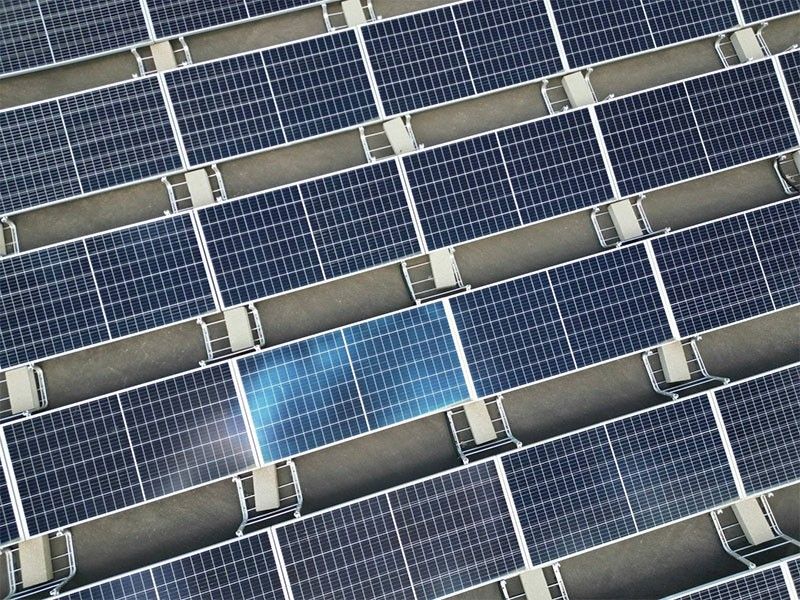
MANILA, Philippines — Beyond the proposed strategic petroleum reserve, the government should also fund rooftop solar rollout to strengthen energy security and buffer the Philippines from global oil shocks, an industry group said.
The Philippine Solar and Storage Energy Alliance (PSSEA) is calling for greater focus on solar power to help reduce the country’s reliance on imported oil for electricity generation.
“We’re saying that a solar reserve should be developed, not an oil reserve,” PSSEA chairperson Tetchi Capellan said in an interview.
While a strategic oil reserve would require continuous funding to replenish stockpiles, Capellan stressed that rooftop solar would involve only a one-time government subsidy.
“Put them (solar panels) on your roof, and in 25 years, they will keep generating. There are no operational expenses,” she said.
Amid the raging Middle East war that has raised supply risks and triggered price shocks for the import-dependent Philippines, a strategic oil reserve is being pushed as a buffer to provide at least 30 days of fuel security during disruptions.
While plans remain in the early stages pending feasibility studies, Energy Secretary Sharon Garin said the government-controlled reserve is intended to complement fuel inventories currently maintained by private oil firms.
A strategic petroleum reserve is an emergency stockpile of crude oil and refined products held by the government, private entities or both.
It is released during supply disruptions caused by geopolitical conflicts, natural disasters or global shocks to stabilize supply, moderate prices and ensure fuel availability.
In Congress, Senate Bill 1934, or the proposed Philippine Strategic Petroleum Reserve Act, seeks to establish an even larger government-managed stockpile equivalent to at least 90 days of the country’s average fuel consumption.
The measure, filed by Sen. Vicente Sotto III, provides that funding for the program will come from the Department of Energy’s budget.
Against this backdrop of renewed energy security concerns, Capellan argued that the crisis makes an even stronger case for accelerating the country’s transition to solar.
“What is the possibility of electricity prices dropping? At best, they will stay the same and eventually increase. So solar will be an alternative solution,” the PSSEA chairperson said.
Around 87 percent of Filipinos are now considering installing solar panels at home amid soaring electricity prices and recurring outages, according to a report by market research technology firm Agile Data Solutions Inc.
A separate report by global energy think tank Ember also found that rising power costs are driving greater adoption of solar power among Filipinos, making the Philippines the second-largest export market for China’s solar panels.
From January to April alone, Beijing’s shipments of solar panels to Manila already exceeded 4,000 megawatts, Ember noted.


- Latest
- Trending