


Improving gut feel
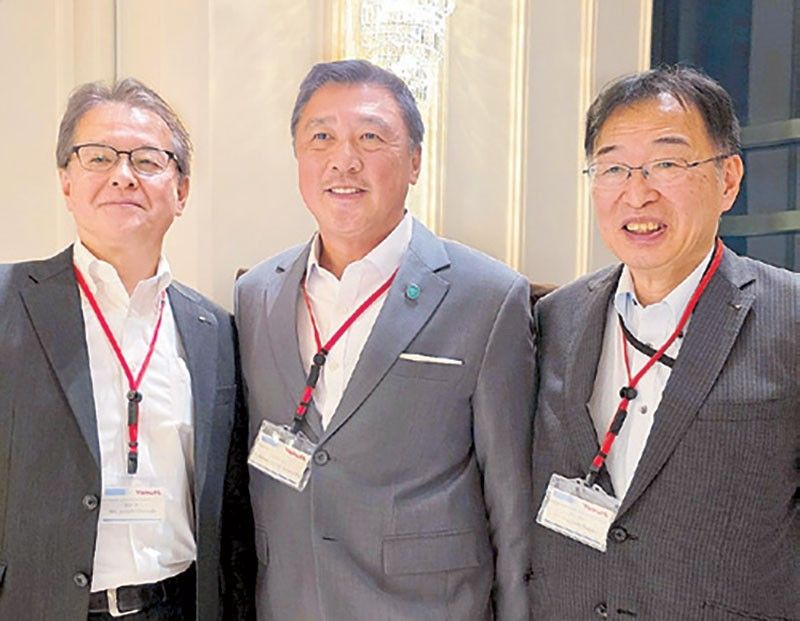
Yakult celebrates its 90th anniversary this year. This is one of my favorite health drinks, which I have been drinking since I was a child. I recently visited the Yakult plant in Japan and discovered they have more than the milk drink that I was familiar with.
Yakult founder Minoru Shirota is a Japanese microbiologist. Many in Japan died from infectious diseases like cholera and dysentery due to poor hygiene and nutrition during Shirota’s youth. Bothered by this, he pursued a career in medicine and entered Kyoto Imperial University (now Kyoto University) in 1921. From there, the young scientist turned his attention to preventive medicine, which places emphasis not on treating illnesses, but on trying to prevent them. This was his gateway to the research of microorganisms. In 1930, Shirota identified a strain of lactic acid bacteria that is part of normal gut microbiota that he originally called Lactobacillus casei Shirota, which appeared to help contain the growth of harmful bacteria in the gut. He founded the company Yakult Honsha in 1935 to sell the beverage that contained the strain branded as “Yakult”. This strain is now known as Lacticaseibacillus paracasei strain Shirota or LcS. There are five benefits of this bacterial strain contained in the Yakult we drink: it reaches our intestines alive, it increases beneficial bacteria, it reduces harmful bacteria, it improves the intestinal environment, and it regulates the condition of the intestinal tract.

These facts are backed up scientifically and the Shirota Institute was established in Kyoto in 1955 and the Research Institute in Kunitachi, Tokyo (later to be known as the Yakult Central Institute) was established in 1967. Research and development continues today and has even collaborated with researchers abroad and put up the Yakult Honsha European Research for Microbiology in Belgium in 2005.
“Shirotaism” is what forms the foundation of Yakult’s operations. Shirota invented Yakult with emphasis on preventing illness, not treating illness when it develops; to promote a healthy gut which may lead to a longer life; and to make sure that this health benefit is affordable for anyone.

Production and sales of Yakult began in Fukuoka in 1935 under the name The Shirota Institute for Research on Protective Bacteria. Shortly after the postwar period, Yakult was sold in tall, narrow glass bottles in the ‘50s and then smaller reusable glass bottles were used until the transition to plastic containers in 1968. Yakult Japan opened their first overseas expansion in Taiwan in 1964 and started in the Philippines in 1978. In 1998, Yakult was approved by the Ministry of Health and Welfare for labeling as “Foods for Specified Health Uses in Japan.”
The Ministry of Health and Welfare (now the Consumer Affairs Agency) evaluates and approves Yakult for its health benefits and safety, allowing the product to display its approved health claims on the packaging.
I was astounded to find out that more than the milk, Yakult had several other products including a wide range of cosmetics (which I shall discuss in next week’s column)! I discovered their other drinks such as coffee, green tea and other herbal drinks. They even have dried instant soup and instant noodles! These do not contain LcS but their drinkable yogurts and chewable tablets do. Yakult 1000 (with 100 billion LcS in each 100 ml bottle, the highest concentration in any of their drinks) was launched as a regionally limited product in 2019 and then launched nationwide in 2021. It was created to relieve stress and improve sleep quality. Due to the demand for Yakult 1000, people were limited to buying one bottle per person when it was launched! I did try a bottle two days in a row and actually fell asleep an hour after taking it! I need this in the Philippines! Yakult Calorie Half (or Yakult Light here) was introduced to the market in 2009 and this is the cultured milk I drink now since it has half the sugar of the regular variant.
Currently, Yakult fermented milk is manufactured and sold in 40 countries and regions worldwide. Japan has over 32,000 Yakult Ladies and over 50,000 Yakult Ladies outside Japan. The Yakult Lady home delivery system was introduced in 1963 to deliver Yakult products whenever scheduled.
A highlight of the trip was a day where we followed a Yakult Lady and saw how she goes to a sales center and packs her daily supply to be delivered to homes and offices. She loads all these into a very heavy cart (which I tried pushing too). They are not merely delivery ladies but they do this as a career and develop bonds with customers. Each Yakult Lady is assigned an area where no other Yakult Lady can deliver to. Lately, Japan has allowed Yakult men to deliver products too!
There are so many interesting and beneficial Yakult products in Japan and I hope these will reach Philippine shores soon. In the meantime, I shall continue drinking my Yakult daily!
Congratulations to Yakult for improving lives for 90 years! *
(For those interested in scheduled deliveries from a Yakult Lady, you may call (02) 88 925858 and ask to be connected to the Sales Department.)








- Latest


