Voices silenced in the midst of crisis
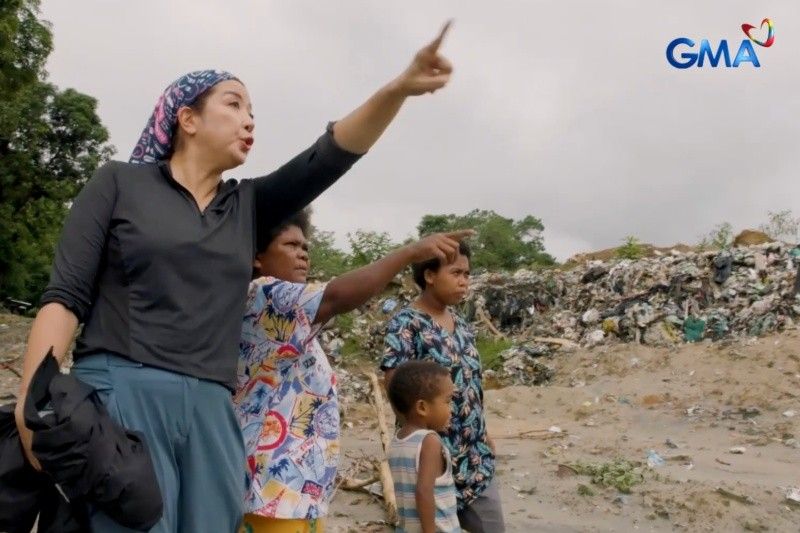
The images from Kara David's "Ibinasurang Paraiso" were difficult to forget. A mountain of garbage now occupies part of an ancestral domain in Sitio Tibag, Barangay Naugsol, Municipality of Subic, Zambales, where Ayta families have lived for generations. More disturbing than the waste itself was the realization that the people who had long protected the land were expected to live beside it. The documentary was not simply about a dumpsite. It was about what happens when convenience triumphs over justice and when those who have the least political power bear the greatest burden.
To understand why this story has touched so many Filipinos, we must first understand the people at its center. The Ayta are among the country's earliest known Indigenous Peoples. Long before the arrival of the Spanish, they had already established communities across the forests and mountains of Central Luzon. Historical accounts, from Antonio Morga in 1609 to William Allan Reed's study of the Ayta communities in Zambales in 1904, remind us that they are not newcomers to these lands. They have lived there for centuries, preserving ways of life shaped by an intimate relationship with nature.
That relationship is often misunderstood. For many of us, land is something that can be bought, sold, developed, or transferred. For the Ayta, land is far more than property. It is home, history, livelihood, memory, and identity. It connects the living with their ancestors and carries a responsibility to future generations. This difference in perspective lies at the heart of "Ibinasurang Paraiso." What the local government viewed as a practical site for waste disposal was, for the Ayta, part of a living landscape that sustained their culture and community.
The documentary also reminds us that this was not the first time the Ayta experienced displacement. The eruption of Mt. Pinatubo in 1991 forced many Indigenous families to leave their ancestral lands and rebuild their lives elsewhere. Nature disrupted their communities, but it did not erase their connection to the land. The tragedy unfolding in Sitio Tibag is different. This time, the pressure to leave did not come from volcanic ash or lahar. It came from human decisions that placed a municipal dumpsite within an area the community regards as part of its ancestral domain. What nature began, institutions now risk completing.
The explanation offered by local officials was familiar. The municipality needed a place to dispose of its waste. It was presented as a temporary solution to a pressing problem. Yet temporary measures have a way of becoming permanent realities, especially when they affect communities with limited political influence. According to the documentary, the community's chieftain recalled giving only a verbal and temporary assent in exchange for a promised payment, but no formal agreement was executed. More importantly, the requirement for genuine Free, Prior and Informed Consent—the very safeguard established under the Indigenous Peoples' Rights Act—appears to have been reduced to a procedural formality rather than a meaningful exercise of Indigenous self-determination.
This is why the issue extends beyond solid waste management. It is about the kind of development we pursue and the values that guide our decisions. The Asia Indigenous Peoples Pact describes this pattern as "development aggression"—projects carried out in the name of public welfare that ultimately dispossess Indigenous communities of their ancestral lands and undermine their rights. Whether the project is a mine, a dam, a road, or a dumpsite, the question remains the same: who benefits, and who pays the price? In Sitio Tibag, the answer is painfully clear. The convenience of many was achieved at the expense of a community that had contributed least to the problem.
It is tempting to think that what happened in Sitio Tibag concerns only one Indigenous community in one municipality. It does not. Every Filipino has a stake in this story because it forces us to confront a larger question about the nation we are becoming. If development can disregard the rights of those who have protected our forests and watersheds for generations, what prevents the same logic from being applied elsewhere whenever convenience outweighs justice? The issue before us is no longer simply where we dispose of our waste. It is how we define progress—and whose lives are considered expendable in its pursuit.
The painful reality, however, is that this story did not begin with a dumpsite. It reflects a much older pattern in Philippine history. During the Spanish and American colonial periods, many Indigenous communities were gradually pushed away from fertile lowlands into the mountains as settlers, plantations, and state institutions expanded. While colonial rule has long ended, some of its habits remain. Indigenous Peoples continue to face the burden of proving that the lands they have cared for over generations truly belong to them, while projects undertaken in the name of development too often proceed without fully recognizing their rights.
This is not merely an environmental issue; it is also about power. Development decisions are rarely made on equal terms. Communities with limited political influence often carry the greatest social and environmental costs, while those who benefit most remain distant from the consequences. The tragedy of Sitio Tibag reminds us that environmental injustice is also social injustice. When convenience outweighs consultation and expediency replaces participation, development ceases to be inclusive. It becomes another form of exclusion.
Edward Said once wrote about "othering", the tendency of societies to treat certain groups as different, distant, or less deserving of recognition. That mindset has not disappeared. Indigenous communities are still too often regarded as people living at the margins, whose lands are seen as available whenever roads, mining sites, dams, or even dumpsites are needed. Their knowledge is dismissed as traditional rather than valuable, and their concerns are heard only after the damage has already been done.
Gayatri Spivak's enduring question, "Can the subaltern speak?" also echoes through "Ibinasurang Paraiso." The Ayta have never been silent. They have defended their ancestral domains, asserted their identity, and expressed their concerns whenever these were threatened. What has often been absent is not their voice, but our willingness to listen. Kara David's documentary did not give the Ayta a voice. It brought national attention to voices that had long been ignored, reminding us that journalism can illuminate truths that institutions sometimes fail to confront.
The challenge now is to ensure that public attention does not fade once the headlines disappear. Cleaning up the dumpsite is necessary, but it cannot be the end of the story. Accountability must follow. Government agencies, local officials, and institutions entrusted with protecting Indigenous Peoples must ensure that ancestral domains are respected not only in law but also in practice. The Indigenous Peoples' Rights Act already recognizes these rights. The greater challenge is faithfully implementing them through genuine consultation, meaningful participation, and respect for Free, Prior and Informed Consent, not as a procedural requirement, but as an expression of justice and democratic governance.
The documentary also offers an important lesson for education. Stories like Sitio Tibag deserve a place not only in television documentaries but also in our classrooms, universities, and teacher education programs. Too often, sustainability is reduced to recycling campaigns, tree-planting activities, or waste segregation. While these remain important, sustainability also requires understanding justice, culture, history, and human dignity. Students should learn that environmental problems are never only about ecology. They are also about people, power, and the difficult choices societies make.
Education for Sustainable Development challenges us to see these connections. It encourages learners to recognize that caring for the environment also means respecting Indigenous knowledge, protecting cultural heritage, and ensuring that development benefits everyone—not only those with political or economic influence. If future generations understand these lessons, then "Ibinasurang Paraiso" will become more than a documentary about a dumpsite. It will become a lesson on citizenship, empathy, and shared responsibility.
The images from Sitio Tibag should therefore move us beyond outrage toward reflection and action. What needs restoring is not only a damaged landscape, but also our understanding of development itself. Progress should never demand that Indigenous communities surrender their dignity so that others may enjoy convenience. A society that values sustainability must first value justice.
Perhaps the greatest lesson of "Ibinasurang Paraiso" is that the future of sustainable development will not be decided solely in government offices or courtrooms. It will also be shaped in our classrooms, in our communities, and in the values we pass on to the next generation. We can continue to view Indigenous Peoples as communities at the margins, or we can finally recognize them as equal partners in caring for the land we all share.
The mountain of trash in Sitio Tibag may one day disappear. The greater challenge is ensuring that the injustice it exposed does not. If this documentary leaves us with one enduring lesson, it is that sustainable development cannot exist without justice, and that education remains our strongest hope for building a society where no community is rendered invisible, no ancestral domain is treated as disposable, and no voice is ever buried beneath a mountain of waste.






- Latest