Government to borrow P892 billion from domestic market
In fourth quarter
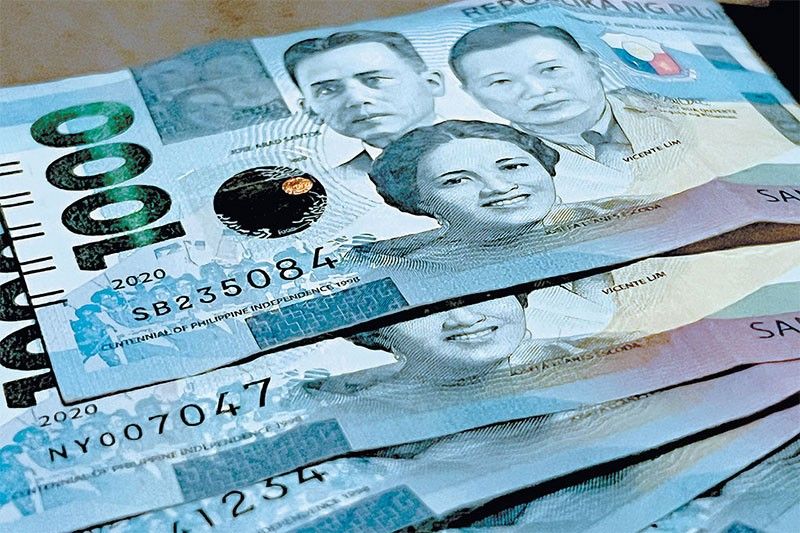
MANILA, Philippines — The government plans to borrow P892 billion from the domestic market in the fourth quarter as it spreads out its issuances amid geopolitical tensions, the Bureau of the Treasury said.
In a memorandum to all government securities eligible dealers released yesterday, the Treasury said it intends to raise P892 billion from both short-term Treasury bills and long-term Treasury bonds from October to December.
The amount consisted of up to P430 billion in Treasury bonds and P462 billion in T-bills.
The fourth-quarter borrowing plan is more than double the P437-billion program in the same period last year, but 20.4 percent lower than the third quarter’s P1.12 trillion.
National Treasurer Sharon Almanza said the sharp year-on-year increase in the borrowing program in the fourth quarter reflected the government’s front-loaded borrowings last year, which left fewer bond auctions for the final quarter.
“But for this year, because of the environment gap, because of the effect of war in Iran, we spread out our issuances. Well, definitely the RTB is part of the fourth quarter borrowing program,” Almanza told a briefing.
She said spreading out the issuances would allow the government to take advantage of any downside in rates.

“Meaning to say, we’re still hoping that the environment will improve and it will smoothen our curve and our borrowing,” she added.
She said there were projections that interest rates could moderate toward the latter part of the year, although this has yet to determine how the Bangko Sentral ng Pilipinas would act at its October policy meeting.
In August, the Monetary Board raised its benchmark rate by 25 basis points to five percent, bringing cumulative increases since April to 75 basis points.
Michael Ricafort, chief economist at Rizal Commercial Banking Corp., said the higher local borrowings for the fourth quarter are largely due to wider budget deficits and delayed fund-raising activities earlier this year.
He pointed to elevated long-term benchmark yields for goverment securities and US Treasury yields, which have climbed to levels not seen since around 2007, raising borrowing costs globally.
The higher borrowings, Ricafort said, are also needed for “catch-up government spending to be financed also starting in the fourth quarter as delayed/spilled over to pump-prime the economy that could lead to faster economic growth as a cushion versus geopolitical risks.”
The Philippines borrows heavily from both foreign and domestic sources to finance its ballooning budget deficit. It continues to book wider budget shortfall as it spends more than what it earns from revenue collections.






- Latest
- Trending