Current account gap widens as imports outpace exports
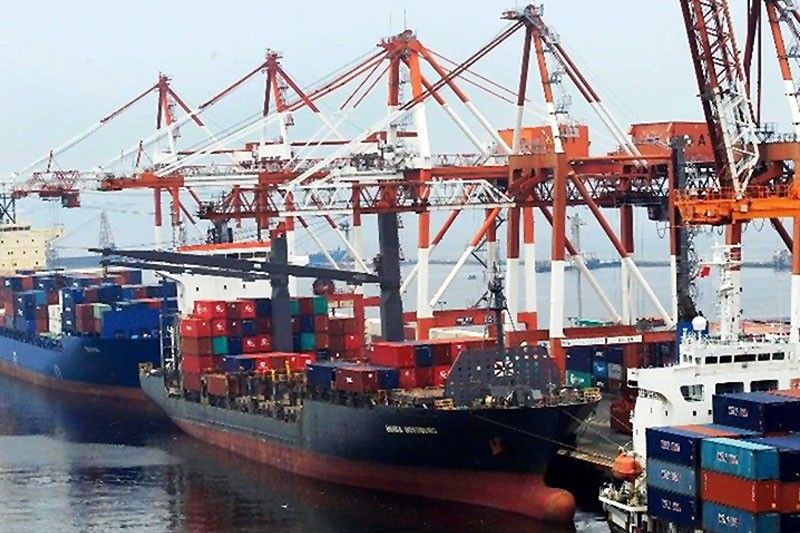
MANILA, Philippines — The Philippines’ current account deficit widened by 51.7 percent to $15.44 billion in the first half as higher import bills outpaced growth in export earnings, the Bangko Sentral ng Pilipinas (BSP) said.
The shortfall increased from $10.18 billion a year earlier and represented 6.4 percent of gross domestic product (GDP) compared with 4.3 percent previously.
In the second quarter alone, the deficit widened by 60.7 percent to $8.97 billion from $5.58 billion a year earlier. It was also larger than the $6.47 billion gap in the first quarter.
The current account measures the country’s trade in goods and services, income flows and transfers such as remittances. A deficit means payments abroad for these transactions exceeded receipts.
The deterioration stemmed mainly from the goods trade deficit – or the excess of merchandise imports over exports – which expanded by 15.5 percent to $37.7 billion in January to June from $32.63 billion a year ago.
Goods imports rose by 12.4 percent to $72.44 billion, while exports increased by 9.2 percent to $34.73 billion.
The BSP said import growth was largely driven by higher prices, with purchases concentrated in telecommunications equipment, electrical machinery, manufacturing inputs and fuel products.
“Elevated global energy prices during the period, driven by supply concerns linked to geopolitical developments in the Middle East, contributed to higher import payments,” the central bank said.
Imports of telecommunications equipment and electrical machinery reflected continued investment in digital infrastructure, while purchases of manufacturing materials supported production.
Export growth, meanwhile, came largely from higher shipment volumes. The BSP cited sustained overseas demand for electronics linked to artificial intelligence and data centers, alongside machinery and transport equipment. The peso depreciation also supported exports.
Earnings from services and remittances helped cushion the larger goods trade gap.
The services surplus, or the excess of earnings from services sold abroad over payments for foreign services, edged up by 1.6 percent to $5.22 billion. Services exports increased by 4.8 percent to $25.32 billion, while imports rose by 5.7 percent to $20.1 billion.
The BSP reported business process outsourcing revenues of $15.4 billion and travel receipts of $5.3 billion in the first half.
Cash remittances coursed through banks increased by 2.4 percent to $17.15 billion from $16.75 billion.
However, the primary income surplus, which covers cross-border earnings from work and investments, fell by 28.7 percent to $1.36 billion, providing a smaller offset to the trade deficit.
Despite the wider current account shortfall, the overall balance of payments (BOP), which summarizes the country’s economic transactions with the rest of the world, improved as stronger financial inflows helped meet external funding needs.
The BOP deficit narrowed by 30.6 percent to $3.88 billion in the first half from $5.59 billion a year earlier.
Net inflows in the financial account, which records cross-border investments, loans and other financing transactions, rose by 39 percent to $12.28 billion.
The BSP attributed the increase mainly to a reduction in domestic banks’ outstanding loans to foreign borrowers and higher foreign borrowing by local banks and other sectors.


- Latest
- Trending