Increased gas emissions logged at Mayon
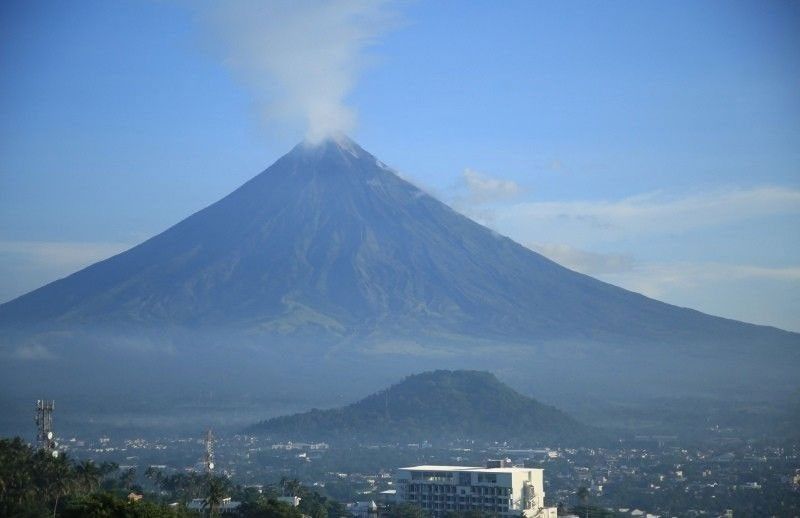
MANILA, Philippines — An increase in sulfur dioxide emissions has been observed at Mayon Volcano in Albay, according to the Philippine Institute of Volcanology and Seismology.
Phivolcs said that figures recorded on Monday showed Mayon reached a “very high” emission rate of 8,393 tons per day based on average measurements, the highest recorded emission since volcanic gas concentrations began decreasing on July 16.
State seismologists said that elevated volcanic sulfur dioxide emissions could forewarn a potential shift to renewed eruptive activity at the summit crater, which are hazardous to areas surrounding the volcano.
Since Mayon’s alert status was lowered to Level 2 or moderate level of unrest on Aug. 5, the volcano’s sulfur dioxide emission has averaged only 2,532 tons per day, experts noted.
“The abrupt rise follows a short-term trend of swelling or pressurization of the northern and eastern sectors of the volcano’s edifice recorded by electronic tilt deformation stations of the Mayon Volcano Network,” state seismologists said. “In contrast, volcanic seismicity and real-time seismic energy release has remained in background levels.”
Although Mayon remains under alert Level 2, Phivolcs said that new possibilities of an eruptive unrest are recurring.
“A new phase of eruption can generate life-threatening volcanic hazards including pyroclastic density currents, rockfalls, ashfall and ballistic fragments that can be thrown out as projectiles from the crater,” Phivolcs said.
Entry into the six-kilometer-radius permanent danger zone remains prohibited.
Communities and local government units within predetermined zones of pyroclastic flow have been told to prepare to evacuate in case the volcanic activity escalates and the alert status is increased.
Pilots have been advised to avoid flying close to the volcano’s summit as ash and ballistic fragments from any sudden eruption can be hazardous to aircraft.








- Latest
- Trending