


The Luzon Economic Corridor needs one plan, not another map
At the Luzon Economic Corridor forum last month, one request stood apart from the rest of the program. The subject-matter expert who oversees where cargo actually moves in the Philippines said he wished the corridor had one master plan. He was not asking for another map.
The government has already drawn the belt: Subic Bay on the west, Clark and New Clark City inland, Manila on the bay, Batangas to the south. It has listed ports, railways, airports, power lines, and industrial parks. Investors were invited to choose from the list. That is a menu. A master plan is different. It is a sequence. It says what must happen first, who is late when a date slips, and how a box of goods leaves a factory and reaches a ship.
Without that, the corridor is four locations joined by hope and by trucks.
Most cargo in this belt still moves on rubber. The freight railway that would tie Subic, Clark, Manila and Batangas together is still being studied. That study matters. It will not carry a container this year or next. The passenger railway now being built will move workers. It will not move factory lots. Those are two jobs. Naming them in the same speech does not put them on the same track.
Clark’s airport is the exception. Air cargo there is already growing. Courier companies are expanding. A second runway is in design. If a factory in New Clark City needs to fly a high-value shipment in the next few years, the airport can help. If it needs to send heavy loads to a port every week, it will use the same expressways everyone else uses. That is not a scandal. It is the calendar. An honest plan would say so on one page.
Adding more projects will not fix this. We have plenty of projects. What the belt needs are four plain rules a mayor, a plant manager, and a customs officer can all read.
First, put the work in order.
Say clearly what the next five years will run on trucks and aircraft, and what must wait for the freight railway. Do not sell a tenant a train that does not exist. Do not tell a town the trucks will disappear next year. Publish the order. Update it when a study slips. People can live with a slow railway. They cannot live with a story that changes at every ceremony.
Second, name the person who owns the calendar.
Not a company that owns Luzon. Not another layer of bureaucracy. One official whose job is to say, this quarter, which link is the bottleneck — the rail study, the Clark runway, the fuel line from Subic, the road into New Clark City — and to raise a missed date immediately. When everyone is in charge, no one is in charge. And the truck waits.
Third, make the papers as simple as the road.
A factory can sit on a good site and still lose a week because the zone, the freeport, and Customs keep three different files on the same shipment. Shippers already know this. Families feel it in the price of goods. The country is also trying to connect its clearance systems with its ASEAN neighbors. That only works if a shipment inside Clark is visible to national Customs as it happens, not after a pile of letters. Create one path for the papers. Publish how long cargo sits at Clark air cargo and at Subic and Batangas.
Fourth, try the rules in one place before asking the whole island to follow them.
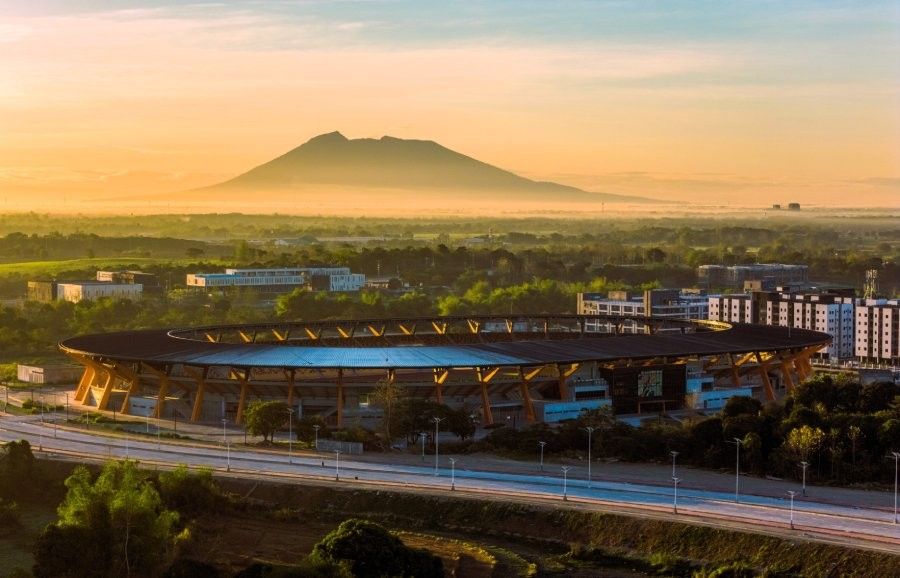
New Clark City is the right test. It is already a planned city on public land. Part of that land has been offered for advanced manufacturing. The city is not the factory, and the factory is not the city. The city has a river park, housing and a long horizon. The industrial site is a campus that needs power, water, and a single gate. If government cannot run those as one process on that one site — one door for investors, a public list of power and water already approved, no construction ahead of the environmental permit — how are we expected to believe it will run a four-port corridor?
That is not asking Manila to bet the country on a slogan or an AI-generated map. It is asking Manila to prove a method on a few thousand hectares and then copy it.
And host towns belong in the same plan. Capas, Bamban, and their neighbors will carry the traffic and the jobs. They should see a clear share of lease and tax revenue when the site works, not a bargaining chip when a permit is pending. People who live next to a project will support it faster if they can read the deal.
None of this needs a new law or constitution. It needs a short operating plan for the Luzon belt, issued this quarter, with names and dates. The deal book can stay. The forum can stay. What cannot stay is the habit of announcing the corridor as if the trains were already running.
When someone who works at the gates of the country’s trade asks for one master plan, that is a warning, not a theme for the next conference.
Write the sequence. Name the clock. Unify the papers. Test it at New Clark City. Then the map on the brochure will finally match the road.
--
Scott Campbell is a non-resident fellow at the think tank Stratbase Institute and the founder of SilicaSentinel. Prior to his current role, he served as the operations manager for Samaritan’s Purse International Relief in the Middle East.




- Latest


