


Between sobriety and transparency in the West Philippine Sea
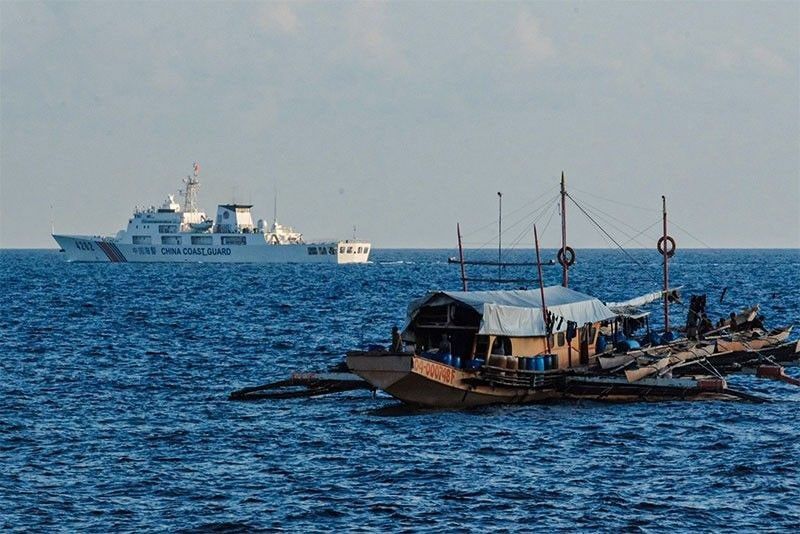
The Department of Foreign Affairs is facing backlash for committing to “sobriety” on the West Philippine Sea while the country’s maritime and security agencies are delivering “transparency” by exposing China’s unceasing coercion at sea and disinformation in the media. Is this an either/or policy issue or can the Philippines have both in a more refined manner?
Given the ASEAN chairmanship, the campaign for a seat at the United Nations Security Council, the recent US-Israel and Iran conflict, and domestic political squabbles, the Philippines’ approach to the West Philippine Sea needs to be re-examined given the very public bickering of several government agencies. Former Albay Representative Joey Salceda speculated that having differing official voices on the West Philippine Sea sends a dual message to China. The sobriety camp signals that the Philippines is amenable to an agreement, while the transparency camp communicates that if none is forthcoming, Beijing would have to deal with a more militant Manila. The bickering is thus an invitation to sit down and cut a deal.
But this messaging would work only when government agencies in both camps are coordinated. The incentive to close a deal breaks down when de-escalatory overtures are met with escalatory responses rather than reduction in tensions. Amid bureaucratic differences, the unmistakable message that China is receiving is that the Philippine government is divided and lacks a coherent strategy on the West Philippine Sea.
When sobriety succeeds
Critics of a more diplomatic approach argue that quiet diplomacy has led to several foreign policy failures, most recently, the 2024 Philippines-China “provisional understanding” (PU) over the Ayungin Shoal regarding rotation and reprovisioning (RORE) missions to the BRP Sierra Madre, an arrangement which detractors frame as a concession to Beijing. One commentary goes further, suggesting that 1) the agreement sidelines the United Nations Convention on the Law of the Sea (UNCLOS) and the 2016 Arbitral Award, 2) relies on secrecy that favors Chinese coercion, and 3) risks rewarding bad behavior in the South China Sea.
These concerns deserve engagement. But they misinterpret and misconstrue the nature and purpose of the arrangement.
First, the claim that the PU sidelines UNCLOS and the 2016 Arbitral Award misunderstands how states actually operationalize sovereignty. Legal victories do not enforce themselves; they must be implemented and sustained through deliberate policy and practice. This includes the totality of our diplomatic strategy, and including the PU.
Moreover, we must not confuse conflict prevention with conflict settlement. The PU is the former, not the latter.
Admittedly, the term “provisional understanding” is not helpful. It brings into mind “provisional arrangement,” which indeed has a special meaning in the law of the sea. The DFA, when it announced the deal on its website, originally called it an “understanding of principles and approaches to avoid misunderstanding and miscalculation in the conduct of the Philippines’ lawful and routine [RORE] missions to the BRP Sierra Madre in Ayungin Shoal.” The deal was never about territorial settlement or maritime delimitation. This temporary understanding (because it covers the specific challenges arising from Ayungin Shoal) helps prevent clashes during resupply missions, and does not weaken the legal position established by the Arbitral Ruling.
Second, critics argue that the PU relies on secrecy and ambiguity, conditions that could enable incremental Chinese pressure. This critique rests on an unrealistic view of diplomacy. Nearly all sensitive diplomatic engagements occur through confidential channels precisely because ambiguity allows room for maneuver. In any case, the DFA has emphasized that although it cannot disclose contents of the arrangement, it has not abandoned its mandate.
There is also not much to the agreement. The PU is a narrow deal: it covers only one activity (RORE missions) in only one area (Ayungin Shoal). It should be evaluated not by speculation about its hidden meanings, but by its discernible fruits: the continued resupply of the BRP Sierra Madre (13 times!) and the avoidance of dangerous confrontations.
Third, the claim that the arrangement rewards coercion stretches the available evidence. The purpose of the PU is to prevent violent incidents during resupply operations that had previously resulted in injuries and equipment damage.
Indeed, the Philippines continues to assert its sovereign rights and jurisdiction in the West Philippine Sea, and ensuring the continued and incident-free resupply of the BRP Sierra Madre is precisely how the Philippines demonstrates the exercise of its sovereign rights in practice.
The PU also functions as a confidence-building mechanism designed to reduce friction while preserving the Philippines’ presence at Ayunging Shoal. Interpreting confidence-building measures as capitulation is a dangerous leap, and mistakes prudence for weakness.
More broadly, one must understand that the arrangement sits at the interstices of diplomacy, constraint, and national interest. Admittedly, the Philippines faces a vastly bigger neighbor while simultaneously seeking to uphold international law and regional stability. This is not an easy goal. Seen in this light, diplomacy ought not to be interpreted as retreat or acquiescence, but a method of advancing national interests under difficult conditions. President Marcos’ pledge that the Philippines will not give up “a single inch” of territory requires a diplomatic strategy that prevents unnecessary escalation, while maintaining our position on the ground and - whether critics like it or not - having China on the negotiating table.
This is precisely the space the PU creates. It allows Manila to continue resupply missions to the BRP Sierra Madre without incidents, sustain its presence in contested waters, and manage tensions while broader diplomatic and regional initiatives unfold. While the Philippines assumes a more prominent role in ASEAN this 2026, maintaining operational stability and presence in the West Philippine Sea at all costs becomes strategically valuable.
Apparently, the PU itself was approved at the highest levels of Philippine government, so the praise or blame for getting that understanding with China should therefore be attributed to the wider set of security actors who made the decision.
What transparency shows and conceals
It cannot be denied that the transparency campaign by the Philippine Coast Guard has had some successes including highlighting PRC aggression and galvanizing international attention in support of the Philippines’ position. What seems to be problematic is the assertion that only the transparency campaign is what is needed to counter PRC activities in the West Philippine Sea.
Supporters of the transparency initiative maintain that transparency is preferable. But a 2024 op-ed published by ISEAS-Yusof Ishak Institute, a Singapore-based think tank, has already warned of the risks of relying solely on this approach. Transparency is not new. Like much of President Marcos’s foreign policy, it borrows from former President Benigno Aquino III’s playbook. Transparency at that time was unable to tone down Chinese maritime coercion. It also failed to persuade ASEAN states. It is therefore unlikely that the same tactic now will yield different results.
Transparency is also amorphous, adding evidence to its tentativeness. It used to refer only to exposes of Chinese aggression at sea. Nowadays, its adherents also label counter-disinformation campaigns as part of the initiative. Transparency is best treated as a tool that is part of an overarching strategy.
Transparency can have many other meanings. In diplomacy, transparency does not mean broadcasting every operational detail to the public; it means that State parties understand each other’s intentions sufficiently to avoid escalation. Understood in this sense, transparency between parties aims to reduce the risk of confrontation. Ironically, the same ambiguity that critics fear with quiet diplomacy can also serve the Philippines’ interests by creating space for calibrated pushback against coercive actions.
The real question, therefore, is not whether diplomacy should be transparent in principle. The question is what kind of transparency best serves the national interest. Is it transparency designed for immediate public optics, or transparency between states that allows mechanisms to function and tensions to remain contained? In complex disputes like the West Philippine Sea, the latter often proves more effective.
Sober, transparent and more
The Philippines approach cannot be a choice between sobriety or transparency, but both and more. We can continue exposing Chinese aggression while continuing our diplomacy with Beijing. While at it, the DFA could do better in communicating with supportive states; diplomacy with its defense ally and partners also need to function alongside any diplomatic outreach to Beijing.
The Philippines must reciprocate when talks are bearing fruit but call out and respond in kind when behavior at sea contradicts messages behind closed doors. Both sobriety and transparency must be bargaining chips. Expect a sober Philippines when China is tame, but a loud one when peace and stability are paid only lip service. Whether calling out China or negotiating with it, there must be no daylight in the public position that the Philippine government takes.
Diplomacy is often misunderstood because its successes are rarely visible. Yet experienced diplomats recognize that confidence-building measures, closed-door negotiations, and calibrated ambiguity are essential tools in managing disputes with far larger counterparts. But we must not confuse diplomacy with being diplomatic. At its broadest, diplomacy is relating with other countries without using violence. Rhetorical escalation is justified “when it advances clear strategic objectives.”
And we also contend that while diplomacy is primarily the area of diplomats, foreign policy is not. With due regard to the DFA’s more formal role in foreign policy making and implementation, foreign policy is not the sole domain of diplomats. This is why Malacanang must see to it that its institutional mechanisms work and impose a system on the government when it comes to communicating matters regarding the West Philippine Sea.
Diplomacy must also be coordinated, and the military and the coast guard must be given space to engage in diplomacy with their counterparts to contribute to confidence-building. The academia and the public could also contribute to promoting the Philippines’ position. While there are matters regarding the West Philippine Sea that must remain confidential, it will not hurt to have regular briefings that explain the Philippines’ position. The priority targets should be those that the transparency initiative is failing to persuade: ASEAN and China itself, both the government and their peoples.=
Yet all of these are merely means. As chief architect of foreign policy, it is up to President Marcos to articulate an end, formulate a sensible strategy, impose discipline on government agencies during implementation, and inspire the rest of society to rally behind it. The president should start with rationalizing the councils and task forces that seem to proliferate in the governance of the country’s response to PRC aggression.
The government can start by assessing whether EO 57 is still sufficient to govern the country’s maritime domain or should it be updated. Refining and clarifying the National Maritime Council to focus on strategic functions like policy formulation, monitoring, evaluation, and policy adjustment on maritime issues of national security significance are critical. Operational execution should be given to the implementing agencies while identifying an office as the clear coordinator for maritime affairs.
It is never too late for the Marcos Administration to adopt a more coordinated approach regarding the West Philippine Sea. Command and control must be exerted over the various institutions and agencies with roles in the West Philippine Sea to reflect a coherent strategy that includes communications, defense, and diplomacy. What has been lacking is an instrument that can whip agencies to toe the line and be more disciplined and professional because neither sobriety nor transparency would be enough. Governance is this country’s number one priority but also its number one problem in responding to the PRC’s challenge in the West Philippine Sea.
Edcel John A. Ibarra is an assistant professor at the Department of Political Science, University of the Philippines-Diliman. Deryk Baladjay is a lecturer at the Department of International Studies, De La Salle University.





- Latest


