


Patriotism has no color
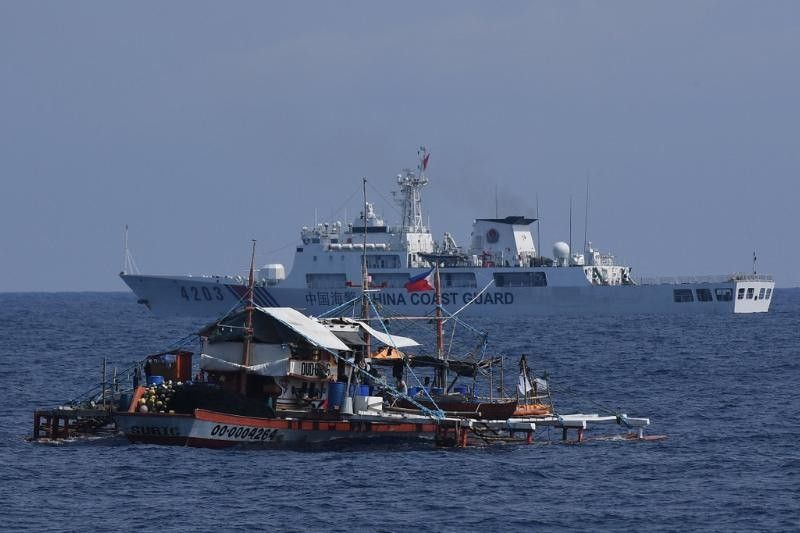
In recent weeks, we have watched Philippine officials publicly argue over the West Philippine Sea. One senator even proposed debating the spokesperson of the Philippine Coast Guard, a former Supreme Court justice, and a maritime law expert on why we should give up defending parts of our own maritime territory.
In response to the harsh and undiplomatic words issued by Chinese Embassy officials against Philippine leaders, the Senate passed a resolution condemning those statements. Of the 24 senators, 15 supported the resolution. The remaining nine chose silence — or took a side, on a matter of sovereignty.
China benefits from this show of division among Filipinos. It does not serve the Philippines in any way. Division displays weakness and suggests that our majority position can be diluted by internal pressure and partisan maneuvering.
Love of country is something every Filipino, whether a public official or private citizen, claims to uphold. Yet recent developments show that we cannot seem to agree on how that love should be expressed when our sovereignty is challenged.
On the surface, the debates appear geopolitical. A small archipelago stands opposite a regional superpower flexing its strength. International law is central to the dispute, which falls under the United Nations Convention on the Law of the Sea. The 2016 arbitral ruling in The Hague is often invoked — and rightly so. It affirmed our maritime entitlements. The discussion can quickly become legal and technical, but the core principle is simple: rights recognized by law must be defended by policy.
National politics and personal interests have distorted the conversation. Positions are drawn due to political alignment or personal businesses. Officials and businessmen of the same stand tend to echo one another especially those who support China as if someone is conducting their tune and thoughts.
This reflexive partisanship shrinks a national question into a partisan contest. Maritime rights are not campaign slogans. They do not change depending on who occupies office.
When Filipino fishermen are blocked or driven away from traditional fishing grounds, the impact is immediate. These are not abstract policy debates. These are daily realities in coastal communities. We are ONE country. We must be on the same side.
**
A common argument is that we cannot afford to stand up to China because it is bigger and more powerful, and because trade and investment might suffer. Yet from a business standpoint, China is not the Philippines’ largest sources of foreign direct investment. Our strongest investment relationships remain with other markets, particularly our like-minded countries such as the United States, Japan, Korea, Australia, Canada and countries in the European Union.
Economic engagement is important, but it should not be confused with economic dependence. Diversified partnerships give the Philippines strategic space. Sovereignty and economic growth are not mutually exclusive. Clear national direction strengthens investor confidence.
The economics that truly matters is often overlooked. It is the daily income of our fisherfolk and the sustainability of coastal communities whose access to traditional fishing grounds has been disrupted. It is also the safety of our fellow Filipino fishermen that depend on secure sea lanes and a rules-based order. That is the reality that demands protection.
If we are serious about economic strength, national unity must be part of the strategy. Investor confidence and long-term development depend on stability and social cohesion. A divided public space fueled by misinformation creates uncertainty that benefits no one.
The bigger business community understands that patriotism is important. It is not just symbolic. It is expressed through strengthening our economy, building partnerships with trusted allies, protecting Filipino workers, and promoting facts over noise.
National interest should be our common ground. Regardless of political affiliation, Filipinos should align on protecting our people and our national dignity. Love of country is not partisan. It is foundational.
The recent wave of online exchanges and hostile rhetoric does not strengthen the nation. It weakens public trust and distracts from constructive solutions.
Earlier this week, the Stratbase Institute, collaborated with the Embassy of Canada, in a forum titled “Navigating Digital Crossroads: Advancing Cybersecurity and Democratic Resilience in the Indo-Pacific.” Leaders from government, business, academe, civil society, and international partners emphasized that resilience against cyber threats requires collective action.
Cybersecurity is now both a national and civic duty. Threats to the Philippines are no longer confined to physical borders. Cyberattacks and foreign information manipulation undermine public trust, weaken institutions, and disrupt livelihoods. Protecting our digital space safeguards all of us Filipinos, businesses, and democratic discourse from external interference designed to divide and destabilize our society.
National unity is our strongest defense in this digital space. Digital security is also national security. And it depends on trust, transparency, and cooperation. When our information space is distorted, the nation as a whole is weakened.
We—not some of us but all of us—must agree to be unequivocally pro-Philippines. In moments of tension, public officials and influencers carry responsibility. Commentary should focus on what protects the Filipino people—workers, communities, and businesses—first.
Attacking fellow Filipinos on the country’s sovereign issues and questioning the support of like-minded countries weakens our stand as a nation. That is not patriotism. It is betrayal.
--
Rupert Paul Manhit is the COO and managing director of think tank Stratbase Group. He is the executive director of Philippine Trade Foundation (Phils Inc.)


- Latest


