Rethinking CHED’s International Affairs Service amid bureaucracy
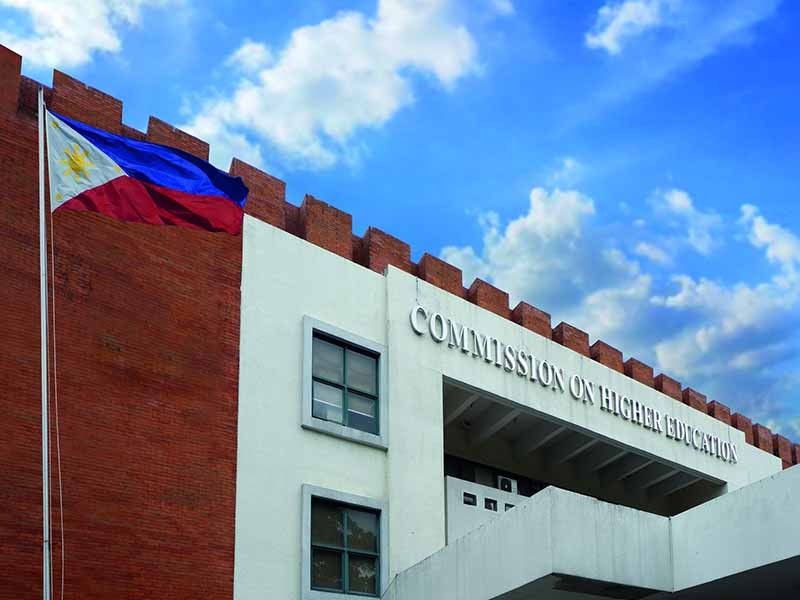
The Commission on Higher Education (CHED) has consistently declared that internationalization is central to raising the quality and competitiveness of Philippine higher education.
Through its International Affairs Service (IAS), CHED envisions a system where Philippine universities and scholars are integrated into global networks, contributing to knowledge production and academic collaboration on the world stage.
This vision is noble and urgent. For a country striving to move past chronic underfunding, inequities, and persistent education crises, connecting its academic institutions to global partners is not a luxury but a necessity.
Yet in practice, the IAS has become less of a gateway and more of a gatekeeper, ensnaring faculty and administrators in bureaucratic red tape that undermines the very goals it claims to promote.
For many faculty members and officials in state universities and colleges (SUCs), dealing with the IAS means navigating slow processing caused by three bottlenecks: excessive documentation, multiple layers of signatories and rigid lead times.
To secure permission for travel abroad, applicants must prepare an exhaustive list of requirements—evaluation forms, official invitations, legal endorsements, itineraries, board resolutions, proof of funding, re-entry plans and sometimes even multiple letters to different CHED offices.
Each of these passes through several signatories, and the entire process must start at least a month in advance for faculty and up to three months for university presidents or officials.
In a fast-moving global academic environment where conference acceptances and collaborations often arise on short notice, these requirements are not simply inconvenient; they form the structural barriers that make international engagement nearly impossible.
The result is that countless Filipino scholars are unable to participate in international engagements, not because they lack merit or funding, but because the system designed to regulate their mobility moves far slower than the opportunities they are trying to seize.
This mismatch has quiet but damaging effects. Researchers decline invitations, papers go unpresented, collaborations are left unexplored and the visibility of Philippine scholarship on the global stage remains stunted. In Southeast Asia, neighbors such as Malaysia and Thailand have simplified academic mobility, with Malaysia allowing universities to approve travel directly and Thailand streamlining faculty exchanges through its higher education commission.
Filipino faculty members remain disadvantaged, watching opportunities slip away as they wait for travel authorities that may or may not arrive on time.
The irony is difficult to ignore. CHED proclaims the importance of internationalization through programs like StudyPH, transnational education partnerships, and scholarship initiatives abroad.
It celebrates the notion of the Filipino scholar as a global contributor. But when it comes to enabling that scholar to attend a conference, the process is so heavily encumbered with paperwork and delays that the rhetoric of internationalization begins to ring hollow.
It is a paradox that exposes the gap between aspiration and implementation. The IAS, envisioned as a facilitator of global engagement, has effectively become a roadblock.
This bureaucratic burden does more than cause inconvenience. It weakens the morale of faculty and administrators who should be at the frontlines of academic globalization. Younger researchers in particular—those who stand to benefit most from early exposure to international networks—find themselves discouraged, some even giving up on applying altogether. What message does it send when the state’s own regulatory structures dissuade academics from seeking global opportunities? It communicates, intentionally or not, that compliance and procedure matter more than visibility and collaboration. Over time, this erodes the credibility of the state’s commitment to internationalization.
CHED has recently attempted to address these concerns through Memorandum Order No. 3, series of 2025, which devolves the authority to process international travel requests from the IAS to CHED’s Regional Offices.
At first glance, this seems like a step in the right direction, an effort to decentralize and speed up the process. Yet the danger lies in assuming that decentralization alone solves the problem.
If the fundamental issue is not the location of the office but the culture of over-documentation and rigid lead times, then replicating the process across regional offices risks multiplying inefficiency rather than eliminating it.
Without genuine streamlining of requirements, shorter timelines, and a shift toward enabling rather than restricting academic mobility, the change could amount to little more than bureaucratic reshuffling.
The heart of the problem is not that the state insists on accountability. Accountability is necessary when public funds are involved. The problem is that accountability has been conflated with excessive control.
Other ASEAN countries have shown that it is possible to balance institutional integrity with international mobility, as seen in Malaysia where universities directly approve most overseas academic travel and in Thailand where the higher education commission facilitates faculty exchanges with streamlined requirements and shorter lead times.
Granting SUC presidents greater authority to approve routine academic travel, reducing the list of required documents to essentials, making fuller use of the existing digital tracking system, and allowing flexibility for last-minute opportunities are measures that can uphold transparency without crippling participation. These reforms are not radical. They are pragmatic, and they are long overdue.
Internationalization cannot succeed if it is treated as mere branding while the lived reality for faculty members is one of endless forms and delayed approvals. The Philippines risks positioning itself as rhetorically committed to global engagement but practically absent from the conversations that matter.
In an era where international partnerships drive research funding, innovation, and even national reputation, this absence carries consequences. The world is not waiting for us to catch up. If our scholars cannot travel, present, or collaborate, others will fill the space we leave behind.
The lesson is clear: the bureaucratic culture embedded in the IAS stands in contradiction to the internationalization dream that CHED so frequently invokes.
It is time for CHED to take pragmatic actions to confront this contradiction honestly. The rhetoric of internationalization must be matched by systems that actually make it possible.
Otherwise, internationalization remains an aspiration undermined by the very office charged with realizing it. The Philippines cannot afford this gap between promise and practice. Our universities, scholars, and students deserve better services.
CHED must decide whether the IAS will continue to function as a checkpoint that curtails opportunity, or whether it will be transformed into a true enabler of global academic engagement. The choice is not procedural; it is a choice about the future of Philippine higher education itself.
If CHED truly believes in the global potential of Filipino scholars, then the IAS must stop being a barrier and start becoming a bridge. Only then can the dream of internationalization move from rhetoric to reality. Unless CHED IAS streamlines its processes, its broader aspirations of promoting ethical standards, academic integrity and sustainability in international academic exchanges will remain unrealized.
Allen A. Espinosa and Arlyne C. Marasigan are professors and fellows at the Educational Policy Research and Development Office; Leah Amor S. Cortez is an associate professor at the Faculty of Science, Technology, and Mathematics, and the executive director and provost of Philippine Normal University South Luzon; and Ma. Arsenia C. Gomez is an associate professor at the Faculty of Behavioral and Social Sciences and director of the Research Management Office. They may be reached at [email protected], [email protected], [email protected], and [email protected], respectively. The views expressed here are those of the authors and do not necessarily reflect the official position of the Philippine Normal University.




- Latest