Silence is not neutral: The civic responsibility of state universities, colleges
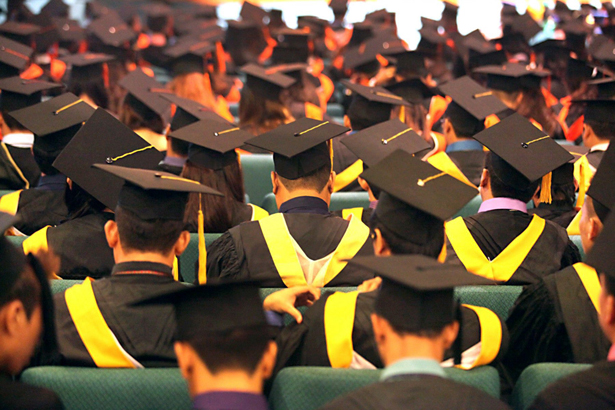
According to the report, many local employers do not easily notice those employable graduates because they come from low-tier colleges. File
In the Philippine higher education landscape, state universities and colleges (SUCs) are often touted as the backbone of accessible, democratic and transformative education.
Subsidized by public funds, these institutions carry a mission beyond technical training: to shape citizens who are critically engaged, socially responsible, and deeply aware of the nation’s challenges.
Historically, universities were never designed merely to churn out workers. They were sanctuaries for ideas, imagination, and the pursuit of knowledge that drives human progress.
Yet a troubling contradiction persists. Despite this lofty mandate, most SUCs remain conspicuously silent in the face of urgent social and political issues, fearful of budget cuts or political retribution.
The only consistent exception is the University of the Philippines (UP), whose unique charter grants it greater autonomy and whose institutional culture embraces political engagement.
This pattern of institutional neutrality demands scrutiny. For a university to remain silent amid national crises, whether threats to democracy, human rights violations, or systemic corruption, is not merely passive. It is a political decision with profound implications.
Worse, many education leaders suppress critical voices within the university, delaying decisions to avoid accountability and justice. Such silence betrays the very ideals higher education is supposed to promote and risks transforming public universities into credentialing factories, churning out graduates stripped of civic conscience and critical voice.
SUCs should be sanctuaries for critical thought, where inconvenient truths can be interrogated and power held to account. Yet we often witness a disconnect between what is taught in classrooms and what is practiced institutionally.
Students are urged to think critically, but institutions themselves refrain from modeling this when it matters most. This institutional dissonance erodes credibility and undermines the educational mission.
Some argue SUCs must remain neutral because they are state-funded. But neutrality, especially in the face of injustice, is never truly neutral. As Holocaust survivor and Nobel laureate Elie Wiesel said, “Neutrality helps the oppressor, never the victim.” When SUCs choose silence, they align, intentionally or not, with the status quo, regardless of whether that status quo is just or oppressive.
This fear of political backlash has created a chilling effect. Administrators and faculty are wary of making public statements perceived as anti-government or politically provocative.
In an era when red-tagging, bullying and online harassment are real threats, the caution is understandable. But caution should not be conflated with complicity.
There are ways for institutions to take principled stands without becoming partisan. They can speak out against injustice, advocate for academic freedom, and defend democratic institutions while staying aligned with their educational mission.
The University of the Philippines has long exemplified this balance. From the First Quarter Storm to the Marcos dictatorship to recent political controversies, UP has served not only as a center of academic excellence but also as a moral voice in the public sphere.
Its institutional courage is rooted not in partisanship but in principle. It recognizes that universities have a role in shaping the moral and political consciousness of a nation.
Unfortunately, UP remains the outlier. The overwhelming majority of SUCs refrain from issuing statements or participating in national conversations on issues such as the K-12 crisis, education budget cuts, environmental degradation, press freedom and the shrinking space for dissent.
This silence is not due to ignorance or lack of concern. Faculty, staff, and students are often acutely aware of these issues. But without institutional support or encouragement, their voices remain fragmented and easily dismissed. At its core, this is a crisis of leadership.
This absence of institutional voice is even more problematic in today’s climate, where disinformation spreads rapidly and historical revisionism gains traction.
When universities stay silent, they leave a vacuum filled by misinformation and anti-intellectualism. They forfeit their role as bastions of reason and truth, allowing others to dictate the terms of public discourse.
Some will insist the role of SUCs is to teach, not to engage in activism. But this view draws a false boundary between education and social engagement.
Teaching is never neutral. The decision of what to teach, how to teach and what to omit is always political. To educate is to shape minds, values and worldviews. If SUCs are committed to nation-building, then they must understand that silence in the face of injustice is not an option.
Moreover, institutional silence does not shield SUCs from political interference. On the contrary, it emboldens those who seek to undermine academic freedom.
By remaining passive, SUCs signal their unwillingness or inability to defend their autonomy. In doing so, they become more vulnerable to censorship, control, and even defunding.
It is time for SUCs to reclaim their voice and reassert their role as critical institutions in society. This does not mean engaging in partisan politics.
It means standing for truth, justice and democratic values. It means issuing statements when academic freedom is threatened, supporting faculty and students engaged in responsible activism and modeling the civic courage they hope to instill in graduates.
As we face political polarization, worsening inequality, and the erosion of democratic norms, the silence of SUCs is not only disappointing; it is dangerous.
The public deserves more than neutrality from institutions meant to be centers of learning and enlightenment. They deserve universities that speak when it is difficult, act when it is risky, and lead when it is necessary.
The University of the Philippines has shown that institutional courage is possible. Other SUCs must now find the resolve to follow. If our public universities do not stand up for truth and justice, who will; and if not now, when?
Allen A. Espinosa and Arlyne C. Marasigan are professors and fellows at the Educational Policy Research and Development Office; Levi E. Elipane is associate professor and deputy dean of the College of Advanced Studies of the Philippine Normal University; and Leah Amor S. Cortez is associate professor at the Faculty of Science, Technology, and Mathematics and executive director and provost of the Philippine Normal University South Luzon.They may be reached at [email protected], [email protected], [email protected] and [email protected], respectively. The views expressed here are those of the authors and do not necessarily reflect the official position of the Philippine Normal University.







- Latest