


DepEd move to drop GE subjects undermines mission of higher education
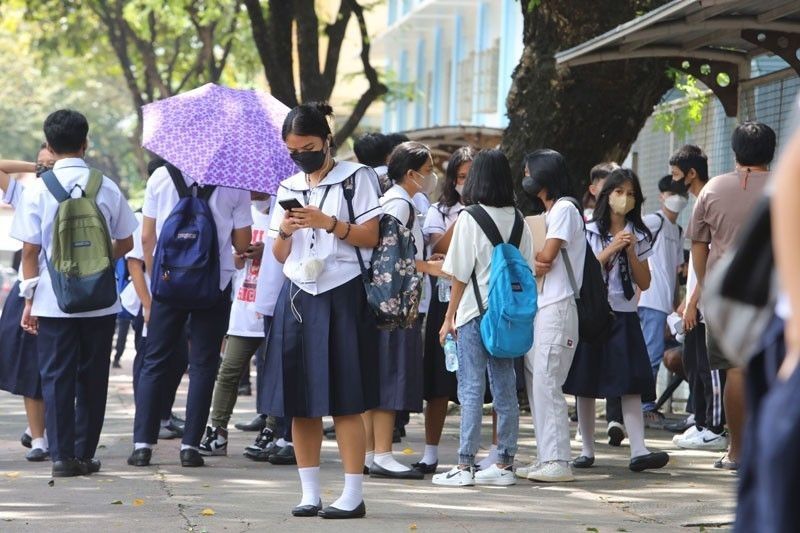
The Department of Education’s proposal to remove Art Appreciation, The Contemporary World and Ethics from the college curriculum and shift them to Senior High School is a dangerous step backward.
They argue this could save students a full semester in college, while masking the hidden agenda of higher education reform: the commodification of education, alignment with corporate needs and the rapid shift from creative and critical thinking to workforce preparation.
Learning is now quantified by employability metrics and immediate return on investment, devaluing knowledge itself.
DepEd claims these subjects are already covered in high school through Arts, Araling Panlipunan and GMRC or Values Education. They argue that moving these courses to SHS could save time.
CHED has not led this initiative but is participating in the alignment process. Still, the consequences of this decision will be felt most in higher education, which risks being stripped of subjects essential to democratic citizenship and critical thought.
This proposal rests on a misguided belief that higher education should serve only one function: to produce employable graduates as quickly and cheaply as possible.
That utilitarian view reduces college to a credentialing machine focused on labor market readiness. It dismisses the role of higher education in cultivating civic responsibility, ethical awareness, cultural appreciation and the intellectual tools to question injustice and inequality.
The idea that these courses duplicate high school content is false. While certain themes may overlap, the depth, context and critical engagement in college are vastly different.
College students approach these subjects with greater maturity and within disciplinary or professional contexts. The need to interrogate knowledge itself involves not just what students know, but how they know it, why they believe it and why it's contested.
This requires locating knowledge within multi-layered contexts, acknowledging perspectives in tension and observing interconnections.
A nursing student studying Ethics considers real-world implications such as patient care, medical accountability and institutional responsibility. A future engineer exploring The Contemporary World or Art Appreciation is not just learning about art history or global issues. They are asked to understand how their work intersects with human experience and environmental, economic and political crises.
DepEd’s plan undermines this kind of engagement by relocating these subjects to a stage where students are still developing basic academic skills. SHS is not the appropriate venue for that level of intellectual inquiry.
Rather than enhancing alignment between basic and higher education, this move dilutes content, trivializes general education and weakens the holistic formation that college is uniquely positioned to provide.
This shift reflects a broader pattern of technocratic, short-sighted educational reforms. The K to 12 program, hastily rolled out and poorly supported, already displaced college-level learning.
Now, DepEd proposes to further compress the space for reflective, values-driven education in favor of a faster and supposedly more efficient graduation path. While framed as supporting economic growth, the reform is clearly driven by economic logic, not by pedagogical integrity.
Faculty groups have rightly pushed back. General education subjects are not fluff—they are fundamental. These courses allow students to think beyond their disciplines, to engage with history, culture, ethics and global concerns in ways that develop them as citizens, not just workers.
In a society plagued by disinformation, political impunity, and historical distortion, these subjects are more essential than ever.
DepEd insists ethical and global issues can be integrated into existing basic education subjects. But integration often results in fragmentation or superficial treatment.
A brief mention of climate change in Araling Panlipunan is not a substitute for sustained, critical engagement with global systems. A discussion of values in general terms cannot replace deep ethical inquiry. Likewise, a simple explanation of Southeast Asian dances does not cultivate aesthetic discernment or cultural agency.
Dedicated college courses provide the rigor and frameworks needed to explore these themes meaningfully. They should be expanded, not erased.
Higher education must be defended as a space where students are not only trained for jobs but also taught to think, reflect and act in the public interest.
Education must not reduce students to “human capital” whose value lies solely in future earnings. That kind of thinking shifts the goal of education from forming engaged citizens to producing compliant labor for the global market.
A college curriculum that ignores this broader responsibility is incomplete. Worse, it betrays the public mission of education in a democracy.
We need more time in college for ethical reasoning, artistic engagement, and global literacy—not less. If we want graduates who can understand the moral and civic dimensions of their work, general education must remain central to higher education.
Removing these subjects will not make college better. It will make it shallower.
DepEd’s proposal is not about innovation or improvement. It is about expedience. It reflects a willingness to sacrifice intellectual depth, human agency, and civic competence to meet bureaucratic and economic goals. This is unacceptable.
Our students deserve more than fast-tracked diplomas. They deserve a college experience that challenges them to think critically, care deeply and act responsibly. If DepEd truly wants to improve Philippine education, it should strengthen the foundations of critical thinking, creativity, and ethical engagement—not remove them from the one place where they can flourish.
This proposal must be firmly rejected. Higher education must remain a place where students learn not only how to make a living but also how to live responsibly, justly, and reflectively in a complex world.
---
Allen A. Espinosa and Arlyne C. Marasigan are professors at the College of Advanced Studies (CAS) and fellows at the Educational Policy Research and Development Office (EPRDO) of the Philippine Normal University. Nikolee Marie A. Serafico-Reyes is an associate professor at the Faculty of Behavioral and Social Sciences and also a fellow at EPRDO. Heidi B. Macahilig is a professor of CAS and the current director of EPRDO. They may be reached at [email protected], [email protected], [email protected], and [email protected], respectively. The views expressed in this article are those of the authors and do not necessarily reflect the official position of the Philippine Normal University.



- Latest


