Midterm SONA: Marcos' reform push enters new phase
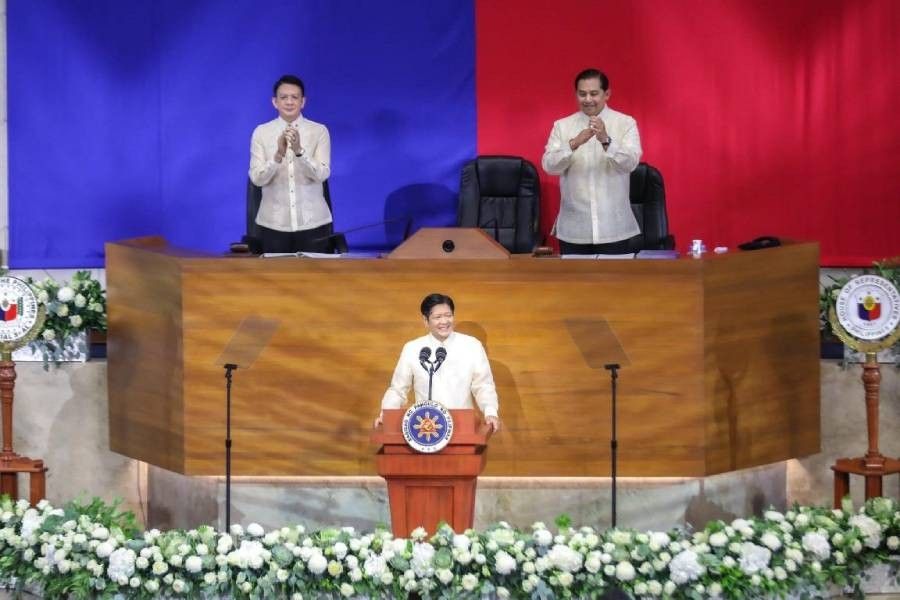
President Ferdinand Marcos Jr. is set to deliver his fourth State of the Nation Address (SONA) on Monday, July 28, halfway into his six-year term.
With a fresh mandate from the 2023 midterm elections and changes in the Cabinet, the administration has a renewed opportunity to drive its reform agenda forward.
A midterm SONA is more than a progress report—it’s a strategic moment to recalibrate, push harder and deliver results.
The direction is clear: make the Philippines more investment-ready by pushing reforms in infrastructure, education, investment policy and sustainability.
This must be done within a governance framework that values transparency, efficiency and strategic long-term planning.
Accountability is not a hindrance to progress – in fact, it is needed to achieve it.
In the 2025 Kearney FDI Confidence Index, investors around the world highly consider the efficiency and transparency of legal procedures in a country before investing in it.
The Philippines must continue to ensure that its systems are built in the foundations of fairness and proper due process to attract more investors to ensure inclusive economic growth.
If pursued with discipline and focus, these priorities can bring real, tangible improvements to the lives of ordinary Filipinos.
These are ambitious goals, to be sure. But we take comfort in the fact that key economic posts in the government are occupied by capable and dedicated individuals who ground their decisions on empirical evidence.
One key area is the push to modernize how business is done in the country. Digitization is central—not only to simplify government transactions but to attract and retain investment.
Policy tools like tax reforms in priority sectors (renewables, technology, health, agriculture) signal that the government is creating space for innovation and long-term competitiveness.
Digital infrastructure remains a priority. Connectivity powers entrepreneurship, improves access to services and fosters inclusive growth.
It also underpins the country’s push to become a hub for tech-driven industries and knowledge work.
In parallel, infrastructure investment continues under the Build Better More program. These projects cut logistics costs, improve mobility, and open up rural areas for development.
The recently approved Accelerated and Reformed Right-of-Way (ARROW) Act will further streamline project implementation, ensuring that infrastructure upgrades are delivered on time.
The quality of growth also depends on whether Filipinos are equipped to take part in it. Education, healthcare, and workforce development are no longer side issues—they are front and center in building a productive economy.
One critical measure in this space is House Bill No. 4, the proposed Expanded Government Assistance to Students and Teachers in Private Education (E-GASTPE) Act. This bill broadens government support for private school students and teachers, maximizing the synergy between public and private education.
It helps decongest public schools and gives qualified students more pathways to quality education. The E-GASTPE Act is a practical, immediate solution to the rising demand for basic education—particularly in areas where public school capacity remains stretched.
Beyond basic education, the proposed Lifelong Learning Development Framework (LLDF) Act institutionalizes continuous learning at all stages of life.
This national framework supports skill acquisition in both urban and rural settings, enabling Filipinos to adapt and stay competitive in a changing economy.
The push for health equity continues. President Marcos has publicly committed to fully subsidized healthcare, aiming to eliminate out-of-pocket hospital expenses.
Access to care is foundational to productivity, and this initiative aligns with the long-term vision of a healthy, resilient population.
In support of industrial growth and global competitiveness, House Bill No. 19, the National Quality Infrastructure Development Act, proposes a framework to harmonize standards, accreditation, metrology and conformity assessment systems.
This is more than regulatory housekeeping—it’s about building a system that protects consumers, encourages innovation and aligns Philippine industries with international norms.
Investment facilitation is also being tackled head-on. House Bill No. 15, or the Green Lanes for Strategic Investments Act, will simplify processes for high-value investors.
By reducing red tape and moving permits online, this bill makes the Philippines more competitive in attracting game-changing capital. This is how jobs are created—not by rhetoric, but by building an environment that welcomes serious investment.
Sustainable development must also guide how we use our land and resources. House Bill No. 12, the National Land Use Act, provides a long-overdue science-based framework for land allocation.
It balances environmental protection, food security, and climate-resilient development—ensuring that growth doesn’t come at the expense of future generations.
Food security itself remains a pillar of inclusive growth. Productivity in agriculture must be increased, and farmers must be supported—not just with financial assistance, but with technology, training, and infrastructure.
Ensuring that all communities have access to affordable food will anchor social stability and keep inflation in check.
All these initiatives, taken together, form a roadmap for shared prosperity. What they need now is political will, execution and sustained public engagement.
There will always be noise around the presidency, especially at midterm. But amid the swirl of commentary and partisanship, the core question is simple: are we moving toward an economy that lifts all boats?
The people don’t need textbook economics. They need visible change in their daily lives—more jobs, better schools, affordable healthcare and safer communities.
The SONA is the president’s chance to reaffirm his administration’s direction—not in abstract terms, but through action plans that match the people’s concerns.
He must speak with the clarity of a leader who listens. In the past year, he’s shown this quality in major decisions—from reassessing transport infrastructure to taking a firm stance on the West Philippine Sea and evaluating Cabinet performance with rigor.
Three years in, the administration must now shift from groundwork to full execution. The public will judge not just vision, but delivery.
As President Marcos takes the podium, the nation will be listening—hoping not just for reassurance, but for results.
Rupert Paul Manhit is the COO and managing director of think tank Stratbase Group. He is the executive director of Philippine Trade Foundation (Phils Inc.)


- Latest