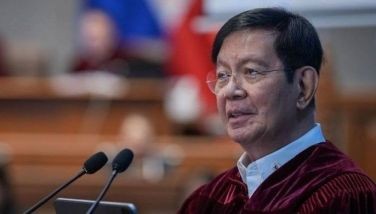
Church gets by on P1 donations
September 9, 2004 | 12:00am
 DAVAO CITY — It’s not the rich but those who have less in life that are keeping the Roman Catholic Church in the Philippines afloat.
Davao Archbishop and Catholic Bishops’ Conference of the Philippines (CBCP) president Fernando Capalla said the loose change poor people offer during Mass is what really provides financial sustenance to the Church.
"The financial support, through the P1, P2 or P3, the poor offer during Masses really help sustain the Catholic Church," Capalla declared.
"There are very few parishes with rich people giving P100 or even P1,000," he added, saying coins form the bulk of collections during offertory in Masses across the nation.
"The banks where the churches deposit the collection would know about the coins because almost all the coins go straight to the banks. But really the churches get very few paper bills," he said.
Capalla said the poor have been consistent in giving financial support to the Church in their own little way despite having less in life.
He described the millions of the poor as those who really comprise the Church as against the prelates and the officials who only make up 10 percent of the faithful.
"The first group (the priests and Church officials) belongs to the 10 percent but the other face of Church is the millions of believers who are humble, (the) poor but give so much of themselves, they are the 90 percent who support the Church," Capalla said.
He also said the per capita contribution of the Philippines to the Holy Father in Rome has been placed only at six centavos. The collection, he said, is given to Mission Sunday every October.
"It is only six centavos, to think that Catholics are 85 percent of the country’s population," he said.
But Capalla pointed out several parishes in the country benefited from the collections generated as Vatican appropriates the money and allocates it for the various parishes around the world that badly need financial support.
He said the existing situation of the Catholic Church drawing support mostly from the poor may pave the way for tithing among its faithful in the country.
Capalla disclosed a bishop has been making the rounds by conducting stewardship seminars on tithing while certain parishes have been identified as "pilot areas" for the actual implementation of tithing.
Tithing is a practice of setting aside a portion of one’s annual income as voluntarily contribution for the support of the Church.
"However, tithing can only be effective when the education component is consistent and systematized. You have to motivate the people on tithing," Capalla told The STAR.
Aside from the collection during Masses, the Catholic Church also gets certain amounts from the offerings during weddings, baptism and confirmation.
As to the issue of taxing the Church, Capalla said there are certain activities that can be taxed.
"It is very clear there are things that are taxable in the Church and they should be taxed. But if they are for religious purposes, like donation for the Church, they should not be taxed. The law is clear about it," Capalla said.
BrandSpace Articles





<
>
- Latest
Latest
Latest


1 day ago


1 day ago

2 days ago
2 days ago

2 days ago
2 days ago
Recommended
October 15, 2026 - 12:00am
October 15, 2026 - 12:00am
1 day ago

October 15, 2026 - 12:00am