Philippines seeks US funding for Bicol rail revival
After rejecting China
MANILA, Philippines — The Philippines is turning to the US to find a potential backer for a P175-billion railway between Manila and Bicol, hoping Washington will pick up a project formerly contracted to Beijing.
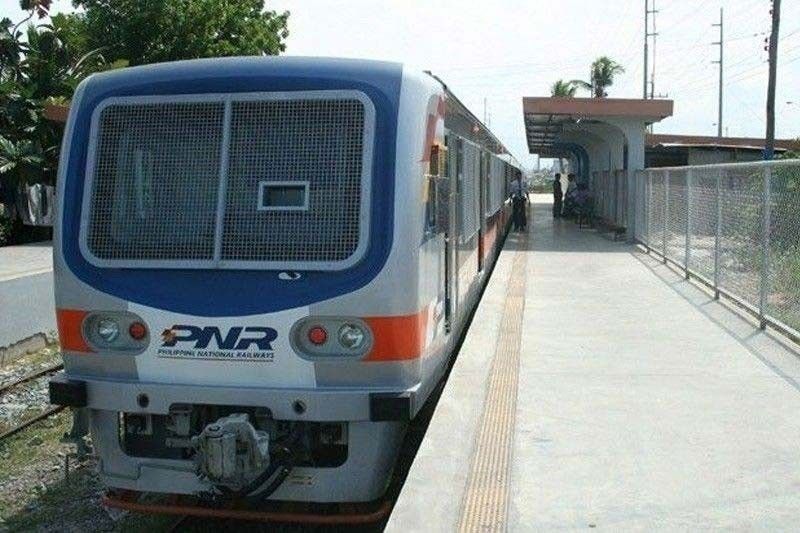
The Philippine National Railways (PNR) is pitching the PNR South Long Haul to private groups in the US in a last-ditch effort to start the project before the end of the Marcos administration.
PNR general manager Deovanni Miranda will be meeting with American investors next week to talk about the prospects of funding the project also known as PNR Bicol.
“PNR was invited to present in the US-Philippines Rail Technology Exchange to be held on July 21. I believe several US firms are expected to attend it and have one-on-one (meetings)with us,” Miranda told The STAR.
Miranda earlier discussed PNR Bicol with the commercial team of the US embassy to gauge interest. The embassy played an important role in convincing Washington to extend technical assistance for the Subic-Clark-Manila-Batangas (SCMB) Railway.
In 2025, the US Trade and Development Agency said it was funding the feasibility study for the SCMB Railway, a 250-kilometer line that aims to connect Luzon’s largest ports.
PNR Bicol, however, requires larger financing and technical requirements as it will cost P175.32 billion to put up its 557-kilometer line between Sucat, Muntinlupa City and Matnog, Sorsogon.
Originally, the project mirroring the old line of the Bicol Express was supposed to be funded by a Chinese loan, but President Marcos withdrew the borrowing application in 2023.
There had been disputes on the interest rates the loan would carry, with China reportedly eyeing a premium rate of three percent per annum. It also did not help that the countries are fighting for control in the West Philippine Sea.
Washington could be a perfect replacement for Beijing, as the US owns the world’s largest rail network of around 140,000 miles. Annually, the US interstate trains move 1.5 billion tons of goods and close to 29 million passengers, according to the American Society of Civil Engineers.
Likewise, Miranda is exploring a potential public-private partnership (PPP) with Taiwan, another Chinese rival, to fund PNR Bicol, although this model would include developing the land around the alignment.
“Taiwanese private companies for PPP also had interest last year, but since PNR ridership is low, they expect to include land use for their development,” Miranda said.
As the government searches for a new PNR Bicol backer, Miranda said his agency has proposed an P11.46-billion budget for 2027 to support commuter operations in southern Luzon.
PNR is currently working on reviving the 422-kilometer service between Calamba, Laguna and Legazpi, Albay. The initiative will cost at least P1.81 billion since the PNR has to buy three new train sets.
The PNR will also spend P1.84 billion for ballasting works to improve the structural integrity of working lines in Southern Tagalog and Bicol Region. The agency will also invest P850.5 million to upgrade rail vehicles given that most of them are already old.
The proposal has earned the support of Bicol Saro Rep. Terry Ridon, who said Bicol is in urgent need of more transport modes because air travel is costly and bus trips are time-consuming.
“The PNR’s P11-billion proposal to refleet and upgrade the Bicol line is a fantastic development for our endeavor to restart operations in the region while waiting for funding for the South Long Haul,” Ridon told The STAR.
Currently, the PNR runs limited trips between Naga and Lupi Viejo in Camarines Sur, as well as between San Pablo, Laguna and Lucena, Quezon by way of Calamba.


- Latest
- Trending