Supreme Court junks petitions vs controversial 2022 traffic code
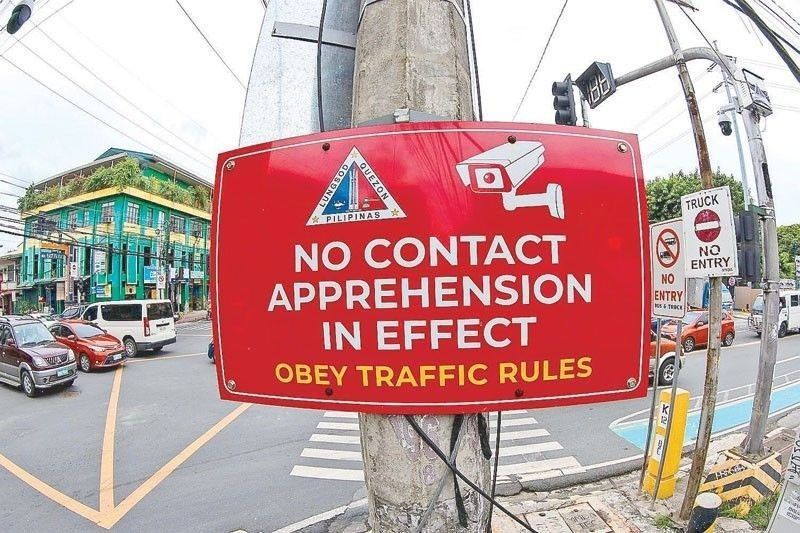
MANILA, Philippines — The Supreme Court has dismissed consolidated petitions challenging Metro Manila's no-contact apprehension policy (NCAP), saying the traffic ordinances questioned by transport groups had been overtaken by a new region-wide traffic code.
In a June 3 decision penned by Associate Justice Rodil Zalameda, the high court lifted the Aug. 30, 2022 temporary restraining order against the covered local governments and the Land Transportation Office.
The court, however, made clear that the dismissal was not a ruling on whether the original NCAP ordinances were valid.
The high court said the adoption of the Metro Manila Traffic Code of 2023 and related local measures made the case moot because they replaced the local ordinances that had been challenged in the petitions.
"To engage in a resolution of the constitutional and legal challenges leveled against the assailed NCAP City Ordinances would be, at this juncture, a patently futile judicial exercise," the Supreme Court said.
"Those Ordinances have been rendered functus officio by the subsequent enactments of the concerned LGUs, all of which have been calibrated in conformity with the MMTC 2023, which is not being challenged in these petitions or in any other forum," it added.
Challenge to old NCAP rules
The case stemmed from petitions filed by Kilusan sa Pagbabago ng Industriya ng Transportasyon and other transport groups against ordinances in Manila, Quezon City, Valenzuela, Paranaque and Muntinlupa.
The petitioners argued that the camera-based traffic enforcement system violated Republic Act No. 4136, or the Land Transportation and Traffic Code, which they said requires face-to-face citation and holds the actual driver, not the registered vehicle owner, responsible for violations.
They also claimed that NCAP denied motorists due process because penalties could accumulate before vehicle owners received physical notice of the violations.
Why the court dismissed the case
The Supreme Court invoked the doctrine of constitutional avoidance, saying courts should avoid ruling on constitutional questions when a case can be resolved on other grounds.
The high court said the old local ordinances were no longer the controlling framework after Metro Manila adopted a unified traffic system under the Metro Manila Traffic Code of 2023 and related guidelines from the Metropolitan Manila Development Authority.
The court also dismissed the petitions for procedural defects, citing lack of legal standing, forum shopping, and violations of the hierarchy of courts and the rule on exhaustion of administrative remedies.
"As act of constitutional fidelity, the Court thus confines itself to the disposition of threshold issues, which petitioners failed to hurdle. The consolidated Petitions are fraught with defects sufficient to warrant their dismissal without a discussion of the merits," the Supreme Court said.
"We rule in this manner without prejudice to the invocation of the substantive and constitutional questions in a petition that adequately satisfies the requisites of judicial review," it added.
No ruling on NCAP's legality. The Supreme Court said the dismissal should not be read as an endorsement of the original NCAP ordinances.
Its ruling was limited to the procedural defects in the petitions and the changed circumstances brought by the adoption of a new traffic framework.
The ruling effectively clears the legal block on the covered local governments, although any challenge to the newer traffic framework would have to be raised in a proper case.


- Latest
- Trending