Lack of facilities shows gaps in juvenile justice system
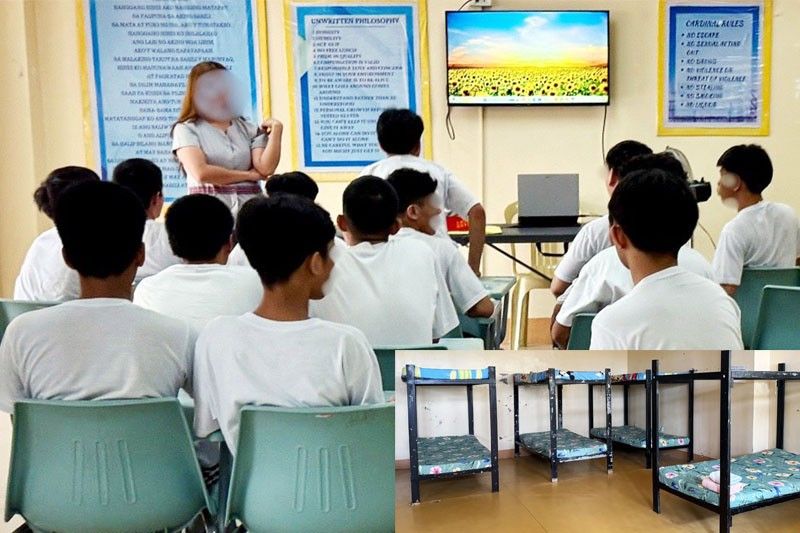
MANILA, Philippines — For the past 14 years, Gary Cañete has been working as a house parent in a Bahay Pag-asa facility, a 24-hour child-caring institution established to provide short-term residential care for children in conflict with the law (CICL).
But unlike most house parents, his commitment to caring for youth who have had brushes with the law is rooted in something more personal: he himself was a former CICL.
“When I was a minor, I experienced being detained at the NBI (National Bureau of Investigation) jail and the city jail. These are facilities for adults, what can be considered criminogenic environments or places that can also push children to learn criminal behavior,” he told The STAR in Filipino.
In 2019, Cañete recounted to The STAR his experiences being detained with adult offenders and how – following the passage of the juvenile welfare law – an intervention program for the youth enabled him to turn his life around.
Now 36, Cañete believes that Bahay Pag-asa facilities offer a valuable opportunity for CICLs to become productive members of society.
“During my time, there was nothing like this, so it’s encouraging to see Bahay Pag-asa facilities… It’s a significant improvement compared with what I experienced back then,” he added.
Republic Act 10630, which amended the Juvenile Justice and Welfare Act of 2006, mandates the establishment of a Bahay Pag-asa facility in each province and highly urbanized city in the country.
In addition to providing support to CICLs awaiting disposition of cases, a Bahay Pag-asa facility must also have an “intensive juvenile intervention and support center” to cater to children between 12 to 15 years old who committed serious offenses.
Each facility is required to have a “multi-disciplinary team” composed of a social worker, a psychologist or mental health professional, a medical doctor, an educational or guidance counselor and a member of the local Barangay Council for the Protection of Children.
Severely lacking
But more than a decade after the 2013 amendments to the juvenile justice law, the requirement to establish Bahay Pag-asa facilities remains largely unfulfilled.
Available data showed that only 30 out of 83 provinces and 28 out of 33 highly urbanized cities have their own Bahay Pag-asa facilities.
And while there are 117 operational facilities, including those run by municipalities and component cities, data presented during a recent Senate hearing showed that only 28 have valid accreditation from the Department of Social Welfare and Development (DSWD).
“One reason I see is that (local government units) have limited resources, so they’re prioritizing where to allocate their funds. And it seems that building Bahay Pag-asa facilities hasn’t made it onto that list,” Tricia Clare Oco, executive director of the Juvenile Justice and Welfare Council, said in a phone interview.
Under the law, local government units – including barangays – are required to allocate one percent of their internal revenue allotment to strengthening their Local Councils for the Protection of Children, including establishing Bahay Pag-asa facilities.
But even Social Welfare Secretary Rex Gatchalian, a former city mayor, recognized challenges in establishing and operating such facilities.
“It’s difficult to build one, and even more difficult to operate one. Some of our local government units simply have very limited capacity to run a Bahay Pag-asa facility. Operating a shelter or residential facility is a complex undertaking,” he said during the Senate hearing on July 1.
Aside from building the actual facility, Oco noted shortage in personnel, especially social workers, psychologists and doctors.
“If a city doesn’t have its own Bahay Pag-asa facility, they sometimes enter into agreements with adjacent cities or municipalities to accommodate the child there,” she said.
Poor conditions
Discussions on the viability of Bahay Pag-asa facilities as rehabilitation centers emerged following the deadly school shooting involving minors in Tacloban City on June 22.
One issue raised was the absence of a Bahay Pag-asa facility in Tacloban. The nearest one, in Biliran, was also found to be operating at full capacity.
“The DSWD is providing assistance,” said Oco, referring to the case of the two minors involved in the shooting.
But beyond the issue of shortage is the question of whether existing ones meet the required standards.
Ma. Angila Capati, center head at non-profit KnK Children Without Borders Philippines, said some Bahay Pag-asa facilities lack the standard environment mandated by DSWD.
“Sometimes, even if you put up an institution, if there is no implementation of activities, the children will not change over time,” she said.
Congestion is a significant problem.
“The reality in some Bahay Pag-asa facilities is that children sleep on pieces of cardboard laid on the floor. Sometimes, they even make makeshift hammocks near the windows because of the lack of space,” she said.
“In some LGUs, there is only one residential facility. The result is that CICL, children at risk, and even rape victims are accommodated in the same place,” added Capati.
In April, the Commission on Human Rights (CHR) flagged the poor conditions in several Bahay Pag-asa facilities across the country.
It also cited cases of violence during a child’s apprehension, ill-treatment by facility personnel and “facilities that are designed more like jails than safe spaces for children.”
“These include poor living conditions, delay in the disposition of cases, limited access to health care and education, strict or limited visitation rules that affect family contact and shortages in staff and resources,” the CHR added.
Houses of hope
When properly operated, Bahay Pag-asa facilities are seen as capable of living up to its name of giving hope to CICLs.
“We have a lot of success stories,” said Ghrace Gaoat, center head of the Molave Youth Home, the Bahay Pag-asa facility of the Quezon City government.
“We believe that (the children) can still change, and we’ve seen that (this system) works. We have many success stories, and many of those who were given a second chance have expressed their gratitude for the opportunity,” she added in Filipino.
Unlike other Bahay Pag-asa facilities, the Molave Youth Home – which relocated to its new site in Payatas in 2021 – has a full complement of personnel as required by law, including its own doctor, psychologist and teachers.
Despite housing 137 children, many of them due to drug-related issues, the facility’s 10 full-time social workers allow it to maintain the ideal 1:15 or better social worker-to-child ratio.
The residential facility also offers education programs, including online tertiary education in partnership with the Quezon City University.
“It is still a child’s right to have access to education. As much as possible, no one gets left behind,” said Gaoat. “The livelihood skills training teaches them different ways to earn money properly and legally.”
Maria Lourdes Gardoce, head of the Bahay Pag-asa facility in Valenzuela, stressed the importance of regularly assessing the programs provided to the children.
This, she said, would ensure that the principles of restorative justice are achieved.
With some legislators again pushing for amendments to the juvenile justice law, particularly lowering the minimum age of criminal responsibility, advocates are hopeful that attention is also given to gaps in implementation.
The Valenzuela Bahay Pag-asa facility, which implements initiatives such as a compliance rating system and performance indicator, already achieved Level 2 accreditation from the DSWD.“Based on the current implementation, we’ve seen that the Juvenile Justice and Welfare Act has produced positive results,” Gardoce told The STAR in Filipino.
“At the same time, I can say that the law has not yet been fully implemented. Because it has not been fully implemented, we have yet to see its full benefits,” she added.
What needs to be done
With some legislators again pushing for amendments to the juvenile justice law, particularly lowering the minimum age of criminal responsibility, advocates are hopeful that attention is also given to gaps in implementation.
“The Philippines has one of the strongest laws when it comes to… juvenile justice,” said Capati of KnK, which provides various forms of support to Bahay Pag-asa facilities.
“The only problem is, even though the law’s implementing rules and regulations clearly spell out what (different agencies) are supposed to do, there is still a significant gap in implementation,” she added.
She noted, for instance, the requirement for barangays to implement intervention and diversion programs for CICLs.
“Our hearts (go out) to the victims of these children. We are not disregarding what happened to the victims, but the lawmakers should better understand also the situation of (CICL),” she added.
Citing their experience working with the youth, both Gaoat and Gardoce stressed that rehabilitation does not stop at the Bahay Pag-asa facilities.
“Other stakeholders also need to fulfill their roles and responsibilities,” said Gardoce. “If we fail to help young people who have, at one point, gone astray, we cannot expect a brighter future for our country. We need to invest in them. They may have gone through difficult circumstances, but if they are given the help and support they need, change is possible.”
Cañete, the former CICL who has made it his mission to support children in similar circumstances, said the gap lies not in the law but in its implementation.
“I am living proof that this law can truly succeed when the right support is in place,” he said. “The problem is not with the law. It’s really about funding, adequate facilities, and proper implementation by the government. For me, we should not place the burden of our institutions’ shortcomings on the shoulders of a child.” — EJ Macababbad


- Latest
- Trending