


Off-grid areas eyed for full hybridization
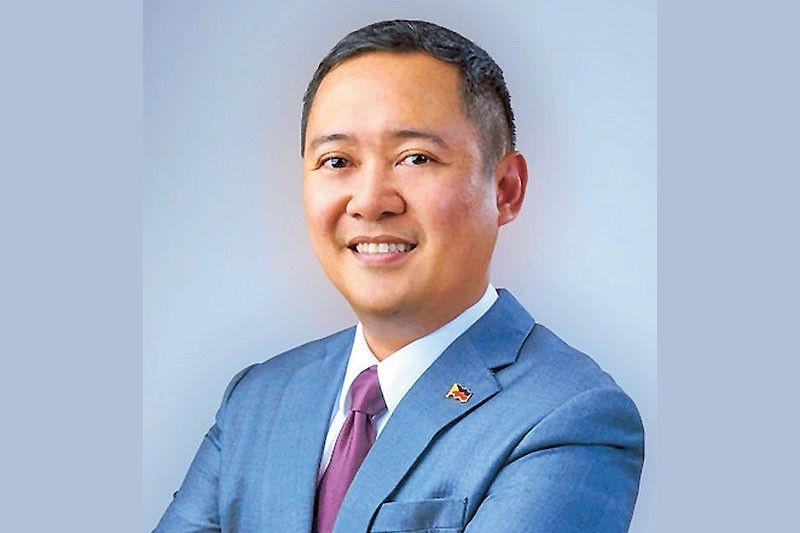
MANILA, Philippines — The government is racing to bring renewable energy (RE) to the country’s most remote communities, targeting full hybridization by 2030 to reduce their costly reliance on diesel power.
But National Power Corp. (Napocor) is not counting solely on government coffers to make the transition happen, as it is also courting the private sector to help boost electricity supply in areas not connected to the main grid.
“That is the plan for five years. That’s in our missionary electrification,” Napocor president and CEO Jericho Nograles said in an interview.
Nograles said the hybridization program from 2026 to 2028 would be funded by the government, while private investments are expected to play a larger role in the succeeding years.
Napocor remains heavily reliant on fossil fuels, with most of its nearly 300 small power utilities group (SPUG) plants powered by diesel generators.
By integrating RE into the SPUG areas, the state-run firm aims to deliver cleaner and more affordable electricity to off-grid consumers.
Despite the high cost of generating power in off-grid areas, consumers typically pay only around P7 to P8 per kilowatt-hour (kWh), thanks to subsidized rates.
Subsidies funded by all power consumers nationwide cover the remaining cost, which averages around P10 to P11 per kWh.
“When the Middle East crisis erupted, crude oil prices went up. I looked into hybridization, then I said: ‘Let’s roll it out as fast as we can and as meaningfully as we can,’” Nograles said.
He said hybridization should be implemented not merely for the sake of deployment, but to deliver real, measurable impact on communities.
Even before the global oil price surge, the Department of Energy had estimated that the actual cost of electricity generation in SPUG areas could reach as high as P62 per kWh.
Notably, this figure reflected generation costs alone and did not include other charges.
With diesel prices still elevated, these costs could rise further, highlighting the urgency of expanding RE deployment in off-grid areas.
Energy Secretary Sharon Garin said hybridization would help shield the Philippines from global shocks, particularly those stemming from the Middle East.
The Philippines sources most of its crude oil from the Middle East, with Saudi Arabia as its largest supplier.
While oil represents only a small portion of the country’s overall energy mix, the main challenge lies in remote areas that remain disconnected from the national grid and rely heavily on diesel for power generation.


- Latest
- Trending


