


Philippines chicken imports seen rising next year
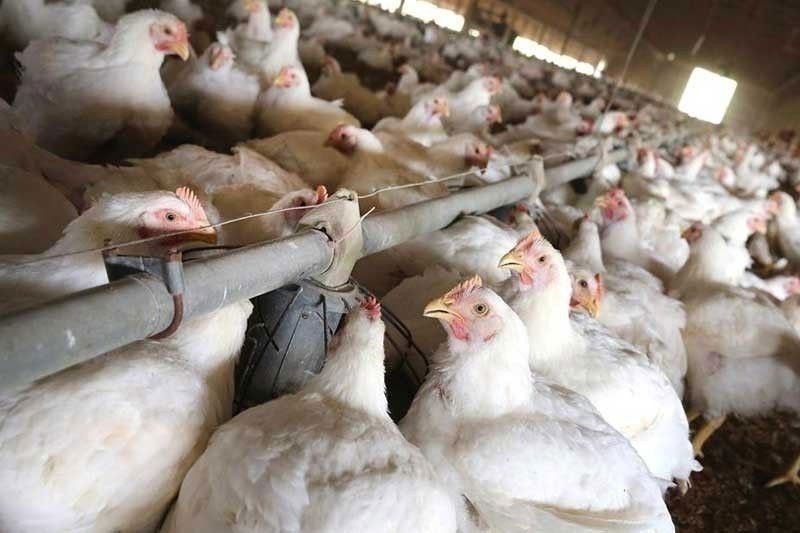
MANILA, Philippines — The Philippines is expected to import more chicken meat next year due to higher demand from the manufacturing and food service sectors, according to the US Department of Agriculture (USDA).
In a report, the USDA’s Foreign Agricultural Service said that Philippine chicken imports are estimated to reach 780,000 metric tons (MT) in ready-to-cook equivalent in 2027.
“Imports are forecast to trend upward as demand from the food manufacturing and food service industries continues to rise, driven by population growth and better economic performance projected for 2027,” it said.
The recent estimate is 14.7-percent higher than the revised 680,000 MT in ready-to-cook equivalent seen for 2026.
According to the international agency, Brazilian chicken would continue to dominate the chicken market next year due to its price advantage relative to other suppliers to the Philippines.
Imports from Brazil are expected to capture the majority of the market in total Philippine chicken meat imports.
Citing industry contacts, the USDA said that prices for Brazilian chicken meat remain competitive compared to other trading partners, particularly the United States, the European Union and Canada.
Imports of mechanically deboned meat (MDM) of chicken from Brazil made up about 66 percent of all imports as of July, according to the Bureau of Animal Industry.
MDM chicken is a typical ingredient in manufactured products, including hotdogs and luncheon meat.
The USDA noted that regionalization agreements for Highly Pathogenic Avian Influenza, or bird flu, with several countries could also allow the eased entry of foreign chicken meat to the Philippines.
Under the scheme, the government will no longer impose a country-wide ban on poultry imports during bird flu outbreaks; instead, the importation of poultry products will be allowed in case-free areas.
Meanwhile, the USDA said that local chicken meat production is forecast to reach 1.92 million MT next year, a 5.8-percent increase from the 1.82 million MT estimate this year.
“This growth is supported by expanding operations among poultry integrators and other commercial farms, alongside efficiency gains from labor- and time-saving technologies, improved genetics and continuing training for farm personnel,” it said.
The international agency noted that the local swine sector’s incomplete recovery from African swine fever continues to support poultry output, as raisers have veered away from hog production to poultry.


- Latest
- Trending


