Marcos: Philippines income status upgrade a vote of confidence
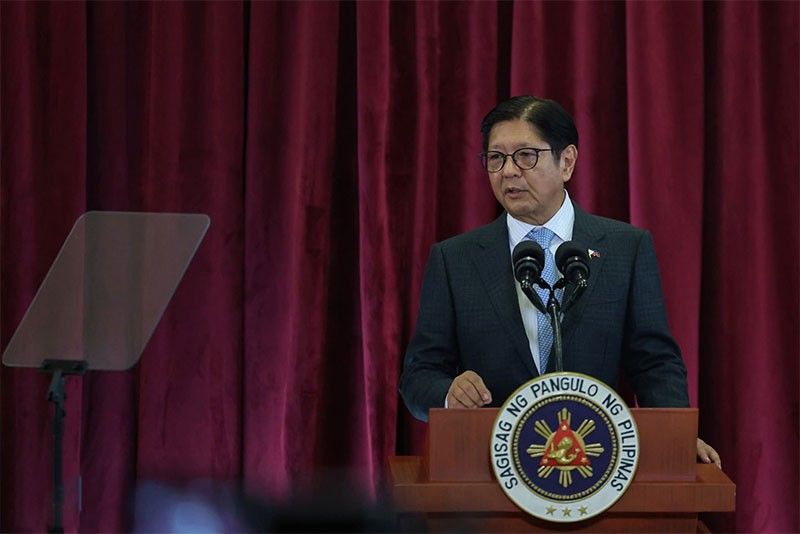
VANCOUVER – The Philippines’ ascent to upper-middle income country status is a “vote of confidence” in the country’s potential and a validation of the administration’s economic policies pursued over the past four years, President Marcos said yesterday.
“For years, Filipinos have worked hard to build this country. Today, the world has taken notice. The Philippines has officially become an upper-middle income country,” Marcos said in a video message.
Marcos arrived here Thursday morning (Manila time) for a four-day official visit.
The World Bank earlier reported the Philippines has reached upper-middle income status, fueled by broad-based economic expansion, with the economy posting an average annual gross domestic product of 5.8 percent over the past five years.
The development “validates the progress we have made and the resilience of the Filipino people,” Marcos said.
“It is also a vote of confidence in our country’s future. Greater confidence means more investments. More investments mean more businesses, better quality jobs and more opportunities for Filipino families,” he said.
“After nearly four decades as a lower-middle income country since 1987, this milestone affirms that the economic policies we have pursued over the past four years have been effective,” the President stated.
“Our steady economic growth, broadly stable currency and long-term reforms have strengthened our economy even amid global uncertainties,” he said. Marcos said the country’s economic progress is not just on paper.
“It is meant to open doors, put food on the table and give every Filipino the chance to build a better life,” he said.
“That is the work we will continue to do until every family feels the benefits of our country’s progress,” the President said.
‘Not the finish line’
In a statement, Executive Secretary Ralph Recto said attaining upper-middle income status is “not the finish line.”
“The true measure of success is whether it was felt by each Filipino family. We will not stop until more Filipinos rise from poverty and experience a more comfortable life,” Recto said.
Recto said the government is determined to sustain reforms to make doing business easier, boost digital connectivity, enhance education and workforce skills, and build greater resilience against climate-related risks and external shocks.
Department of Economy, Planning and Development Undersecretary Rosemarie Edillon said the government should increase spending on infrastructure and human capital to sustain the gains that led to the country reaching upper-middle income status.
“The first thing to do right away is to accelerate capital spending, especially by the government, because this will increase our capacity to grow,” Edillon told One News’ “Storycon.”
“We need to invest more in infrastructure to increase our capacity. We can have more trade, we can have more shipments and we can actually entertain more visitors and tourists,” she said.
“At the same time, we need to invest a lot in human capital because this will bring us to the next level,” she added.
Management Association of the Philippines president Donald Lim, in a Viber message, considered the country’s entry into the upper-middle income club “an important milestone and a positive signal to global investors that our economy has made meaningful progress.”
However, Lim said the statistical classification does not necessarily reflect the realities of many Filipino families, who continue to struggle amid the high cost of living and limited purchasing power.
“The real measure of success is whether this milestone translates into more quality jobs, higher incomes and better opportunities for ordinary Filipinos,” he said.
Launchpad
Bangko Sentral ng Pilipinas Governor Eli Remolona Jr. said that while the Philippines’ move to upper-middle income status reflects years of steady economic progress, it also underscores the importance of efforts to preserve macroeconomic stability and sustain structural reforms.
“It is a launchpad. The next phase of development will depend on faster productivity, stronger innovation and better quality jobs – reaching all regions and communities,” said World Bank division director for the Philippines Zafer Mustafao?lu of the country’s ascent to the upper-middle income club.
Some quarters, however, have expressed skepticism over the World Bank report, with Rep. Antonio Tinio of militant party-list ACT Teachers calling it propaganda.
“Are we in the same universe? Wages in the country are not even living wages, whether for teachers, civil servants, or ordinary workers. If their basis is whatever growth indicators they set, the average citizen won’t feel it,” ACT chairperson Ruby Bernardo said.
“It does not make any sense for our economic managers to boast of this higher national status while continuing to shortchange workers by claiming, time and again, that a badly needed legislated wage hike, the first in 37 years since 1989, only spells doom for our economy and businesses,” the Trade Union Congress of the Philippines said in a statement. — Louella Desiderio, EJ Macababbad, Alexis Romero, Rhodina Villanueva, Bella Cariaso, Delon Porcalla


- Latest
- Trending