


Return to pre-war pump prices may take a year
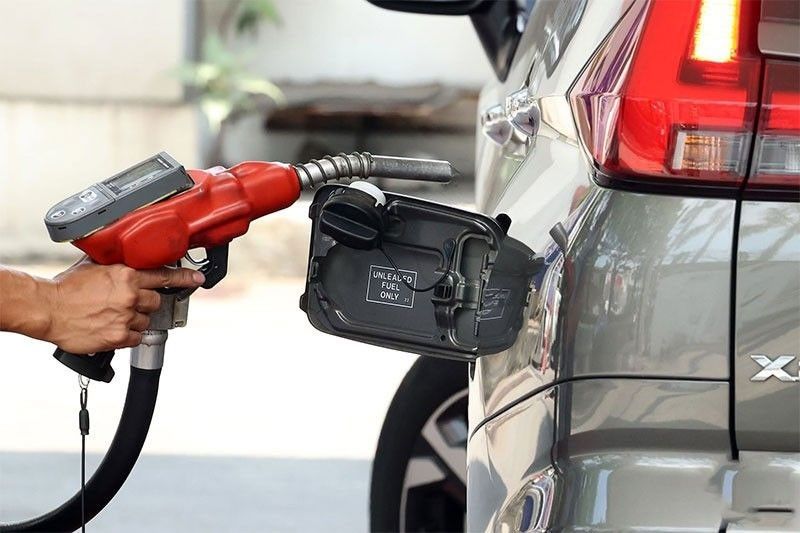
MANILA, Philippines — Will Filipinos see pump prices fall back to pre-war levels now that the United States and Iran have reached a peace deal?
For the Department of Energy (DOE), it will be a long road back to that scenario.
“We probably need another six to 12 months,” DOE Undersecretary Alessandro Sales said yesterday. “It’s really just an issue of restarting the supply that was disrupted by the war. The return of supply is not instantaneous, so that’s the outlook.”
Fuel prices are set for major declines today, as Energy Secretary Sharon Garin has announced price cuts of P3.71 to P5.71 per liter for diesel and P0.50 to P2.50 per liter for kerosene.
Gasoline prices may see a rollback of P0.32 per liter, or even increase by up to P1.68 per liter.
After the US and Iran, as well as key mediator Pakistan, confirmed a truce had been hashed out, global benchmarks Brent crude and West Texas Intermediate fell more than four percent, to below $90 per barrel.
Since the Gulf War broke out, energy supplies have been crippled by the closure of the Strait of Hormuz to commercial traffic.
With the Philippines dependent on the strait to transit nearly all of its energy needs, the effect on pump prices was immediate.
Diesel, which hovered between P50 and P60 per liter, skyrocketed to nearly P150 before falling to around P80.
US President Donald Trump said Sunday that the strait, a narrow waterway through which one-fifth of the world’s oil passes, will immediately be opened “toll-free” upon signing.
DOE-Oil Industry Management Bureau Director Rino Abad had warned of tightness in oil supply if a peace deal isn’t reached before the end of July.
The International Energy Agency (IEA) called for the “unconditional” reopening of the Hormuz Strait to prevent oil markets from entering a “red zone” in July or August, in which global stocks are further depleted amid an expected demand pickup due to the summer travel season.
The IEA reported in May that even if the war had been resolved in early June, the market would still be “severely undersupplied” until the third quarter of the year.
Weaker demand has not offset the supply shortfall, with the deficit from March to June at six million barrels a day.
Kuwaiti oil producers turned off their wells due to insufficient storage and it would not be easy to turn them back on.
Wells in Saudi Arabia and Kuwait are losing pressure that may never return to their original form.
Qatar’s liquefaction trains, which cool natural gas, will take weeks to function normally again.
Abad said if traffic fully resumes in August, supplies from freed-up tankers would serve as a buffer for the world while oil producers fix production facilities damaged by the war.
Research firm Rystad Energy estimates that the bill to repair damaged energy infrastructure in the Middle East, which acted as retaliatory targets by warring parties, is pegged at $58 billion, with a chunk spent on engineering and construction. — Brix Lelis


- Latest
- Trending


