


Genuine rather than facade democracy
MANILA, Philippines - The 2010 presidential election is meant to serve as a reminder that we are a democracy — that the citizens are at our nation’s core. Those familiar with legal literature recognize with ease the relationship between democracy and elections.
An election demonstrates not the abstract forms of rights enumerated in the Bill of Rights of the Constitution but the concrete set of legal entitlements of citizens. In a tradition played out every six years, we are able to show how our society has imbibed the two recognized indicators of a true democracy: universal suffrage (“anyone of legal age can vote”) and equal voting rights (“one person, one vote”). True democracy also carries with it the promise of rule of law and respect for human rights. And it can only operate on transparent and accountable governance, genuine political processes, and politically empowered citizens.
The issue of automated elections to facilitate the voting process, and arrive at more accurate results faster, plays into this perennial clamor. A supplemental budget for automation has already been signed into law.
But let’s not forget that beyond the issue of counting votes, lies a more critical question: who are we voting for?
On this note, one realizes that political parties are an essential ingredient in a true democracy. Literature tells it quite simply: No political parties, no democratic development.
A political party system serves both electoral and non-electoral roles. In elections, political parties provide citizens with choices. By fielding candidates representative of collective interests, political parties frame public policy choices. Not only that, they also ignite public discussion and mobilize public support.
Perhaps more important though is the role played by political parties in non-electoral, long-term concerns. A party serves as the platform for articulation of interests and political governance. They are vessels of legitimate political expression. Unlike any interest group, political parties encourage pluralism, representing various interests through party programs. One of its greatest potentials for good is its ability to drown the complexity of multiple and scattered political agendas through the creation of priority policies. The party system mitigates against personality politics, and assures continuity of programs.
Through their collective nature, political parties are better equipped to formulate solutions to problems in governance, while keeping in touch with the finer issues that commonly beset a constituency.
What you get is democratic governance — voters enjoying an accountable link with their politicians. These roles result in citizen empowerment and more importantly, sustained democracy.
But establishing a party system is not enough. Only an effective system can speak of genuine political expression and choice. This is what the United States and other politically mature states boast of — well demarcated party lines through issue-based platforms. This is why the policy changes in taxes and health care US President Obama once promised are now being addressed.
It is unfortunate that we have yet to graduate to this level. What we have in the Philippines are parties used to power political machineries during elections. We see an unhealthy mix of the politics of personalities and money. Few political parties can stand by themselves, much less on the strength of their principles. They are forced to seek funding, the sources of which are not always savory.
This problem strikes at the heart of our democracy. A fragile party system produces weak political institutions. Weak political institutions breed corruption. A corrupt system is a perversion of the ideals upon which it was built. It stunts political development, and hinders economic progress. And when economic blueprints are flighty, foreign investments shy away.
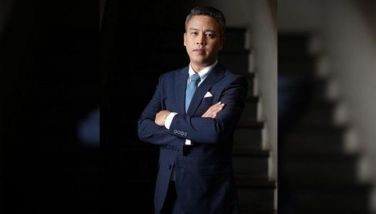
For these and other reasons, I authored a Political Party Development Act. The bill will transform political parties into public institutions and provide state subsidy to parties that will adopt an internal code of conduct and agree to public audit. The bill also prevents politicians from changing parties based on the tides of opportunity. Turncoats should never proliferate for they do not have clear blueprints, and they destroy the concept of word of honor.
We should not forget how novel and recent the mechanisms that empower our democracy are. These rights are intertwined with debates that have been vigorously fought in the course of history. The right to have one’s vote counted as equal to another are spoils won over years of the war of ideas. The participation of every citizen in government through his vote is a right that was earned by the blood of countless patriots. These rights are not simple constructs. They are tangible demonstrations of the power of one man, woman or child to change the society they live in. A stronger, stable and ideology-based political party system is key to meaningful political, social and economic reforms.
Ensuring clean elections requires that we address the ailing party system. The lack of strong ideological foundations, makes existing parties more prone to resort to fraud and money politics. By promoting clean elections, ideologically-centered political parties lead to a definite and clear platform of government — the true embodiment of a democracy in full bloom.
E-mail: [email protected]
Website: www.edangara.com






- Latest


