The Philippines is a maritime nation. Why don't we think like one?
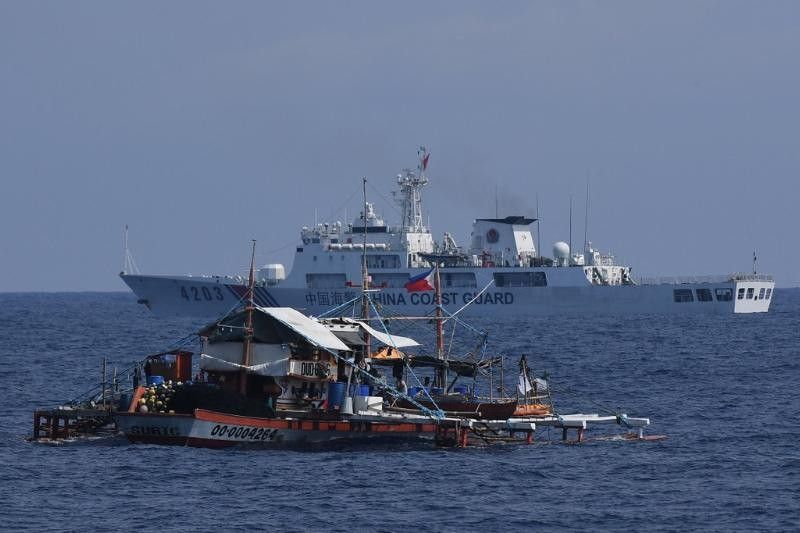
Tomorrow morning, before most Filipinos have finished breakfast, they will already have depended on the maritime industry several times without realizing it.
The fuel that brought food to the supermarket. The wheat in bread. The farmer's fertilizer. The medicine at the pharmacy. Much of what we use has traveled by sea.
We rarely think about the ships, ports or people that moved them.
That may be the maritime industry's greatest paradox.
The better it works, the less we notice it.
But stop the ships. Close a port. Interrupt a supply chain. Damage a fishing ground. Suddenly, maritime is no longer invisible.
It is food prices. Fuel supplies. Raw materials for industries. A fisherman's livelihood. An island awaiting relief after a typhoon.
For an archipelago, the sea does not merely surround the economy. The sea is part of the economy. And yet we have never quite learned to think about it that way.
We talk about seafarers as a labor. Ports as infrastructure. Shipbuilding as industrial policy. Fisheries as agriculture. Maritime security as defense. Education as training Filipinos to work aboard ships.
Each matters. But the sea does not divide itself according to the government's organizational chart. We miss the larger picture connecting them.
That is the proposition behind Blue Philippines: to look at our maritime and marine ecosystem as one national development platform.
Congress is taking an important step through proposed Blue Economy legislation. The House-approved measure recognizes fisheries, tourism, shipping, shipbuilding, renewable energy and maritime education, providing a foundation for sustainable ocean development.
But we should go further. The Blue Economy framework can help us govern the ocean asset. Blue Philippines should ask how we organize the national economy around the full value that asset can sustainably support.
Consider what is already there. The Philippine ocean economy generated about P1.08 trillion in 2025 and employed 2.46 million Filipinos. More than half a million Filipino seafarers were deployed internationally, generating billions in remittances.
We are also a significant shipbuilding location, with enormous potential in offshore renewable energy. Our marine ecosystems support food, tourism, livelihoods and coastal protection.
The pieces already exist. What we have not done is connect them. And perhaps our greatest opportunity lies not beneath the sea or inside our ports, but in our people. For generations, one Philippine maritime success story has stood above all others: the Filipino seafarer.
Filipinos help operate the ships that carry the world's food, energy, raw materials and manufactured goods. Few global industries have Filipinos playing such a significant role.
We should be proud of that achievement and protect it. But perhaps it has also narrowed our imagination. In the Philippines, maritime has too often become synonymous with seafaring.
It is not.
Someone owns a ship. Someone finances and insures it. Someone designs, builds and repairs it. Someone manages and supplies it. Someone writes its software, handles its cargo and advises on its law and regulation.
Around it are ports, logistics networks, shipyards, energy installations, universities, technology companies and coastal communities.
Why shouldn't Filipinos participate in much more of that value chain? This question becomes especially important in education. The Philippines has more than 80 maritime higher-education institutions. Yet our system still largely defines maritime education as preparation for work aboard a ship.
International maritime degrees require onboard training, but berths are limited. Some students cannot complete the pathway they entered.
The answer is not to lower standards for going to sea. Those standards must remain high. The answer is to widen the number of places a maritime education can take a young Filipino.
Imagine a Philippine Maritime and Marine Skills Framework mapping the professions our economy will need over the next 10 or 20 years.
A marine engineering student might become a ship's engineer or pursue shipbuilding, marine technology or offshore energy. A marine transportation student might go to sea or build a career in ports, logistics or fleet operations.
Then add marine science, maritime law, insurance, finance, cybersecurity, artificial intelligence and environmental management.
Instead of educating Filipinos principally for jobs on ships, we begin educating them for careers across the maritime world. That is how a manpower advantage can become a knowledge advantage and eventually an economic one.
The same thinking should extend across the country.
Ports should become engines of regional development. Shipyards should anchor industrial clusters. Marine ecosystems should be treated as productive natural capital. Maritime technology should become an innovation opportunity. Offshore energy should build Filipino engineering and service capabilities, not simply generate electricity.
And environmental protection cannot be an afterthought. There can be no Blue Philippines if the blue disappears.
Healthy seas are not the alternative to development. Sustainable maritime growth depends on them. All of this requires policy, investment and institutions. But perhaps it begins with something even more basic.
A conversation.
A finance official asking why more maritime value is captured elsewhere. A university president asking what new professions a maritime school could teach. An entrepreneur wondering what maritime technology company could be built here. A mayor asking how better ports could transform a local economy. A student discovering that a career connected to the sea does not necessarily mean going to sea. A policymaker asking why an archipelago has never organized development around one of its most obvious advantages.
One question creates another. One conversation creates another. We do not need 50 million maritime experts. We need 50 million Filipinos who understand why maritime matters.
This is one of the few truly global industries that moves food, energy, trade, people and opportunity across borders every day.
Filipinos are already helping move it. They represent 25% of the total global workforce working on the international fleet. The Philippines is already a maritime nation by geography. The question is whether we now have the imagination to become a maritime economy by design.
We have spent decades helping move the world. It is time to ask what maritime can do to move the Philippines.
--
MGEN Restituto Padilla (Ret.), former Deputy Chief of Staff for Plans and Programs J5 of the Armed Forces of the Philippines and Non-Resident Fellow at the Stratbase Institute.





- Latest