ASEAN Summit and energy security

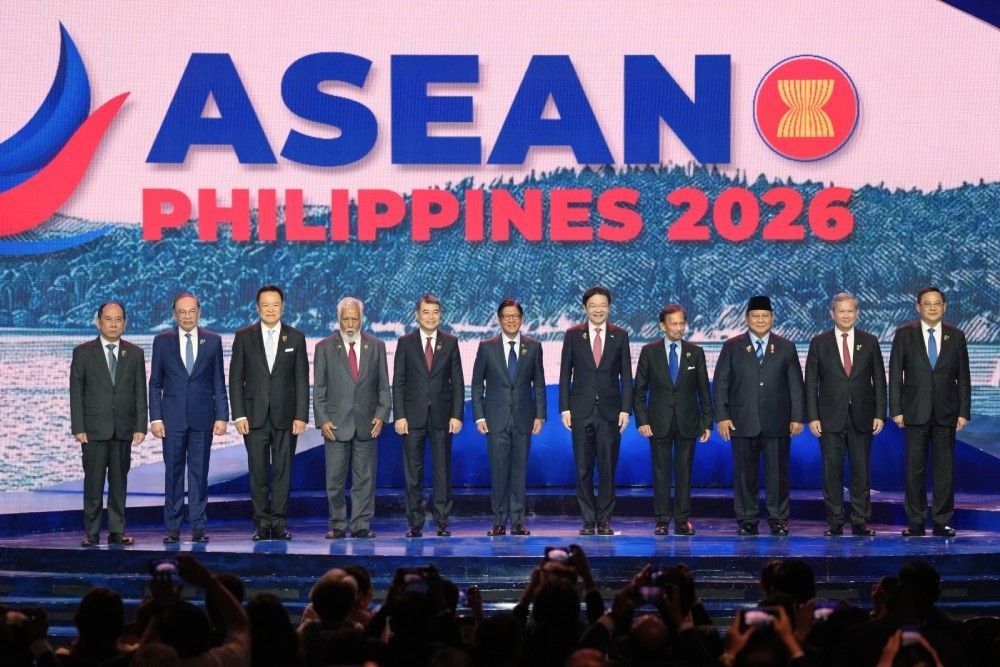
A huge international event will occur in Manila this coming Nov. 15 to 17, the 49th ASEAN Summit and Related Summit meetings. We expect 20 heads of state – presidents and prime ministers – the 11 member-countries of the ASEAN plus partner countries in the Related Summits US, Canada, Japan, etc. US President Donald Trump, Japan PM Sanae Takaichi, India PM Narendra Modi, Canada PM Mark Carney (likely) will be among the heads of state who will descend in Manila in three weeks’ time.
Last Tuesday, Executive Secretary Ralph Recto, the chairman the ASEAN National Organizing Council, announced the preparations of the Philippine government, saying that “with 20 heads of state in attendance, this is a meeting with a million moving parts, from convoys to conferences, from agenda to attractions to be visited, from security to seat plans, so failure on our part is not an option… we are trying to blend the Filipino’s charming fiesta hospitality with the serious business that will yield peace, progress and prosperity.”
The higher-for-longer prices of energy, fertilizers, petrochem and industrial products, securing regional and national energy security, should be among the big issues that will be tackled.
Also this week, from Oct. 20 to 21, a big international event, the World Nuclear Supply Chain (WNSC) 2026 Conference and the Philippines International Nuclear Energy Forum, jointly sponsored by the World Nuclear Association (WNA) and Department of Energy (DOE), was held at Grand Hyatt Manila in BGC.
Keynote speeches were given by DOE Secretary Sharon Garin and WNA Director-General Dr. Sama Bilbao y Leon. Among the local speakers in the panel discussions were DOE director Patrick Aquino, Meralco PowerGen Corp. (MGEN) president and CEO Emmanuel Rubio and Aboitiz Power (AP) vice president Nicole Yazon.
Mr. Rubio highlighted that Meralco has been sending a number of Meralco and MGEN engineers to take masteral degrees in nuclear engineering in many countries like the US and China under the FISSION program. And after taking their degrees, the scholars will work for a year or two in nuclear facilities there, before they come back to the Philippines and be ready for a future nuclear build up by MGEN. He emphasized that MGEN will go for a diversified energy portfolio that currently includes gas, coal, solar, battery energy storage system (BESS) and hydrogen-ready gas plant. MGEN subsidiary PacificLight Power in Singapore just inaugurated their 670-MW hydrogen-ready combined-cycle gas turbine power plant. Having nuclear in the near few years will further diversify their portfolio.
Last month, Meralco and MGEN selected US-based engineering firm Sargent & Lundy, in partnership with local engineering firm AMH Philippines Inc. to undertake a comprehensive feasibility study for the potential deployment of small modular reactors (SMRs) in the Philippines. It is part of the $2.8-million technical assistance program funded by the US Trade and Development Agency (USTDA). A senior consultant from Sargent & Lundy also spoke in Day 2 of the nuclear conference and he mentioned the project with Meralco.
Ms. Yazon mentioned that AP has signed an MOU with Korea Hydro & Nuclear Power Co., Ltd (KHNP) in Gyeongju, South Korea to explore cooperation on nuclear energy technologies and their potential applicability in the Philippines. KHNP is the largest power company in Korea. An official of KHNP also spoke in the afternoon session of the conference.
Last Monday, at the 52nd Philippine Business Conference and Expo by the Philippine Chamber of Commerce and Industry, AP chief corporate services officer Carlos Aboitiz said that “we need to dare to be bold… the idea of nuclear energy. The DOE is daring to be bold with nuclear, and I think that the private sector is coming around to that.” Yes, be bold and aggressive in ensuring the country’s energy security.
ASEAN members in general are among the most dynamic, fastest-growing economies in the world, thereby pushing them to have fast expansion in power generation mostly from fossil fuels. Here are the numbers for the ASEAN-6 in 2025: (a) GDP size at purchasing power parity (PPP) values, average GDP growth 2010-2025; (b) total power generation in terawatt-hours (TWH), average increase per year 2015-2025.
Indonesia: (a) $5,045 B, 4.3 percent (b) 382.7 TWH, 14.9 TWH/year. Thailand: (a) $1,880 B, 2.1 percent (b) 200.5 TWH, 1.6 TWH/year. Vietnam: (a) $1,838 B, 6.3 percent (b) 329 TWH,16.7 TWH/year, Malaysia: (a) $1,494 B, 4.1 percent (b) 210.0 TWH, 6.0 TWH/year, Philippines: (a) $1,469 B, 4.8 percent (b) 129.3 TWH, 4.7 TWH/year. Singapore: (a) $998 B, 3.4 percent (b) 60.4 TWH, 1.0 TWH/year. Gas is about 95 percent of their total power generation.
See that, average growth between two to six percent including the economic contractions in 2020-2021. G7 countries would have average growth of only one percent except the US.
The Visayas grid continues to suffer from almost daily yellow alert, sometimes a red alert that requires manual load dropping (MLD) or simply a rotating blackout.
At a Congress Committee on Energy public hearing in Bacolod City early this month related to the frequent blackout in the Visayas, among the videos that circulated around was when DOE Secretary Garin approached NGCP vice president Cynthia Alabanza in a very angry mode. The Secretary was said to get angry at Ms. Alabanza when someone mentioned that NGCP should be allowed to build and operate peaking plants (like pumped hydro storage) mainly for its ancillary service (AS) grid stabilization purpose.
Good thing that Ms. Alabanza kept her composure and remained cool. The main cause of frequent blackout or at least yellow alert in the Visayas is lack of baseload power generation, not due to lack of transmission lines. DOE is wrong for heavily promoting intermittent RE instead of baseload or 24/7 generation like coal and gas plants.





- Latest
- Trending