Foreign debt payments hit $6.2 billion in 5 months
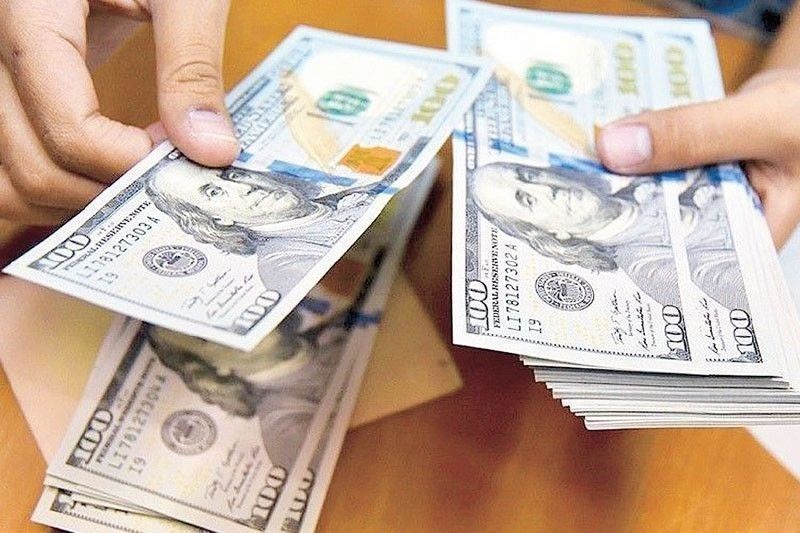
MANILA, Philippines — The country’s foreign debt payments increased by 4.8 percent to $6.21 billion from January to May as higher principal repayments outweighed a decline in interest payments, preliminary data from the Bangko Sentral ng Pilipinas (BSP) showed.
The debt service burden, which represents principal and interest paid on covered foreign obligations, was $283 million higher than the $5.93 billion DSB recorded in the same period last year.
Principal repayments went up by 13.6 percent to $3.01 billion from $2.65 billion. In contrast, interest payments, or the cost of borrowing, declined by 2.3 percent to $3.2 billion from $3.28 billion.
Interest accounted for 51.5 percent of the five-month debt service bill, while principal made up the remaining 48.5 percent.
Under the BSP’s internationally accepted measure, the DSB covers principal and interest payments on fixed medium- and long-term foreign loans. It also includes interest paid on certain short-term obligations of banks and non-banks.
The measure excludes advance payments on foreign loans due in future years and principal repayments on short-term liabilities. This means the DSB does not capture every foreign debt transaction during the period.
Economists said the increase largely reflected scheduled debt maturities, rather than a deterioration in the country’s ability to meet its foreign obligations.
SM Investments Corp. group economist Robert Dan Roces said more debt matured during the period, driving principal repayments higher even as interest payments declined.
“With ample reserves and steady foreign currency inflows, the country remains well-positioned to meet its external obligations,” Roces said.
Jonathan Ravelas, senior adviser at Reyes Tacandong & Co., likewise said the figures indicated responsible debt repayment rather than financial stress.
“The key challenge is ensuring that the economy continues to generate sufficient dollar earnings to comfortably meet future debt obligations while preserving fiscal flexibility,” Ravelas said.
Debt service was equivalent to 21.6 percent of export shipments from January to May, lower than the 22.4 percent recorded a year earlier. Put simply, the debt service bill was equivalent to about 21.6 cents for every dollar of merchandise exports.
Meanwhile, the ratio of debt service to exports of goods and receipts from services and primary income was unchanged at 9.3 percent. The DSB-to-current account receipts ratio also remained at 8.9 percent.
The DSB is a flow of payments over a period and should not be confused with external debt, which is the total amount still owed to foreign creditors at a particular date.
The country’s outstanding external debt edged up by 0.4 percent to $147.35 billion as of end-March from $146.74 billion a year earlier. Public sector external debt increased by 4.5 percent to $95.66 billion, while private sector debt declined by 6.4 percent to $51.7 billion.





- Latest
- Trending