House moves to remove system loss charges
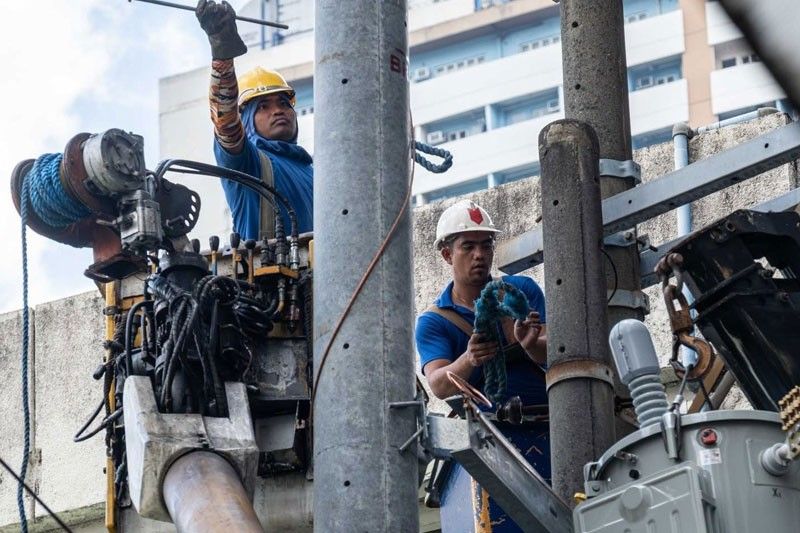
MANILA, Philippines — The House leadership has filed its version of the measure that seeks to abolish systems loss charges from electricity bills, freeing consumers from shouldering losses caused by power theft, faulty meters, weak collection systems, poor maintenance, inefficient operations or negligence by distribution utilities.
Speaker Faustino Dy and Majority Leader Sandro Marcos filed House Bill 10340 or the Systems Loss Charge Abolition Act, which seeks to remove system loss as a separate component of electricity bills.
The measure declares that consumers should be protected from charges arising from conditions within the control of distribution utilities while allowing the recovery of costs genuinely necessary for efficient electricity delivery.
The filing of the bill came following President Marcos’ latest State of the Nation Address, where he called on Congress to abolish the system loss charge.
Under the bill, distribution utilities cannot recover disallowed system losses through wheeling charges, supply charges, metering charges, universal charges, subsidies or any other item appearing on the monthly bill.
The Energy Regulatory Commission (ERC) will determine what limited portion of electricity necessarily consumed in the efficient operation of a distribution network may be recovered as part of the distribution wheeling charge.
The measure provides that costs arising from illegal electricity use, power theft and the theft or destruction of electrical lines, equipment and materials can no longer be passed on to paying customers.
The same prohibition will cover losses caused by defective or inaccurate meters, billing and collection deficiencies, inadequate maintenance, inefficient operations, negligence and other causes reasonably within the utility’s control.
The bill allows distribution utilities to retain the right to recover prudent and reasonable costs necessary to maintain reliable service and remain financially viable.
The ERC will implement the reform in phases to protect consumers without disrupting electricity reliability or destabilizing properly managed utilities.
The transition must progressively reduce the costs recoverable from end-users and be completed within three years from the effectivity of the implementing rules.
The regulator will establish minimum efficiency standards for distribution utilities, including benchmarks for service interruption frequency and collection performance.
“This is not a blanket denial of legitimate costs. Utilities that operate efficiently may recover prudent expenses, but costs born of controllable losses must remain where responsibility belongs,” Marcos explained.
Remove solar, battery permits
Dy and Marcos have also filed a bill to remove barriers to rooftop solar panels, battery storage and similar behind-the-meter energy systems and allow Filipinos to generate and store electricity for their own use without being subjected to requirements designed for commercial power producers.
The bill aims to amend the Electric Power Industry Reform Act of 2001 to distinguish electricity generated for personal consumption from power produced for commercial sale.
An end-user operating a behind-the-meter generation or storage system solely for personal use will not be classified as a generation company.
Systems using equipment certified under standards recognized by the Energy Regulatory Commission to prevent electricity from flowing into the distribution grid will no longer need a certificate of compliance or prior ERC authorization.
Distribution utilities will be prohibited from requiring prior approval, an agreement, a technical study, meter replacement or additional charges for qualified non-exporting systems.
The owner may only be required to notify the distribution utility that the installation has been completed.
Systems capable of exporting electricity to the grid would remain subject to interconnection rules, but utilities must act on complete applications within 10 working days.
The measure provides that an application would be deemed approved if the utility fails to decide within the prescribed period, while unauthorized procedures, technical requirements, equipment specifications and charges would be prohibited.
The Department of Energy (DOE) would be directed to promote the wider adoption of behind-the-meter systems, remove national and local administrative barriers and improve access to financing, qualified installers and reliable equipment.
Homeowners’ associations, subdivision developers and property managers will be barred from prohibiting installations on property owned or exclusively controlled by the end-user, subject only to reasonable conditions involving structural safety, public safety and common property.





- Latest
- Trending