


Modern ports keep the economy moving
Speeches are known to be grandiose and vague, consisting of sweeping claims and feel-good pronouncements. But a good speech will stand out for its ability to balance broad concerns with concrete details, without getting stuck in either generalities or minutiae.
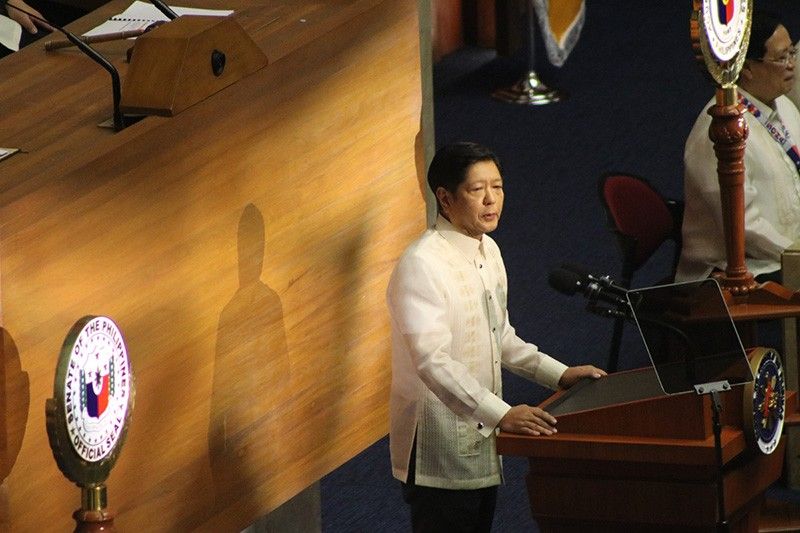
President Ferdinand Marcos Jr.’s State of the Nation Address, which he will deliver this Monday, is expected to cover numerous things that concern us as a nation. Recent surveys have affirmed the issues that most concern Filipinos.
Addressing graft and corruption in government is one of the top issues. This is why the nation tuned in to the flood control hearings last year, and why we continue to be invested in arrests and case buildups against erring officials. This is also why many Filipinos are riveted to the impeachment trial where the questionable accumulation of wealth and misuse of public funds will be prosecuted.
Aside from public accountability, however, people are demonstrably concerned about whether they would be able to afford basic goods and services, whether their wages would be enough for a decent living, and whether they could find – and keep – sustainable jobs.
Answers to these issues are no doubt numerous and complex. Every sector’s potential contribution to the improvement in the lives of Filipinos merits a long discussion. How, then, should one choose from among the many areas of concern and actually mention a specific sector in a speech that is supposed to be comprehensive and tangible at the same time?
**
“Infrastructure” has been given a bad name by the flood-control scandal. But infrastructure is the only way to call massive projects – for instance roads, bridges, airports, seaports and railways -- that bring an exponential degree of benefit to society. In the case of port infrastructure, it is also an advantage given that the Philippines is an archipelago and could derive much advantage from trade, exports, and supply chains.
Admittedly, the trade imbalance in the country leaves much to be desired. We have seen how trade activities have suffered with just the slightest disruption in the global supply chain. With the ongoing problems in the Strait of Hormuz, the supply of oil is also being gravely affected in many parts of the world, the Philippines included. During the pandemic, supply chains became constricted resulting in disrupted accessibility to goods and in higher prices.
It is high time we advanced the modernization of our ports as a flagship national infrastructure priority.
For an archipelago like the Philippines, ports are critical economic infrastructure that underpins trade, manufacturing, agriculture, and the efficient movement of goods. The country’s international trade heavily passes through its ports, making their efficiency a key determinant of logistics costs, supply chain resilience, export competitiveness, and investor confidence.
Some claim that our ports are congested. But are they truly congested? Or is the real problem occurring outside the ports – where heavy traffic and inefficient truck movements slow the flow of cargo in and out of port facilities? Congestion also occurs when goods are not cleared and transported out of the ports promptly, causing unnecessary bottlenecks that further disrupt the supply chain. Bottlenecks like the extended storage of goods is a main concern now in our ports, these incidents reduce cargo throughput, limit available yard capacity, and slow the movement of goods in our main seaport of entry.
But addressing port congestion demands so much more than an expansion of physical infrastructure. It requires operational reforms that maximize the efficiency of existing facilities. Ports are designed to facilitate the continuous movement of cargo, not to function as low-cost storage facilities of traders or importers. When containers remain inside terminals beyond their allowable storage period, they occupy yard space, reduce cargo handling efficiency, constrain the capacity to receive incoming shipments, and slow the entire logistics chain.
Encouraging faster cargo turnover through progressive storage charges, timely customs disposition of abandoned cargo, efficient transfer mechanisms to accredited off-dock facilities, and improved digital cargo monitoring would help restore the primary function of ports as gateways for trade rather than long-term and lower cost storage facilities.
To be sure, there have been initiatives by the private sector that show that things are moving forward with the ports. For example, newspaper reports said that the Manila International Container Terminal of the International Container Terminal Services Inc. (ICTSI)set a new single-year record for container volume in 2025, with 3 million twenty-foot equivalent units as of December 22 last year. ICTSI said it achieved this feat through sustained investments in equipment and infrastructure, continued operational improvements, and capacity expansion.
There are three distinct problems in port infrastructure that must be addressed with equal focus and attention: local shipping charges, overstaying containers inside the port, and empty container storage outside the port. It is laudable that Bureau of Customs Commissioner Ariel Nepomuceno is putting pressure on the shipping lines to implement the 90-day rule on overstaying containers. His three (3) marching orders: moving out paid but unclaimed containers at least after 10 days of payment, moving out of assessed but unpaid containers after 15 days, and the transfer of unlodged goods within 15 days. Indeed, proper implementation of these orders of Commissioner Nepomuceno would greatly improve the flow of goods in our seaports.
**
The Marcos Jr. administration has two years remaining to make a lasting mark on the economy and consequently on the people’s quality of life. Smoothening the flow of entry and exit of goods in the port is a quick win since there are already reliable port operators in the country. Modernizing our ports are useless if there are business importers abusing the regulated storage fees of the port operators. We truly hope that the President, when he addresses the nation on Monday, would talk about how the country has much to look forward to in terms of modernizing our ports, enabling the smoother flow of trade, and making our supply chains more resilient to external shocks.
Ultimately, these will have a profound and lasting effect on the economy and provide greater opportunities to improve the lives of Filipino families.


- Latest


