SC upholds law on VAT refund for foreign tourists
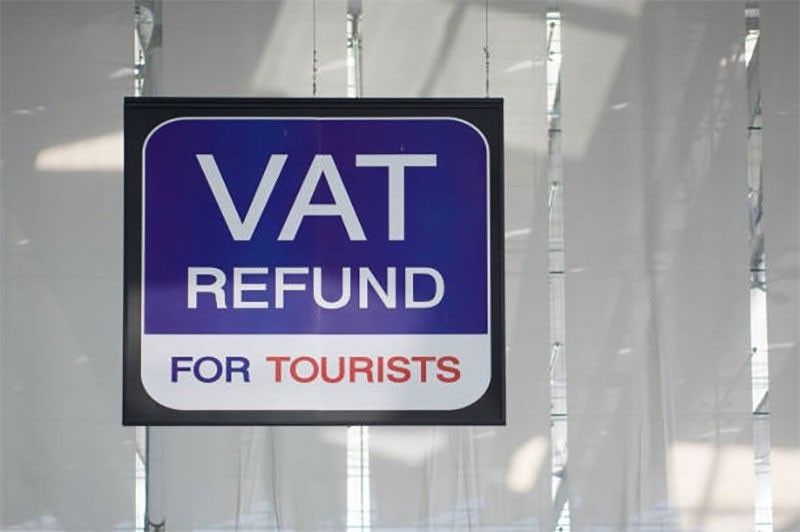
MANILA, Philippines — The policy that allows foreign tourists a refund of their value-added tax (VAT) payments in purchasing specific goods during their stay in the country adheres to the Constitution, the Supreme Court has declared.
In a 17-page decision promulgated last April 22, 2026 but published on its website yesterday, the Supreme Court unanimously declared Republic Act 12709 – the VAT Refund for Non-Resident Tourists Act signed into law by President Marcos in December 2024 – as “not unconstitutional.”
It also dismissed the petition against the law filed by high school teacher John Barry Tayam, with former finance secretary and current Executive Secretary Ralph Recto, former Senate president Francis Escudero and former House speaker Martin Romualdez named as respondents.
Tayam argued that the policy was unconstitutional as it violated Article VI, Section 28 (1) of the 1987 Constitution, particularly the “constitutional right to equal protection of the law as the measure excluded Filipino citizens and residents from eligibility for VAT refund.”
While the law requires a minimum purchase of P3,000 for foreign tourists staying in the country to avail themselves of the VAT refund within 60 days before leaving, Tayam alleged that it would deprive the government of a minimum of P321.43 worth of refunded VAT for every purchase or as high as P1.93 billion every year.
However, Tayam’s argument that the law is unfair to Filipinos has “nothing to do with the principles of equality and uniformity under the principle of taxation,” according to the high tribunal.
“Verily, the law does not discriminate against Filipino citizens. The primary goal of the State to boost tourism can only be realized if certain privileges are granted to foreign tourists. Nothing more,” read a portion of the decision penned by SC Associate Justice Amy Lazaro-Javier.
The high court also pointed out that neighboring countries such as Indonesia, Malaysia, Singapore, Thailand, Vietnam, China and Japan and those in Europe “have long implemented this VAT refund mechanism for foreign tourists.”
The VAT refund law was “a policy decision based on legitimate state interests, i.e., the need to remain competitive as a global tourist destination,” the ruling added.
Chief Justice Alexander Gesmundo, Senior Associate Justice Marvic Leonen and Associate Justices Alfredo Benjamin Caguioa, Ramon Paul Hernando, Henri Jean Paul Inting, Rodil Zalameda, Samuel Gaerlan, Ricardo Rosario, Japar Dimaampao, Jose Midas Marquez, Antonio Kho Jr., Maria Filomena Singh and Raul Villanueva concurred with the decision while Associate Justice Jhosep Lopez was on leave.
In his separate concurring and dissenting opinion, Leonen called out Tayam saying, “We cannot privilege those who seek media mileage over those who would have the proper legal position and motives.
“Not only will the overeagerness to file waste this Court’s resources, but it also puts in unnecessary peril the legal arguments of the party that has an actual case and legal standing,” he added.
However, the SC unanimously ruled Tayam has locus standi or legal standing, saying his “injury… lies in the differential legal treatment mandated by statute itself,” which was “neither imagined nor superficial.”
Meanwhile, Singh pointed out the VAT refund policy was “not a mere expense in the books of the government, but an investment to make the country a viable destination for tourists.”
“Any revenue less from the implementation of the VAT refund mechanism may be offset by the expansion of the tax base when the country welcomes more tourists, thereby generating more economic activity and, in turn, more tax revenues,” she said.




- Latest
- Trending