


T.I.P. boosts future stature through innovation, AI-ready learning, graduate competitiveness
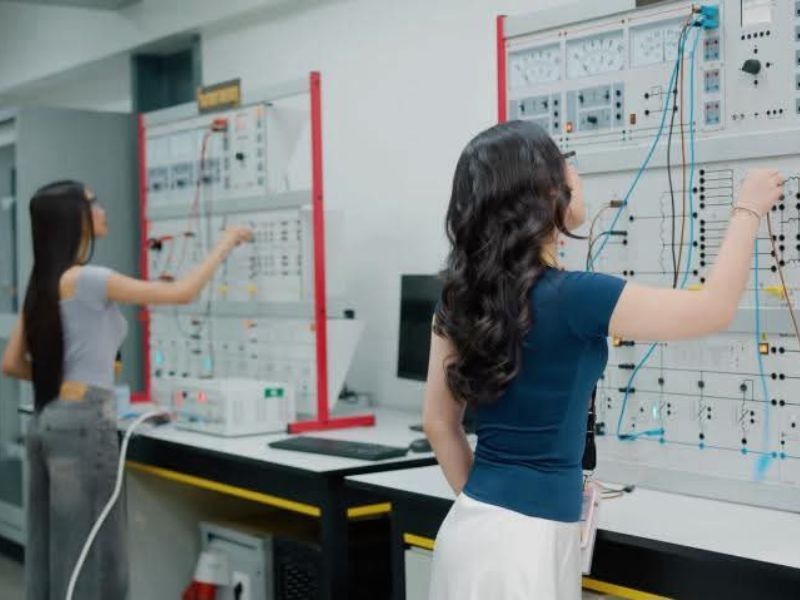
The Technological Institute of the Philippines (T.I.P.) is strengthening its position as a future-ready technological institution, advancing a quality education agenda anchored on innovation, applied learning, industry relevance, and graduate competitiveness.
At a time when higher education is being challenged by artificial intelligence, economic uncertainty, global conflict, and shifting workforce demands, T.I.P. continues to define quality education not only by what students learn in the classroom, but by how well they are prepared to think, adapt, solve, and contribute beyond graduation.
This direction is part of T.I.P.’s broader institutional commitment to reengineering what’s next — preparing students not only for the careers of today, but for the changing realities of tomorrow.
From 149th in WURI 2024 to 128th in WURI 2025 and now 93rd in WURI 2026, T.I.P.’s steady climb signals growing global recognition of its innovation-driven education agenda. According to T.I.P.’s official announcement, the institution ranked 93rd among the World’s Top 500 Innovative Universities in the WURI 2026 rankings.
T.I.P.’s institutional momentum is also reflected in EduRank’s 2026 ratings, where the institution ranked 32nd among universities in the Philippines and 12th among universities in Manila. The rankings further underscore T.I.P.’s strength as a technological institution, with the school holding a Top 10 national standing in Engineering and Computer Science research and the No. 1 spot in the Philippines for Blockchain and Cryptography research.
For T.I.P., these recognitions are not merely rankings. They reflect a broader commitment to strengthening learning models, supporting applied and industry-linked education, and ensuring that students are not only taught concepts, but trained to use them meaningfully.
“Innovation, for us, is not simply about adopting what is new,” said T.I.P. President Angelo Lahoz. “It is about making education more relevant, more responsive, and more purposeful for the world our students are entering. That is what we mean when we say we are reengineering what’s next.”
The urgency of future-ready education has become sharper as artificial intelligence reshapes how people work, learn, communicate and compete. According to the World Economic Forum’s Future of Jobs Report 2025, job disruption is projected to affect 22 percent of jobs by 2030, with 170 million new roles created and 92 million displaced.
The International Monetary Fund has also noted that AI is expected to affect almost 40 percent of jobs worldwide. These shifts reinforce the need for graduates who can keep learning, exercise judgment, and adapt to changing expectations.
T.I.P.’s learning approach responds to this reality by emphasizing applied learning, problem-solving, collaboration, technical grounding, and continuous learning. In an AI-driven world, graduates must know how to use technology without losing creativity, ethics, judgment, and humanity.
“The future will not reward students who only know how to follow instructions,” Lahoz said. “It will require graduates who can think clearly, solve responsibly, adapt continuously, and use technology without losing their human judgment.”
Beyond rankings and academic formation, T.I.P.’s strength is also reflected in graduate outcomes and employer confidence.
According to T.I.P.’s strategic roadmap, the institution cites a 92.5 percent employment rate, employer preference recognition, and entry-level compensation benchmarks as proof points of graduate competitiveness. The roadmap frames these not merely as employment data, but as indicators that T.I.P. graduates are being prepared to compete in the professional world with competence, discipline, and confidence.
JobStreet’s career guidance also reflects the broader shift in employer preference, noting that employers increasingly look beyond school status and value quality education, work attitude, digital skills, adaptability, problem-solving, resilience, and growth potential.
“Employability is not the end goal of education, but it is an important result of good formation,” Lahoz said. “When our graduates enter the talent market with confidence, discipline, and the ability to contribute, it tells us that their education has prepared them not only for work, but for responsibility.”
For students and families, this is the deeper promise of a T.I.P. education: not simply a diploma, but formation for life beyond the campus. As global conditions become more complex, T.I.P. continues reengineering what’s next around a clear belief: turbulent times require tough, adaptable and values-driven graduates.
--
Disclaimer: This is externally supplied material from a third party and is not a product of reporting or editorial work by the Philstar.com newsroom.


- Latest


