Uwan leaves 25 dead, two missing
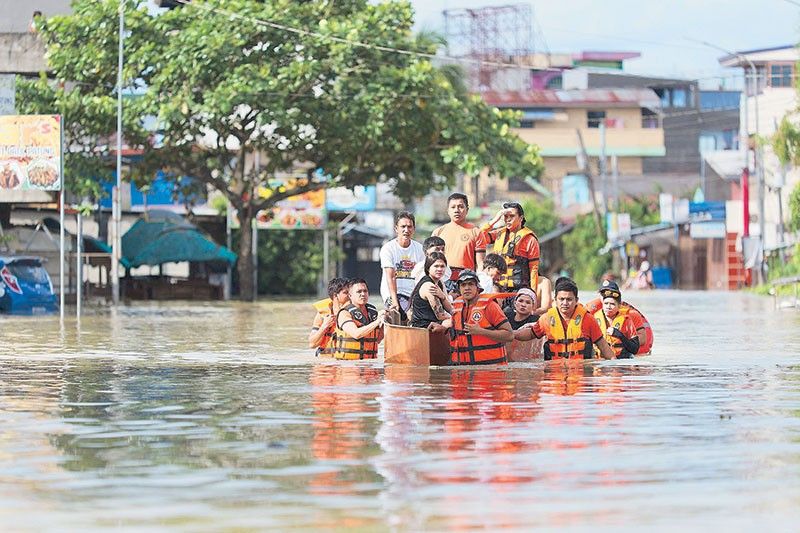
MANILA, Philippines — Super Typhoon Uwan left at least 25 people dead and two others missing, the Office of Civil Defense (OCD) reported yesterday.
Nineteen of the fatalities were from the Cordillera Administrative Region and three from Cagayan Valley, mostly due to landslides.
One death each was recorded in the Bicol Region, Western Visayas and Eastern Visayas, caused by drowning and electrocution, according to OCD deputy administrator Bernardo Rafaelito Alejandro IV.
Uwan displaced more than 2.4 million people across 6,900 barangays. Of these, around 804,000 people are currently staying in some 11,000 evacuation centers in various provinces.
The National Disaster Risk Reduction and Management Council documented 267 flooding incidents and 19 storm surges nationwide.
Preliminary reports show that about 4,100 houses were damaged, with Catanduanes identified as the hardest-hit province.
Rescuers using backhoes and chainsaws have begun digging through landslide-hit areas as floodwaters receded in hundreds of villages.
“The greatest challenge for us right now is the restoration of lifelines, road clearing and restoration of power and communication lines, but we are working on it,” Alejandro said, noting that early recovery efforts could take weeks.
In coastal Isabela province, a town of 6,000 remained cut off from assistance as of Tuesday, while parts of neighboring Nueva Vizcaya province were similarly isolated due to landslides that blocked major roads.
A 10-year-old boy was among those killed in the slides, according to Cagayan Valley region spokesman Alvin Ayson.
“We are struggling to access these areas,” Ayson told AFP. “Others are now in evacuation centers, but when they get back to their homes, rebuilding will take time and face challenges.”
In Catanduanes, issues with the water supply could take up to 20 days to fix. Residents in Virac town said they have been traveling long distances to fetch water from rivers, with many expressing exhaustion after surviving multiple storms in succession.
“We thought we were safe here,” resident Jossa Floranza. “My neighbors said this was the first time they experienced flooding in this area. I am very tired of this. So tired.”
In Cagayan, part of the country’s largest river basin, flash floods in neighboring Apayao province caused the Chico River to overflow, sending residents scrambling to rooftops.
Rescuers in Tuguegarao City used boats to reach stranded residents as chest-deep waters inundated low-lying villages.
“The water level here at Centro 4 village is rising,” a Cagayan information officer said in a video posted online. “There are residents still in the upper floors of multi-storey houses.”
The Armed Forces of the Philippines deployed all available assets and personnel for search, rescue, retrieval and clearing operations.
“All hands on deck,” military spokesperson Col. Francel Margareth Padilla said, adding that troops are working to reopen blocked roads and restore access to isolated communities.
Scientists warn that typhoons are becoming more powerful and destructive due to human-induced climate change.
Warmer oceans allow storms to strengthen rapidly, while a warmer atmosphere holds more moisture, resulting in heavier rainfall and widespread flooding.
As of 5 p.m. yesterday, Uwan was spotted 340 kilometers west of Itbayat, Batanes, packing maximum sustained winds of 100 kilometers per hour near the center and gusts of up to 125 kph. — Christine Boton


- Latest
- Trending