Philippine universities talent-rich but research-poor — QS
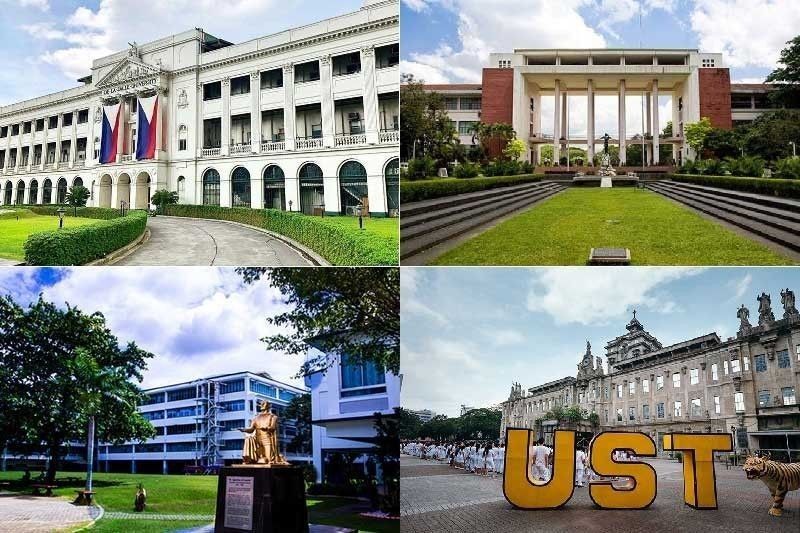
MANILA, Philippines — The Philippines has more universities in international rankings than ever before, yet still struggles to produce graduates with the right skills for the jobs its economy needs.
That’s the verdict of the latest Quacquarelli Symonds (QS) report on ASEAN universities released Tuesday, November 4, which draws on past global rankings to weigh how schools in Southeast Asia, including the Philippines, measure up to the demands of their economies and job markets.
QS' analysis had generally praised the Philippines for its growing higher-education footprint but warned of a widening gap between what universities and colleges teach and what employers need.
Overall, Philippine universities enjoy a strong employer reputation and produce graduates recognized for adaptability and soft skills, but research output, citation impact, and internationalization remain weak, according to QS.
“The Philippines has proven talent and resilience. The challenge now is to turn this into stronger research output and global visibility,” QS said in its regional analysis.
Historical trend
The Philippines in recent years has seen more of its universities break into global rankings. QS' 2026 world ranking has at least 14 Philippine universities — led by the University of the Philippines (UP) at 362nd and followed by Ateneo de Manila University (511th).
That is more than triple the four Philippine schools that made it to the QS rankings in 2022, one of the sharpest improvements in Southeast Asia.
But it is also clear that the Philippines is "gaining ground more slowly" in global rankings compared to the rapid strides made by Malaysia and Indonesia, whose universities are rising more quickly in global visibility, research output, and international partnerships, according to the report.
While all three Southeast Asian countries are expanding their presence in global rankings, unlike Malaysia and Indonesia, the Philippines is not moving into the upper tiers. Indonesia and Malaysia's recent rise in the rankings "signals that universities in these countries are starting to compete at a level once dominated by established education powers," QS said.
Singapore remains the undisputed leader in higher education in the region, according to the QS report. National University of Singapore and Nanyang Technological University "continue to dominate, consistently ranking among the very top globally."
‘Talent-rich but research-poor’
Despite growing visibility in global rankings, Philippine universities continue to underperform in research productivity and international collaboration. The former metric is the most important in QS' methodology for ranking schools.
QS noted that while Filipino graduates enjoy a strong reputation among employers for adaptability and soft skills, the country’s research output per capita and citation impact remain low.
The Philippines' public education spending, at 3.6% of GDP in 2023, lags behind many ASEAN peers, the report stated.
Skills gap in STEM
The QS World Future Skills Index — the results of which were released early 2025 — placed the Philippines slightly below the ASEAN median, with a final score of 62.2, compared with the regional median of 63.9. While the country scored 93.8 in “Future of Work," reflecting strong demand for new skills, it lagged in "Skills Fit" (47.6) and "Academic Readiness" (66.6).
The Skills Fit score, according to QS, measures how well school curricula align with the jobs employers are looking for.
This gap between demand and the actual abilities and skills of Filipino graduates, QS said, is "unusual."
"The Philippines, with an overall score of 62.2, is unusual," QS explained. "Its Future of Work score is very high... showing a strong demand for new skills, but its Academic Readiness is lower and Skills Fit weaker still."
QS said the mismatch between employer demand and "graduate preparation" explains the "persistent hiring challenges in areas like ICT and engineering."
"In the Philippines, a booming digital economy is creating far more jobs than the local skills pipeline can deliver," the report stated.
The Philippines' digital economy is still continuing to grow and analysts have estimated 1.1 million new IT and digital jobs may be created by 2028. But whether there are enough skilled graduates to snap up these jobs remains a question.
An analysis by state think tank Philippine Institute for Development Studies in 2021 shows that only around four out of 10 Filipinos have at least one of the six information and communications technological skills monitored by the Sustainable Development Goals. These skills are the ability to use basic arithmetic formula in a spreedsheet, using copy paste tools, sending e-mails with attached files, creation presentations, downloading software and transferring files.
The QS report also noted that the percentage of tertiary graduates in STEM fields in the Philippines (31.7% in 2023, the latest data) is lower than the high rates seen in regional leaders like Malaysia and Singapore, where STEM graduates often approach or exceed 40%





- Latest
- Trending