‘DA, DPWH reports disprove overpriced FMRs in Leyte’
MANILA, Philippines — Public works and agriculture reports have declared as aboveboard the farm-to-market road projects in the Leyte district represented by former speaker Martin Romualdez, his camp said, contrary to claims by Sen. Sherwin Gatchalian that the FMRs were overpriced and abnormally large in number.
In a detailed statement to The STAR, the office of the Leyte first district congressman maintained there was nothing irregular about the FMR projects in his district and hometown in Tacloban City, as attested to by the Department of Public Works and Highways and the Department of Agriculture.
Romualdez stressed that the DPWH and the DA “confirmed that the Barangay 93 Bagacay FMR and Barangay San Roque FMR (Phase 2) were validated, cost-evaluated and approved under the DA’s Farm-to-Market Road Development Program.”
This was after a “joint review and field inspection conducted by both DPWH and DA engineers,” he said.
“No funds have been disbursed and no works have begun pending resolution of the right-of-way issue,” Romualdez quoted the DPWH report as stating, stressing that the project remains valid and within standard FMR cost parameters validated by DA engineers in Region 8 (Eastern Visayas).
Romualdez also pointed out that the San Roque FMR Phase 2, worth P99.5 million, is “92 percent complete as of September 2025.”
In denying that the local infrastructure projects were “overpriced and excluded from the DA’s Master Plan,” the former leader of the House of Representatives emphasized that the P25-million Bagacay FMR was “designed to improve access for farmers and residents in the upland barangay.”
“The project has not started due to unresolved right-of-way issues involving the Department of Health-Philippine Institute of Traditional and Alternative Health Care and the Manobo tribe, which owns adjacent land,” he said, quoting a report of the agency.
“The additional slope protection and drainage structures were essential to prevent erosion and ensure long-term road stability,” the report signed by project engineer John Nichole Bertulfo noted.
The completion is targeted by Oct. 30 this year following a revised schedule approved by DA and DPWH.
‘Overpricing’ explained
On allegations of overpricing, Romualdez explained that Barangay 93 Bagacay FMR is located in a steep upland area where the terrain features soft rock formations and slopes exceeding 10 percent, which “limit road grades to a safe maximum of 10 percent.”
“Engineers had to conduct massive excavation and embankment works, accounting for about 80 percent of total civil works cost,” and that such works are “labor- and equipment-intensive, drastically raising costs compared to ordinary concreting on flat farmland.”
“What inflates the cost is not the concrete road itself – but the heavy ground engineering required to make the area safe and traversable,” the officials stated, adding these FMRs are “high-standard, terrain-adapted infrastructure designed to serve mountain communities safely and sustainably.”
“When you build a road in the mountains, you don’t just pour concrete – you reshape the land to make it safe for decades. That’s what these projects represent,” said a DPWH engineer familiar with the validation process.
In conclusion, Romualdez pointed out the above-average cost of their FMRs was a “direct result of difficult geography, strict engineering design and preventive safety measures – all verified by both DPWH and DA as justified and necessary.”
The former speaker said all of these are fully documented and based on documents submitted by DPWH Tacloban City District Engineering Office and DA-Regional Field Office VIII.
Romualdez also informed The STAR that the DPWH and DA reports clarified that both projects are “classified as mountain-type FMRs, requiring heavy excavation, embankment, slope protection and drainage works due to steep terrain.”
“According to DPWH and DA engineers, these additional engineering components explain the cost difference compared with flatland FMRs and are essential for road stability and safety,” their statement read.
“The DA validation confirmed that the per-kilometer cost estimates – P12.7 million for the Bagacay FMR and P12.3 million for the San Roque FMR – fall within the acceptable range of standard FMR concreting costs for difficult terrain, following site inspections and survey verification,” it added.
“No padding or overpricing – just engineering reality. The higher cost reflects terrain-driven engineering complexity, safety compliance and DA-approved modifications – not financial irregularity,” it pointed out.
Engineers also stated that the Brgy. San Roque FMR Phase 2 was originally intended as a short road-concreting project, but on-site validation revealed unstable mountain slopes prone to landslides and erosion.
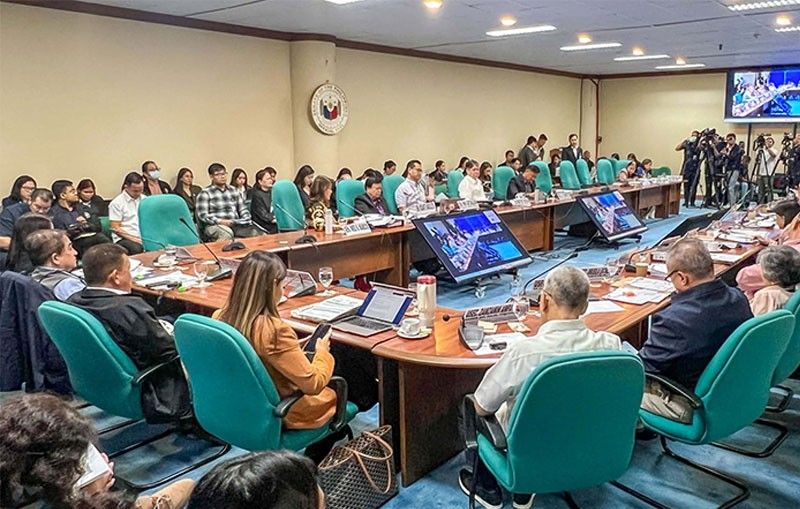
Earlier, Gatchalian – chairman of the Senate finance committee – claimed that in their review of the 2023 to 2025 national budget, farm-to-market roads turned out to be numerous in Romualdez’s district, apart from being allegedly “overpriced.”
Design revised
To protect both the existing and new sections of the road, the design was revised to include 20,038 square meters of slope protection (stone masonry and retaining structures), 1,911 linear meters of drainage canals and additional embankment and slope stabilization works.
These safety and sustainability components represent over 90 percent of the project’s cost, but they are engineering necessities – not optional enhancements, according to the report.
Field validation also found that earlier segments were already showing signs of soil erosion and landslide activity. Rather than limiting improvements to the unpaved portion, the DPWH and DA agreed to extend slope protection and drainage works to cover the entire stretch of the San Roque FMR.
This approach ensures long-term serviceability and reduces the need for repeated repairs, which would otherwise cost more to government over time.
The project, therefore, may appear expensive up front, but it prevents future reconstruction costs and safeguards public investment.
The proponents added that Tacloban FMRs are high-standard, terrain-adapted infrastructure designed to serve mountain communities safely and sustainably.




- Latest
- Trending