


DPWH to prioritize completion of 2,200 unfinished classrooms
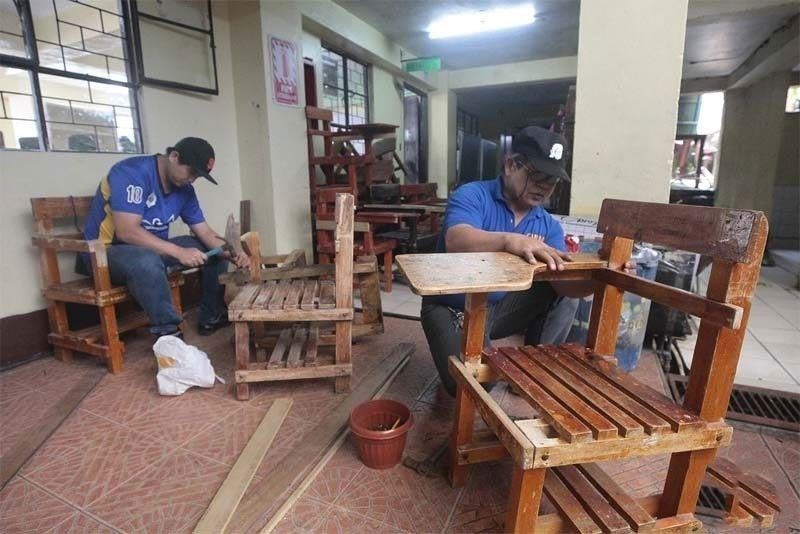
MANILA, Philippines — On top of dealing with the flood control controversy, the Department of Public Works and Highways (DPWH) has another massive task at hand – the completion of around 2,200 unfinished classrooms all over the country.
According to Arrey Perez, DPWH undersecretary for technical services and the National Building Code Development Office and External Convergence Projects, the agency is looking to finish the classroom building projects by itself as these are just small jobs that could be undertaken by its regional and district offices.
“We do not need big contractors to do the work of finishing the classrooms. The DPWH may be able to do the work, by administration,” Perez told The STAR last Tuesday in Makati.
Education Secretary Sonny Angara previously revealed that more than 1,000 classrooms turned over by the DPWH to them were not completed and therefore, unusable.
Angara said the Department of Education had launched an audit of classrooms built by the DPWH following reports of ghost and substandard flood control projects.
ICI liaison
Meanwhile, Public Works Secretary Vivencio Dizon designated Undersecretary Samuel Rufino Turgano as focal person for the Independent Commission for Infrastructure (ICI), currently investigating flood control corruption in the agency.
Among Turgano’s responsibilities are the coordination of all official communications and activities with the ICI and its secretariat, establishment of protocols and other mechanisms to ensure smooth communication and coordination with the ICI, and forthwith compliance of all requests of the presidential commission in relation to its fact-finding activities.
Dizon also named DPWH Legal Service director Gliricidia Tumaliuan-Ali as alternate focal person for the ICI.
‘Blockchain can only go so far’
As various sectors explore the use of blockchain technology to curb government corruption, an expert warned that it can only go so far in promoting transparency in the budget process because corruption is a human problem.
The Senate has begun exploring proposals to put the national budget on blockchain technology to promote transparency and accountability, while the House has received 10 bills so far seeking to establish this mechanism.
Donald Lim, president of the Blockchain Council of the Philippines (BCP), tempered public expectations that blockchain will magically solve this decades-long and deeply entrenched problem in government.
“Corruption is a people problem, not tech,” Lim told “The Big Story” on One News Friday.
Given blockchain’s features, Lim stressed it has the “highest chance” of reducing irregularities in the coffers: “It’s decentralized, it’s transparent and it’s immutable.”
Under Sen. Bam Aquino’s proposal, a National Budget Blockchain System will be created to record all budget transactions as a digital public asset.
These DPAs will be accessed in real time via a public portal to track down the flow of funds per agency, project and beneficiary.
Blockchain, which is powering cryptocurrencies, records transactions and links them together permanently, creating a decentralized database that is stored across multiple computers.
Lim said all government processes, from bidding to implementation should be digitized for the blockchain technology to work.
“If you have a paper and pen, then you can change it, and then, okay, input this,” he said.
The BCP on Tuesday signed a memorandum of agreement with the DPWH to use blockchain in tracking the status of infrastructure projects.
Pilot implementation will begin in foreign-assisted projects, as their funding is already vetted by multilateral lenders and international organizations such as the World Bank and Asian Development Bank.
The partnership will also result in the creation of an Integrity Chain, or a real-time and publicly available dashboard where project details can be scrutinized. Civil society groups and business organizations will serve as validators, providing a human aspect to the program. — EJ Macababbad


- Latest
- Trending


