Why the Supreme Court lightened penalties for man who killed abusive father
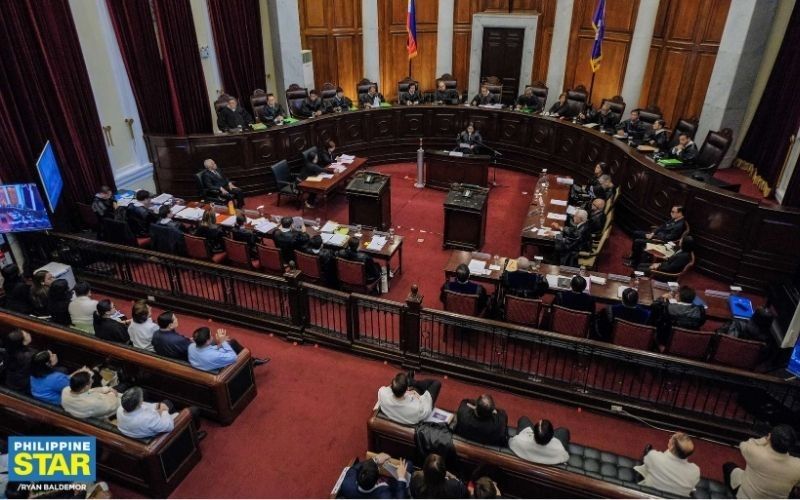
MANILA, Philippines — The Supreme Court has ruled that a sudden, uncontrollable emotional outburst brought on by years of abuse may be considered a mitigating circumstance in parricide cases.
In a decision promulgated on May 7, 2025, the high court’s First Division upheld the conviction of Leopoldo Singcol for the killing of his father but lowered the penalty due to the presence of “passion or obfuscation” under Article 13 of the Revised Penal Code.
The case
The case stemmed from an incident in which Leopoldo was confronted by his father, Andres Singcol, who was armed with a bolo. The argument escalated when Andres attempted to attack him but stumbled. Leopoldo grabbed the weapon and stabbed his father fatally in the chest.
After the stabbing, Leopoldo reportedly held his father, asked for forgiveness, and then attempted to take his own life by cutting his throat and abdomen.
Shortly after, while on his way to a nearby spring, Leopoldo encountered his sister-in-law and her two-year-old child. He attempted to stab the woman but wounded the child instead. When the mother lost her grip on the boy, Leopoldo fatally stabbed her. The child survived the attack.
'Abused since childhood.' During trial, Singcol admitted to all three stabbings. He testified that he had been abused as a child and believed Andres was not his biological father.
He described frequent fights between his parents and claimed his father would often direct violence toward him, even into adulthood and his marriage, often with a bolo.
The ruling
Both the Regional Trial Court and the Court of Appeals found Singcol guilty of parricide, which is defined under Article 246 of the Revised Penal Code as the killing of a parent, child, spouse or ascendant, and carries a penalty of reclusion perpetua to death.
However, under Article 13, Paragraph 6, of the same code, the court may lower the penalty if the act was committed under the influence of “an impulse so powerful as naturally to have produced passion or obfuscation.”
Penalty modified. The Supreme Court said that while reclusion perpetua to death is the prescribed penalty for parricide, the presence of the mitigating circumstance warranted a reduced sentence of reclusion perpetua.
Singcol was also ordered to pay damages to the heirs of his father:
P75,000 as civil indemnity
P75,000 as moral damages
P75,000 as exemplary damages
P50,000 as temperate damages
Conviction for sister-in-law’s death upheld. Singcol, however, was also convicted of murder for the killing of his sister-in-law. The high court upheld the penalty of reclusion perpetua in that case.








- Latest
- Trending