UN report backs long-stalled Philippines rights bills. Will new Congress deliver?
MANILA, Philippines — Key human rights reforms that died in the 19th Congress are now back on the table as lawmakers of the 20th Congress start their terms today, with a United Nations special rapporteur calling these measures essential for the Philippines to break from its troubled past with rights abuses.
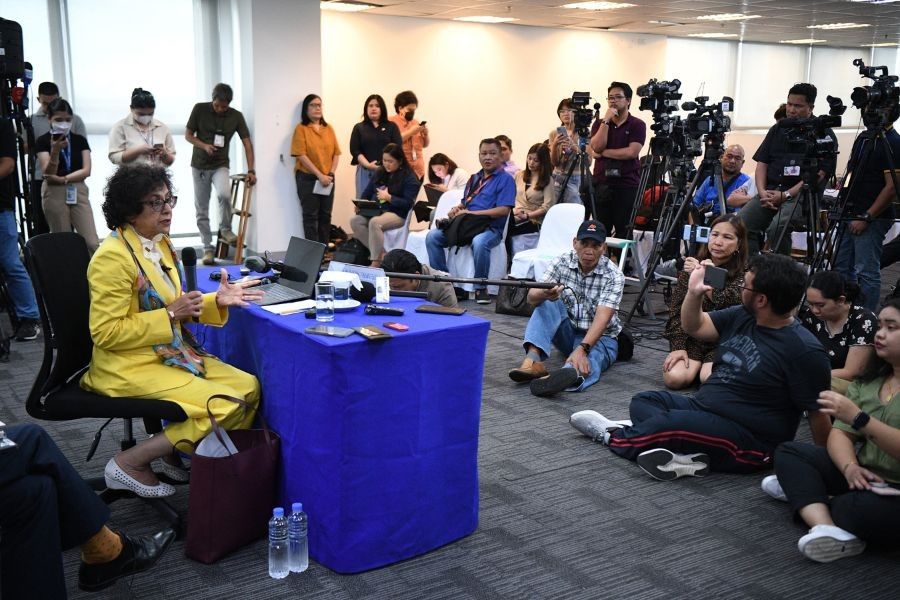
At a press conference on June 24, UN special rapporteur on free speech Irene Khan said the Marcos administration's efforts have "not been enough to turn the page decisively on the past." After conducting interviews with civil society and government, Khan found hundreds of red-tagging cases and the continued harassment of rights defenders and community journalists, despite officials who say they do not condone this.
To bring domestic legislation up to speed on international human rights standards, Khan recommended a range of bills in her final report to the UN Human Rights Council on the state of free speech and press freedom in the Philippines. This includes decriminalizing libel, overhauling the Anti-Terrorism Act, passing a Freedom of Information law, and adopting the Human Rights Defenders Protection Act.
Khan — whose visit to the Philippines in 2024 was at the invitation of the government — has since forwarded her recommendations to the government.
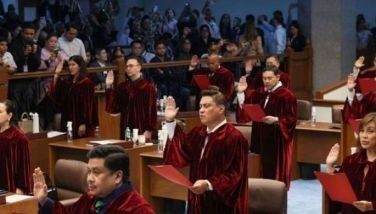
Lawmakers officially began their new terms past noon today, with the 20th Congress set to formally convene on July 28. The new legislative session runs until 2028, covering the second half of President Ferdinand Marcos Jr.'s presidency and giving lawmakers the opportunity in the next three years to tackle some of these long-stalled measures.
Whether this Congress can break decades of legislative limbo on human rights reforms remains a critical test — but what exactly are these recommended bills, and why have they repeatedly failed to pass?
Human Rights Defenders Protection Act: An 'important' measure for the times
While she was informed of "hundreds of bills" filed in Congress that covered a broad range of rights during her visit last year, Khan had tagged the proposed Human Rights Defenders Protection Act as an "important" one.
In her report to the UN Human Rights Council, Khan said she supported the measure filed by the late Edcel Lagman (House Bill 77) for affirming the valuable role of human rights defenders and providing them with legal safeguards. The bill, if passed, would "[enable] them to conduct their human rights work free from intimidation, pressure, violence, reprisals and unreasonable restrictions from State or non-State actors."
The measure aimed to define specific rights for defenders — including freedom from intimidation and red-tagging, the right to communicate with international organizations, and the right to form associations — while imposing prison sentences for those who violate these protections.
Lagman filed HB 77 on the first day of his term in the 19th Congress, and this was eventually joined with similar measures filed by the Makabayan bloc.
The bill was approved by the human rights panel chaired by Rep. Bienvenido Abante (Manila, 6th District) in February 2023. But it was never sent to plenary and thus, never voted on in second reading before the 19th Congress ended. Lagman died in January 2025.
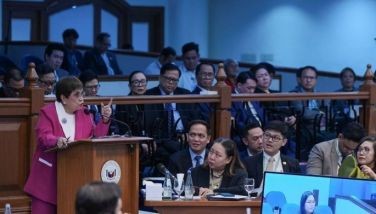
At the Senate, Sen. Risa Hontiveros filed a counterpart bill in September 2023. It never made it past the committee on justice and human rights, chaired by co-minority bloc member Sen. Koko Pimentel.
The Commission on Human Rights (CHR) has expressed its support for a measure of this kind, given the dangers faced by rights defenders and the "prevalence of impunity for violations and abuses against them."
But the NTF-ELCAC — a task force that Khan recommended be dismantled due to its overreach, but which Marcos has refused to do so — opposed the bill.
Freedom of Information Act: Decades in limbo
Khan had called on the Philippine government to craft a bill in consultation with civil society a new law on access to information "in line with international human rights standards, which would include maximum disclosure in the public interest."
"An important means for building a culture of dialogue and debate is maximizing transparency and access to information," Khan said in her report to the UN Human Rights Council on the state of free speech and expression in the Philippines.
"In too many contexts, States impose exemptions to information laws or introduce restrictions that are purported to counter disinformation but, in effect, shield powerful individuals or public officials from scrutiny, even on matters involving public interests," the UN special rapporteur said.
The Philippines has had to do without an enabling law on freedom of information for over three decades despite a global rise in FOI laws during the same time. Lawmakers across different Congresses have failed to pass comprehensive access-to-information legislation despite it being guaranteed in the 1987 Constitution.
The measure gains some kind of momentum early in each Congress, with committee-level deliberations of filed bills. But this loses steam as lawmakers appear to grow wary of the transparency requirements that would apply to their own offices and dealings.
Currently, only Executive Order No. 2 signed by former President Rodrigo Duterte in 2016 covers freedom of information, but it applies solely to executive agencies and does not have the force of an enabling law.
Cyberlibel: The penalty that has 'no place in modern society'
Khan had also urged the Philippine government to reform its legal framework to decriminalize libel. Doing so, Khan said, would demonstrate that the government under Marcos is committed to protecting civic spaces. It would also "send a strong signal nationally and internationally" of his government's commitment to free expression.
"Criminal libel and laws criminalizing the criticism of State institutions and officials have no place in modern democratic societies," Khan wrote in her report.
Bills to decriminalize libel entirely or reduce cyber libel to a fine-only offense have been filed repeatedly. In the 19th Congress, opposition lawmakers like Hontiveros filed measures to remove the criminal aspect of libel while still allowing victims to seek damages. But these also failed to advance.
In its official response to Khan's report, as posted on the website of the UN human rights office, the government did not comment on Khan's recommendations to decriminalize libel.
Anti-Terrorism Act: The 'most assailed' law
Khan also recommended to overhaul the Anti-Terrorism Act of 2020, which she noted has become "the most assailed piece of legislation in Philippine history" after 37 petitions challenged its constitutionality before the Supreme Court.
The law allows authorities to detain terrorism suspects without charge for up to 24 days. It also uses what critics call an overly broad definition of terrorism that could criminalize expressions of dissent against the government.
While the Supreme Court upheld most provisions in December 2021, declaring them "not unconstitutional," it struck down two sections as violations of due process and free speech. The court acknowledged the law's potential for abuse but said existing safeguards were sufficient.
Marcos admin's argument. In response to Khan's recommendations, the Philippine government defended the Anti-Terrorism Act, arguing that the Supreme Court has already ruled its detention provisions constitutional.
The government further argued that the Communist Party of the Philippines - New People's Army "has consistently called for the repeal of the ATA as it severely hampers their capability to recruit new terrorists, particularly among the youth and student sector, and to raise funds for their terrorist attacks."
The Anti-Terrorism Act of 2020, along with the Terrorism Financing Prevention and Suppression Act of 2012 and Executive Order 68 of 2018, has been used to target legitimate activists and humanitarian groups, with authorities freezing bank accounts of development organizations and filing terrorism financing charges against aid workers.
Government faces 'decisive choice'
The National Union of People's Lawyers said the Philippine government now must choose between maintaining "a legal order that instrumentalizes law as a tool of repression" or finally embracing principles of democratic accountability and human rights.
The group — which represents detained journalist Frenchie Mae Cumpio and activists Mariel Domequil and Alexander Abinguna, cases Khan highlighted in her report — welcomed the UN expert's findings and endorsed her legislative recommendations.
"The Special Rapporteur's report lays bare the ongoing weaponization of law against human rights defenders, journalists, and civil society actors who challenge state power," NUPL said.
NUPL cited the activists whose defense they handle as people who face "prolonged, pretrial detention on dubious charges" after being red-tagged, reflecting "an entrenched strategy of state repression cloaked in legal form."



- Latest
- Trending