


Senate panel subpoenas Cabinet execs who snubbed Imee probe
MANILA, Philippines — Executive officials snubbed yesterday the invitation of the Senate foreign relations committee investigating the arrest of former president Rodrigo Duterte and turnover to The Hague.
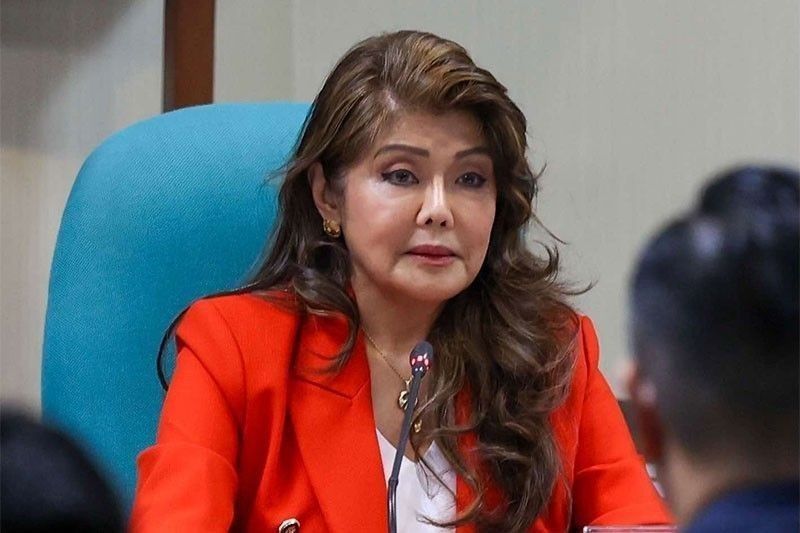
Their absence compelled committee chair Sen. Imee Marcos to call, on motion by Sen. Ronald dela Rosa, for a subpoena to compel attendance or risk contempt.
Absent at yesterday’s hearing were Secretaries Jesus Crispin Remulla of justice, Jonvic Remulla of the interior, Gilberto Teodoro Jr. of defense and Enrique Manalo of foreign affairs; Philippine National Police chief Gen. Rommel Marbil, spokesperson Brig. Gen. Jean Fajardo and Criminal Investigation and Detection Group chief Nicolas Torre III; National Security Adviser Eduardo Año; Prosecutor General Richard Anthony Fadullon, and Philippine Air Force commanding general Arthur Cordura.
Interior Secretary Remulla and Año initially confirmed their attendance, but later declined, according to Senator Marcos.
They did not attend yesterday’s hearing pursuant to a letter from Executive Secretary Lucas Bersamin invoking executive privilege and the sub judice rule in declining the invite.
Malacañang reasoned that the executive officials have exhaustively answered senators’ questions during the previous March 20 hearing.
“I respect the doctrine of executive privilege, but this should not be used as a blanket shield to evade a Senate invite,” Marcos said in her opening statement.
“There is a saying ‘hidden truths are unspoken lies.’ The truth that is being hidden is also a lie, and that is what is happening. By using executive privilege and sub judice to hide the truth, it is appearing to be a cover-up,” she added.
Dela Rosa lashed out at the executive for their “total snub” of the Senate, a “co-equal branch,” as he warned of a “constitutional crisis” because Malacañang deprived the Senate of its “checks and balances” role in government.
Malacañang refuted the warning, with Presidential Communications Undersecretary Claire Castro citing Supreme Court decisions that affirmed executive privilege, including the rulings on Senate vs. Ermita and Neri vs. Senate Committee.
“According to the Supreme Court decisions, it can be invoked by the President and his high-ranking officials especially if it is about deliberative process privilege, presidential communications privilege or state secrets privilege. I hope he will read these cases so he can be enlightened,” the Palace press officer said in a briefing.
Castro said Dela Rosa could have relayed his questions to the Cabinet officials if he were present during the first hearing.
“Does he not remember that there was a first hearing and he was not present? That was an opportunity for him to ask. So, he should not put the blame on others, now that the Cabinet officials did not attend the second hearing,” she said in Filipino.
”The hearing lasted for six hours. He should have attended and he could have asked his questions.”
Executive Secretary Lucas Bersamin maintained that some of the topics of the Senate hearing were covered by executive privilege.
“When we learned about the topics, because the invitation of Sen. Imee (Marcos) was quite specific about the topics so we had looked at this invitation and we determined that there are probably or likely topics that are covered by those matters that would come under executive privilege,” he said in a chance interview.
“So it was best to get ahead with a letter to the senator and to the Senate president so that they would be formally informed that in that hearing, our Cabinet secretaries and other executive officers would be not forced to respond to questions concerning those matters. That’s the essence of the letter.”
In a press briefing after the hearing, Senate President Francis Escudero said he could not yet sign the requested subpoenas, adding that it has to go through the Senate’s legal department to ensure that it would not result in a “constitutional crisis.”
He added that while he agreed that Supreme Court jurisprudence recognizes executive privilege to decline congressional investigations, the sub judice rule could not be used in the same way.
Bersamin also invoked the sub judice rule in deference to the Duterte camp’s petitions before the Supreme Court assailing the turnover to The Hague.
“The least thing I want to happen is to make things worse in the country by triggering a constitutional crisis. This is why I referred it to our lawyers for their recommendations,” Escudero said.
ICC probers visited Philippines
Meanwhile, Marcos yesterday in her presentation bared that four International Criminal Court staffers visited the Philippines last year to look into the deaths of Duterte’s war on drugs, belying the administration’s claim that it did not assist the ICC in its probe.
Marcos showed in the presentation passport photos and arrival details of Maya Destura Brackeen, William Rosato, Amir John Kassam and Glenn Roderick Kala in 2024.
According to the senator, Brackeen is an ICC interpreter who arrived on Oct. 4 and Rosato is an ICC protection expert who arrived on Oct. 15. Both Kasam, a protection expert, and Kala, an investigator, arrived on Oct. 20.
“This clearly shows that the ICC personnel with their own specialties were able to enter the country. They even asked for protection detail and transportation in the Philippines. So, it is clear that the Philippines participated with the ICC,” Senator Marcos said.
“I can’t help but wonder – why is the administration saying it did not help the ICC?” she asked, addressing her brother President Marcos.
The senator also showed during the hearing a copy of the ICC’s “proposed investigation agenda” to interview key police officers, such as personnel in the Batasan Hills police station, said to be the deadliest police station during the drug war.
The ICC also requested records from the East Avenue Medical Center about slain suspects brought by the police from 2016 to 2017 even though they were already killed in alleged shootouts and asked the House of Representatives for a record of the testimonies of former police colonel Royina Garma and former National Police Commission commissioner Edilberto Leonardo about the alleged drug war reward money system.
The tribunal sought for the bank records of Peter Parungo, who was named in the House quad probe as owner of the bank account where the drug war reward money was processed.
“This agenda appeared in the application for Duterte’s warrant. The ICC case is based on the evidence that was provided by the Philippine government,” Marcos said.
Marcos Jr. used same jet
Questions about the ownership of the Gulfstream G550 private jet that ferried Duterte to The Hague were also discussed during the hearing.
Senator Marcos showed Flightradar24 data, official social media posts by the police and news reports, which showed that the jet was used by President Marcos to fly him for various official functions.
Flightradar data showed that the jet with tail number RPC5219 took off from Cauayan, Isabela to Manila on March 6, its previous flight before it was used to ferry Duterte to Rotterdam from March 11 to 12.
Social media posts from the Police Regional Office 2 and the local government showed that Marcos arrived at Cauayan airport on March 6 for a visit to a rice processing center in Isabela.
Senator Marcos said her brother’s use of the jet could be gleaned from social media posts, as reported by Mindanews, that the President used the same jet to fly to Puerto Princesa City in Palawan and to Sulu and Tawi-Tawi.
The private jet was also used by the President to attend a proclamation rally in Laoag City in Ilocos Norte on March 28, the senator said.
The Office of the President has confirmed that it paid for the jet to fly Duterte to The Hague. – Alexis Romero





- Latest
- Trending


