Water supply significant amid extreme heat – Palace
MANILA, Philippines — As Filipinos are experiencing high temperatures, Malacañang assured the public yesterday of enough water supply and that efforts are underway to ensure access to the vital utility.
“The water supply remains significant despite (the) change in the weather condition. As of now, there is no declaration that we are experiencing El Niño. We do not have to worry,” Presidential Communications Undersecretary Claire Castro said at a press briefing yesterday.
“We are used to extreme heat and we can handle it, but the government will not stand idle on this. If there is a water supply shortage, the government would act immediately,” she added.
Castro said the government is working to avoid scenarios such as rationing, which is usually done if there is inadequate water supply.
“But we need to prepare for this. Every year, we need to be ready for these kinds of crises,” Castro said.
Danger level heat index
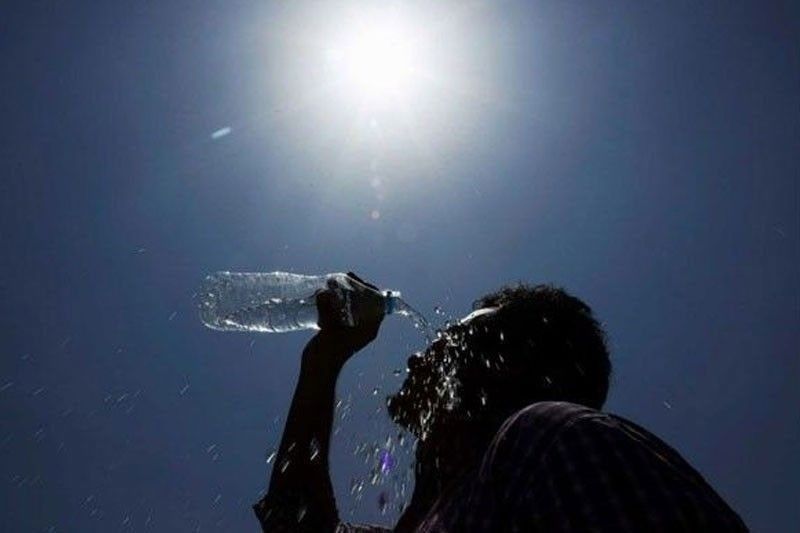
The heat index in several areas across Luzon is expected to reach dangerous levels, according to data from the Philippine Atmospheric, Geophysical and Astronomical Services Administration (PAGASA).
The highest projected heat index in Luzon is 42 degrees Celsius in Iba, Zambales and San Jose, Occidental Mindoro.
PAGASA classifies a heat index between 42 degrees Celsius and 51 degrees Celsius as a “danger” level, posing increased risks of heat-related illnesses such as heat cramps, heat exhaustion, and even heat stroke with prolonged exposure and physical activity.
The state weather bureau also predicted that the heat index in many areas nationwide would range from 33 to 41 degrees Celsius which are classified as “extreme caution” level. Central Luzon, Calabarzon, the Bicol region and Western Visayas are expected to record the highest temperatures in this category.
In Metro Manila, the heat index is also forecast to climb, reaching 41 degrees Celsius in Quezon City and 40 degrees Celsius at the Ninoy Aquino International Airport in Pasay City.
Residents in affected areas are advised to stay hydrated, avoid direct sun exposure between 10 a.m. and 4 p.m. and wear light-colored, loose-fitting clothing.
The Civil Aviation Authority of the Philippines (CAAP) reminds all air travelers to prepare and stay well-hydrated as temperatures continue to rise.
CAAP said that based on the five-day heat index computed by PAGASA from Feb. 28 to March 3, temperatures at some airport locations have risen to between 42 and 45 degrees Celsius.
Local government units in Negros Occidental and Pangasinan have also extended the suspension of face-to-face classes in schools following the high heat index forecasts of PAGASA.
The heat index is a measure of the apparent temperature felt by the human body, combining air temperature and humidity levels.
PAGASA’s forecast warns that elevated heat index levels are expected to persist in the coming days as the country continues to experience high temperatures amid the dry season.
No water shortage
The Metropolitan Waterworks and Sewerage System (MWSS) yesterday assured the public that there will be no water shortage in Metro Manila and nearby areas despite the high heat index.
In an interview with The STAR, MWSS department manager Patrick Dizon said that the water level of Angat Dam, which supplies 90 percent of water in the metropolis, is still above its normal high water level of 212 meters.
“We even released water (from the dam) in January and February so its elevation is unusual so during the summer until May, we don’t see any water shortage. Actually, until end of December, the water elevation of Angat Dam will remain high,” Dizon said.
Dizon added that he does not see that the elevation of the water reservoir will reach critical level.
Maynilad Water Inc. corporate communications head Jennifer Rufo said that the high temperatures have no impact on the water supply in Metro Manila and nearby areas.
“Maynilad also has alternate sources like Laguna Lake, deep wells, recycled used water, and NIA dams in Cavite, to augment supply from Angat,” Rufo told The STAR.
At the same time, Dizon asked the public to ensure the responsible use of water.
The water levels of seven Luzon dams dropped amid the hot temperatures being experienced in the country beginning this month.
As of 8 a.m. yesterday, the water level of Angat Dam decreased by 0.17 meters at 212.9 meters compared to its previous level of 213.07 meters.
The water level of Ipo Dam in Bulacan also went down 0.05 meters at 100.37 meters. It was 0.73 meters below its normal high water level of 101.1 meters.
Four other dams are also now below their high water levels such as the Ambuklao Dam in Benguet, San Roque Dam in Pangasinan, Pantabangan Dam in Nueva Ecija and Magat Dam in Isabela.
Caliraya Dam in Laguna decreased by 0.22 meters after it reached 287.07 meters compared to its previous level of 287.29 meters. –Bella Cariaso, Rudy Santos, Gilbert Bayoran, Cesar Ramirez


- Latest
- Trending