UsapangCancerTreatment: Putting cancer care on the national agenda
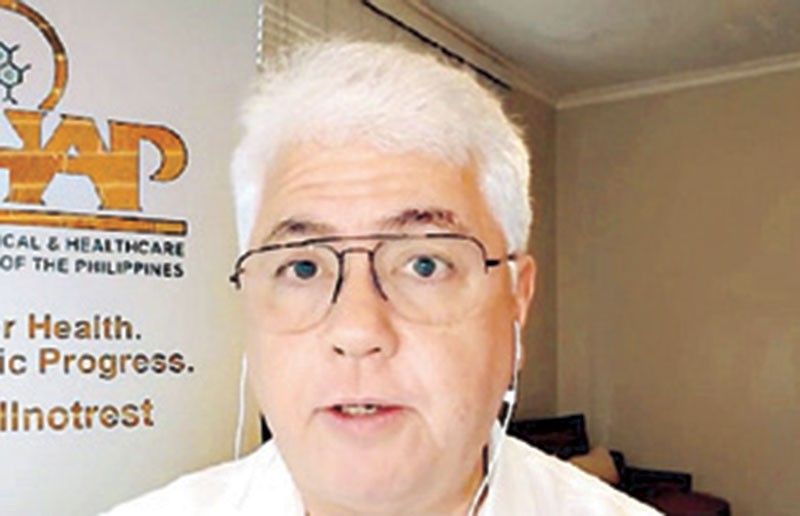
MANILA, Philippines — The Department of Health, the Pharmaceutical and Healthcare Association of the Philippines (PHAP), MSD in the Philippines’ Hope From Within and AstraZeneca’s AZ Cares gathered national leaders, health experts and patients to discuss the national agenda on health care and cancer treatment access in #UsapangCancerTreatment, the third episode of the ‘Tita Hope Talks’ cancer conversation series.
In her message, Vice President Leni Robredo said, “With the passage of the Universal Healthcare Act, it is our job to ensure that we effectively carry out these health reforms, to enact policies that will push the universal health care agenda forward such as empowering our barangay health workers, strengthening health care regulations and creating safeguards so that health care systems in local governments are successfully integrated with their provincial counterparts and to ensure that the system is fully funded by strengthening the collaboration between the private and public sector.”
Discussing the effect of the pandemic on cancer patients, Sen. Panfilo Lacson shared, “The limitations brought about by this health crisis have also led to reduced diagnosis and treatment of other serious illnesses, including cancer. Cancer is indiscriminate. It sees no bound, age, social class or gender. Science tells us that early detection can prevent many critical illnesses. I prioritize our programs to make medical intervention affordable, available and accessible.”
Meanwhile, Quezon City Representative Alfred Vargas recalled efforts done to fund the country’s cancer program. “We successfully included P620 million as cancer assistance fund into an overall P756 million for the cancer supportive care and palliative care access program in the 2021 national budget. This year, P786 million has been allocated in the national expenditure program which will lay the foundations for the 2022 national budget,” Vargas said.
Former senator JV Ejercito, who became instrumental in the passage of the law, urged fellow legislators to ensure the continuous implementation of the landmark cancer care law.
“I hope that legislators will really fund the Cancer Control Act because cancer is very expensive to treat. A lot of Filipinos are suffering right now. Especially in this time of pandemic, all the more that the NICCA needs to be funded so that people who have cancer will have a new lease in life,” noted Ejercito. “We have to continue the fight. Continue making noise so that this landmark law will be funded and its implementation becomes a reality.”
What’s next for NICCA?
Key provisions under NICCA include the creation of the Philippine Cancer Center to promote and encourage cancer research, provide training to medical professionals and house the population-based cancer registry.
It also mandated the creation of a Cancer Assistance Fund and the National Integrated Cancer Control Council.
NICCA also states that PhilHealth will expand its benefit packages to include primary care screening, detection, diagnosis, treatment assistance, supportive care, survivorship follow-up care, rehabilitation and end-of-life care for all types and stages of cancer in both adults and children.
“I envision the NICCA to provide the framework for future cancer centers in both public and private sectors. An area within the Lung Center of the Philippines has been identified as the site for the Philippine Cancer Center, it will be the apex hospital for all government cancer centers where the most difficult cases will be referred,” said Dr. Samuel Ang, medical director of the Chinese General Hospital. “One step that NICCA will ensure is the creation of a cancer registry for the whole country to know the real situation of cancer in the Philippines.”
“DOH has designated cancer specialty hospitals around the country. We have also started refurbishing these hospitals so that patients in the provinces will have access to services. We also have support for diagnostics through the cancer assistance fund. There is a budget for cancer medicines, supportive and palliative medicine access program,” shared Dr. Mae Dolendo, member of the NICC Council.
A comprehensive cancer care law provides more innovative treatment options for patients.
“In the fight against cancer, the value of innovation has never been more emphasized. We have entered an era of new medicines where we are pushing science to have a meaningful impact on patients,” highlighted Dr. Teodoro Padilla, executive director of PHAP.
“Cancer treatment is a complex approach. Different cancers require different treatment approaches and with different outcomes,” noted Pieter de Richter, chief strategy officer of Ipsos Healthcare.
“If these innovative treatments reach more patients, studies show that patients can enjoy significant life years, progression-free life years. This means that even if a patient is undergoing treatment, one can continue to perform daily activities, enjoy life with less pain and adverse effects. These innovative treatments can make all the difference to a cancer patient,” said Dr. Madeleine Valera, former health undersecretary.







- Latest
- Trending